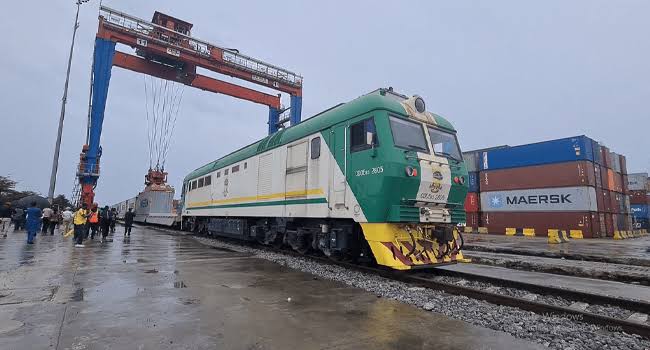
Nigeria’s rail freight sector recorded significant cargo movement in the first quarter of 2025, with a total of 133,116 metric tonnes of goods transported across the narrow and standard gauge rail corridors.
According to official figures obtained by our correspondent, rail cargo operations moved a total of 104 train frequencies within the three-month period spanning January to March 2025. Standard gauge operations accounted for the bulk of the movement, handling 99,600 metric tonnes across 50 trips, while narrow gauge lines moved 33,516 metric tonnes on 54 trips.
A month-by-month breakdown shows that January witnessed a combined tonnage of 10,830 metric tonnes from 24 trips, while February saw a significant surge to 55,830 metric tonnes moved in 40 train frequencies. March recorded the highest movement, with 66,456 metric tonnes moved across 40 trips.
The surge in rail freight operations comes as the Nigeria Customs Service (NCS) and the Nigerian Railway Corporation (NRC) intensify efforts to enhance cargo evacuation through the nation’s railway corridors, particularly from the Lagos ports.
Speaking recently at a stakeholders’ engagement convened at the Apapa Command of the Nigeria Customs Service, the Customs Area Controller, Comptroller Babatunde Olomu, underscored the agency’s commitment to optimising cargo movement through multimodal transport systems.
“Rail has been operational for some time. We want to fine-tune the system to better support our trade facilitation goals,” Olomu said, noting that improved rail logistics would not only decongest the ports but also boost efficiency in cargo delivery across the country.
The Head of Operations at the NRC, Akin Oshinowo, reaffirmed the Corporation’s collaboration with Customs, describing the partnership as a key component of the established Standard Operating Procedures guiding rail cargo evacuation.
Stakeholders at the session equally expressed optimism that the renewed drive to strengthen rail freight capacity could translate into reduced import costs, faster cargo delivery, and a more efficient supply chain across Nigeria’s trade corridors.