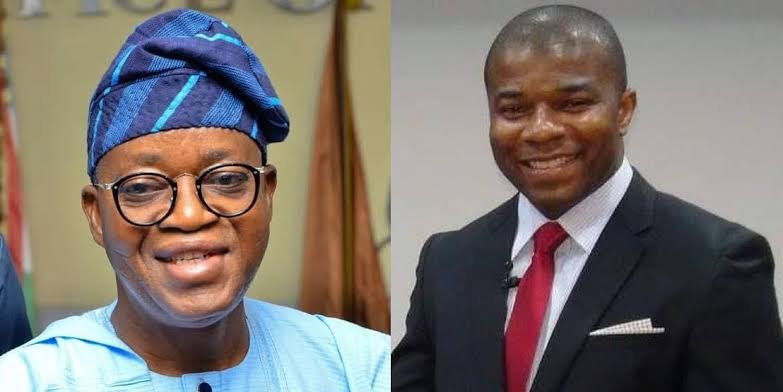
Stakeholders in the freight forwarding industry have raised serious concerns over what they describe as the continued neglect of the Council for the Regulation of Freight Forwarding in Nigeria (CRFFN) by the Federal Ministry of Marine and Blue Economy, following the recent constitution and inauguration of governing boards of other agencies under the ministry.
Accusing the ministry of sidelining the Council despite its statutory regulatory role, they are now demanding the immediate reconstitution of the CRFFN Governing Council comprising solely of elected freight forwarders while calling for a reduction in the number of political appointees who they say have hampered the Council’s effectiveness over the years.
Industry players argue that the failure of the ministry to reconstitute the CRFFN Governing Council, after other agencies such as the Nigerian Maritime Administration and Safety Agency (NIMASA), Nigerian Ports Authority (NPA), National Inland Waterways Authority (NIWA) and others have their boards, shows a clear lack of seriousness in recognizing CRFFN as a key regulatory agency within the maritime sector.
Amid growing concerns from stakeholders over the exclusion of the CRFFN from recent governing board appointments, Shipping Position Daily contacted the Federal Ministry of Marine and Blue Economy who assured that the Council has not been forgotten.
Responding to inquiries, Dr. Bolaji Akinola, Special Adviser on Media and Communications to the Minister of Marine and Blue Economy, said the ministry is aware of the situation and will communicate the inauguration date in due course. “We’ll let you know when the Boards of the other agencies under the Ministry, including CRFFN will be inaugurated.” Dr. Akinola stated.
Reacting to the situation, a former CRFFN Council member, Chief Increase Uche decried the silence and inaction of the ministry, noting that CRFFN is a statutory regulatory body and not a political agency that should be treated with levity.
While noting that CRFFN has a tripartite composition of membership from government appointees and practitioners with elected freight forwarders forming the governing council’s core, Uche criticized the blanket dissolution of parastatal boards by the current administration, stressing that the CRFFN’s governing council should not be subjected to the same treatment as political appointees.
Chief Uche further alleged that some individuals have vowed to frustrate any new elections into the council, until the matter of the dissolved elected members is resolved. He stressed the need for the Ministry of Transportation to engage with the aggrieved elected members and seek an amicable resolution.
While acknowledging internal challenges within the Council, Uche urged the federal government to adopt a more deliberate and reconciliatory approach, including the reinstatement of the elected members, as a way to rebuild confidence and restore order in the freight forwarding regulatory landscape.
Another former CRFFN Governing Council member, Alhaji Ibrahim Tanko, confirmed that discussions are ongoing behind the scenes to address the matter, hopeful that an upcoming meeting with the Minister of Marine and Blue Economy will resolve lingering issues surrounding the reconstitution of the governing council.
However, Alhaji Tanko cautioned that while the idea of an all-elected council may be ideal, it is not feasible under the current framework. He noted that the issue of political appointees had previously been raised with the former Minister of Transportation, who affirmed that the inclusion of such members is consistent with the provisions of the CRFFN Act.
On his part, Mr. Frank Obiekezie, the General Secretary of the Association of Registered Freight Forwarders of Nigeria (AREFFN), expressed deep dissatisfaction with the federal government’s handling of CRFFN matters, particularly regarding the tenure of the last board, appointment of the registrar, and the imbalance between government appointees and elected freight forwarders.
According to Obiekezie, while the tenure of the last CRFFN board may have technically expired, its members were never given the full opportunity to serve out their mandate, leaving the council in a state of uncertainty.
Obiekezie cautioned that appointing board members without consulting the industry’s accredited associations and professionals will lead to more internal conflict. He cited the flawed outcome of the last election, which he described as “acrimonious,” and blamed the CRFFN itself for becoming entangled in the political drama.
The AREFFN Scribe emphasized the need for a comprehensive dialogue involving the Ministry, CRFFN leadership, and recognized associations to find a lasting solution. He argued that the current lopsided structure, where 17 government appointees hold sway over a minority of elected freight forwarders, undermines the council’s integrity and purpose.
“We are not on the same page with CRFFN right now. If the government pushes ahead to constitute a governing council without resolving these underlying issues, it will only breed more suspicion and crisis. What is needed now is sincere dialogue and engagement,” he stressed.
Dr. Kayode Farinto another former member of the governing council had earlier criticized the Federal Government’s handling of the CRFFN board, urging the Registrar to officially brief the Minister of Marine and Blue Economy and demand stakeholder engagement before any further actions are taken.
According to him, the grievances of members who spent over ₦500,000 to obtain forms and who contested the last CRFFN election must be addressed before moving forward. He maintained that lack of communication and consultation from the Ministry has left the Council in a state of limbo.
“I let the Registrar know that I was a member of the last board. If the government wants to do away with the last board, then it must conduct another election. And if you must conduct another election, you need to first call those former aggrieved elected members.” Dr Farinto said.