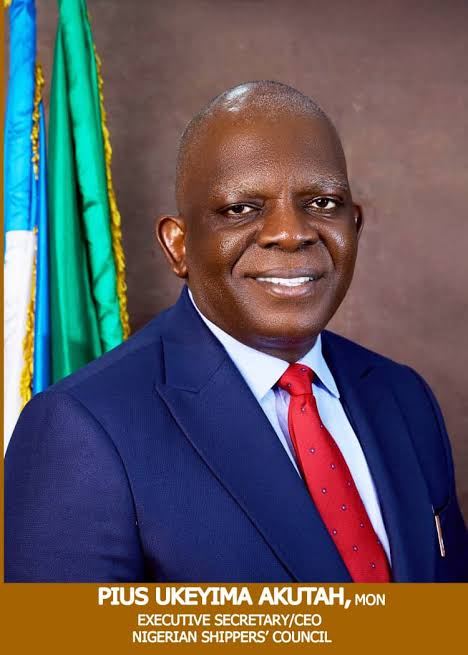
The Nigerian Shippers’ Council (NSC) has announced plans to engage international insurance underwriters over the continued imposition of War Risk Insurance premiums on cargo bound for Nigeria, despite the absence of piracy incidents in the Gulf of Guinea in the last three years.
Executive Secretary of the Council, Barr. Pius Akutah, who was represented by the Director of Regulatory Services, Mrs. Margaret Ogbonna, disclosed this at the third edition of the MARAN Annual Maritime Lectures (MAMAL) held in Lagos on Wednesday.
Akutah lamented that Nigerian shippers have paid more than $1.5 billion in the last three years to foreign insurance firms, including Lloyd’s of London and Protection and Indemnity (P&I) clubs, as premiums on shipments to Nigeria. He described the charges as unjust and no longer justifiable given Nigeria’s improved maritime security.
According to him, the Council will initiate direct discussions with Lloyd’s Market Association, P&I clubs, and other global underwriters to demand a reassessment of Nigeria’s risk status.

“The continued imposition of these premiums is no longer tenable, given the improved security in our maritime domain,” he said. “The NSC, as the port economic regulator, is committed to protecting the interest of shippers, and we will engage with international underwriters to ensure Nigeria is fairly treated.”
The NSC boss added that the Council is working with the Nigerian Maritime Administration and Safety Agency (NIMASA) and other relevant bodies to compile empirical data on security in Nigerian waters, which will be presented at international forums including the International Maritime Organization (IMO), ECOWAS, and the Gulf of Guinea Maritime Collaboration Forum.
He warned that the burden of these premiums is eventually passed down to importers, exporters, and consumers, resulting in higher prices of goods and weakening the competitiveness of Nigerian trade.
Akutah stressed that continued collaboration between government agencies, the private sector, and international partners is necessary to address the challenge and ensure Nigeria’s maritime industry is not unfairly burdened.