By Oluyinka Onigbinde
Former Director-General of the Nigerian Maritime Administration and Safety Agency (NIMASA), Barrister Temisan Omatseye, has raised alarm over what he described as the unfair exploitation of Nigeria by foreign insurers through arbitrary war risk premiums, insisting that the country has been compelled to pay more than even Pakistan at the height of its terror crisis.
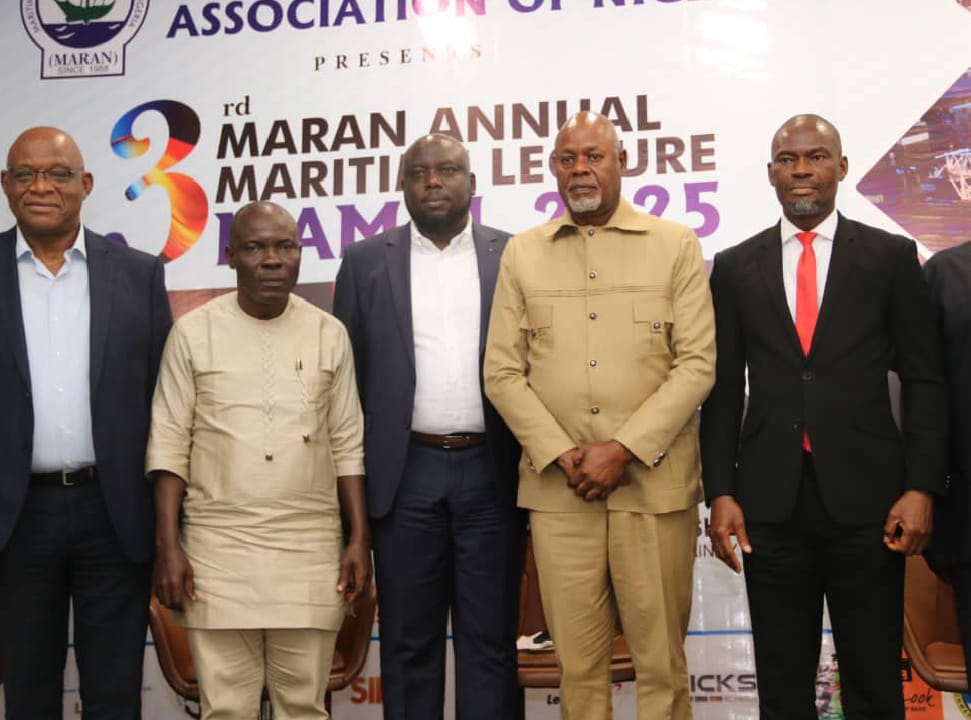
Speaking at the 3rd MARAN Annual Maritime Lecture, which held in Lagos last week, Omatseye disclosed that the Joint War Risk Committee (JWRC) in London arbitrarily raised Nigeria’s war risk premium from 0.025% to 0.625%, a sharp increase that exceeded the 0.25% imposed on Pakistan during its worst period of insurgency.
“This is nothing but economic exploitation. Every time an incident is reported in Nigeria, the JWRC arbitrarily decides to raise the premiums. There is no scientific analysis, no fair assessment—it is simply at their discretion,” he declared.
Omatseye, who once led NIMASA at a time when Nigeria lost as much as $400 million annually to war risk premiums, described the practice as unjust and a burden on the nation’s maritime trade. He revealed that during his tenure, efforts were made to set up a local insurance portal under NIMASA to challenge the dominance of foreign players, but the initiative collapsed due to lack of political backing and resistance from powerful reinsurers in the UK.
“Even when we secured a UK reinsurer to support us, he said he could only proceed if there was a green light from Nigeria’s president. The fear was that the British government earns so much from these premiums that they would block any alternative,” he said.
The former NIMASA boss warned that Nigeria’s growing role as a global energy hub makes the country an even bigger target for exploitation. With the Dangote Refinery’s 650,000 barrels-per-day capacity, other modular refineries coming on stream, and increased LNG exports, Omatseye noted that maritime traffic into Nigeria will multiply, leaving shipowners vulnerable to excessive premiums unless local solutions are developed.
According to him, the government must urgently support the creation of a Nigerian-backed war risk insurance pool to drive down costs and end foreign dominance.
“We should not be going to London to beg anyone. Let us create our own war risk insurance mechanism here. Once we crash the rates, they will have no choice but to review theirs. Competition is the only way out,” Omatseye argued.
Meanwhile speaking during the panel session, Mr. Emmanuel Maiguwa, President of the Maritime Security Providers Association of Nigeria (MASPAN), dug deeper into the systemic issues behind Nigeria’s risk profile and the burden of war risk insurance.
Maiguwa, who also moderated the session, observed that while piracy incidents have dropped significantly — from more than 50 in 2020 to less than 10 in 2023 — insurers have not revised Nigeria’s premiums downward. He posed a crucial question: “What exactly drove this decline — international patrols, Nigeria’s Deep Blue assets, or intelligence operations? And why is Nigeria still being punished despite progress?”
A key concern raised was prosecution of maritime criminals. The Nigerian Navy revealed that it arrested over 80 piracy suspects between 2019 and 2020 through intelligence-driven operations, some linked to Somali-owned vessels operating in Nigerian waters.
But stakeholders questioned how many were actually prosecuted, stressing that without convictions, international confidence in Nigeria’s security will remain low.
The Navy admitted that while sustained sea presence and joint operations with the Department of State Services (DSS) had weakened piracy networks, funding constraints were a major barrier. Officers disclosed that a single small frigate, costs between $50,000 and $70,000 monthly to operate.
Panelists also highlighted gaps in inter-agency collaboration. Omatseye stressed that while the Navy plays a crucial role, the Marine Police, Customs, Immigration, and NIMASA, all have statutory responsibilities that must be harmonised, rather than duplicated.
“We don’t need to reinvent the wheel. The Marine Police have jurisdiction in inland waters, the Navy in coastal defence, and NIMASA has the resources. What we need is collaboration, not competition. Even in the U.S., the Navy lowers its flag when performing Coast Guard duties. Nigeria can do the same,” Omatseye said.
Another hot issue was the Best Management Practices (BMP) West Africa guidelines, which ship captains use as a security bible. Panelists argued that routing incident reports through Abidjan, instead of Nigeria’s Navy, delays responses and unfairly worsens Nigeria’s security rating in insurers’ assessments.
Retired naval officers and security experts at the panel agreed that lack of harmony between BMP West Africa and Nigerian protocols continue to distort Nigeria’s image, feeding the very risk assessments that sustain high premiums.
Beyond security, the panel warned that structural bottlenecks in Nigeria’s shipping operations — from excessive ship-to-ship transfer charges to reliance on foreign security escorts make Nigerian waters less competitive compared to neighbouring Lome in Togo, where costs are three times cheaper.
Maiguwa concluded that unless Nigeria fixes its justice system, inter-agency collaboration, and maritime cost structures, the war risk premium burden will persist, regardless of improvements in actual security.
Omatseye also cautioned that if left unchecked, the dominance of foreign insurers and external security frameworks could cripple Nigeria’s sovereignty in global trade.
“The next colonisation of Nigeria will come through shipping. If sanctions are placed on us tomorrow, we will be crippled because we have no control over our cargoes. That is the danger ahead,” he warned.
The lecture ended with calls for urgent government intervention to set up a Nigerian P&I Club, strengthen prosecutions under the SPOMO Act, and harmonise security protocols, so that Nigeria can finally escape the cycle of inflated war risk premiums.