Nigeria’s vast coastline and inland waters hold immense potential for economic growth, job creation, and food security.
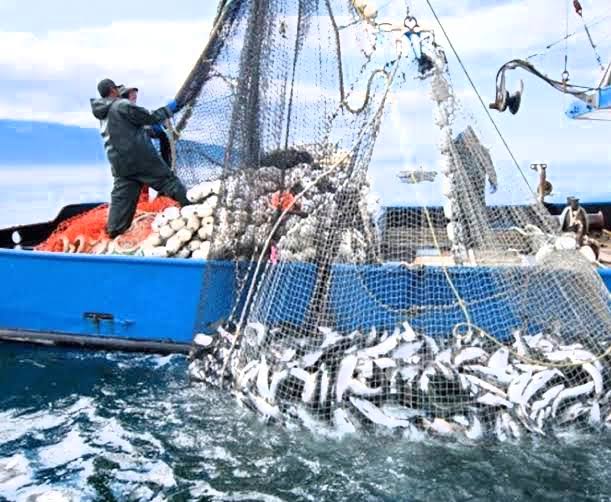
However, this promise is being undermined by the persistent menace of Illegal, Unreported, and Unregulated (IUU) fishing.
Experts warn that illegal fishing not only drains billions of naira from the nation’s economy but also threatens livelihoods in coastal communities and depletes fish stocks essential for Nigeria’s food supply.
As the government and stakeholders intensify efforts to diversify the economy through the blue economy, illegal fishing continues to erode marine resources, coastal livelihoods, and food security.
According to the Food and Agriculture Organisation (FAO), West Africa loses over $2.3 billion annually to illegal fishing, with Nigeria accounting for a significant portion due to weak monitoring systems and porous maritime borders.
Across the continent, Africa loses an estimated $10 billion annually to IUU fishing.
West African waters are among the hardest hit, while in East Africa, including Tanzania, Kenya, and Mozambique, unreported fishing by distant-water fleets is rising.
In contrast, North African countries like Morocco and Egypt benefit from stronger monitoring frameworks, and Southern Africa, led by Namibia and South Africa, has improved enforcement through advanced vessel tracking and joint patrols.
The drivers of illegal fishing in Nigeria mirror those across Africa- weak governance, limited maritime surveillance, poor enforcement of fisheries laws, and lack of regional data sharing.
High poverty levels also push artisanal fishers into informal markets, leaving local communities particularly vulnerable.
To address this challenge, African nations have adopted measures such as the Lomé Charter for regional cooperation and the Port State Measures Agreement, which denies port access to illegal vessels.
They have also implemented satellite monitoring, electronic catch documentation, and community-based co-management initiatives that empower coastal populations.
Experts stress that without proper management and effective enforcement, Nigeria risks losing a critical opportunity to harness its maritime wealth for inclusive and sustainable development.
Mr Segun Aluko, a marine resource analyst, described IUU fishing as a “silent crisis” with far-reaching economic, social, and environmental implications.
He likened the situation to a cancer gradually eating into the nation’s marine ecosystem, depleting fish populations vital for nutrition and local commerce.
“Illegal fishing threatens marine biodiversity and food security by reducing the availability of affordable fish, a major protein source for millions of Nigerian families,” Aluko said.
He alleged that foreign and local vessels often enter Nigeria’s waters without authorisation, using destructive nets that destroy spawning and breeding grounds.
“Small-scale fishermen are the most affected, as they compete unfairly with industrial trawlers exploiting nearshore waters reserved for artisanal fishing.
“Communities that depend on fishing for survival are experiencing increased poverty and youth migration.
“It’s not just about the economy; it’s a human development issue.
“Foreign vessels operate in Nigerian waters without authorisation, causing overfishing, loss of biodiversity, and shrinking incomes for local fishermen,” he said.
Similarly, in Akwa Ibom, southern Nigeria, Mrs Victoria Obot, a fisherwoman, lamented the growing scarcity of fish and declining fortunes of artisanal fishermen.
“Fishermen now return from long expeditions with almost empty nets because industrial trawlers and foreign vessels have already cleared large sections overnight.
“We are gradually going out of business because there’s hardly any fish to catch and sell to meet daily family needs.
“Albeit high waters, the quantity of fish keeps declining every season,” she said.
Beyond economic losses, environmental experts warn that continued depletion of marine resources could lead to ecosystem collapse, affecting food chains, coastal resilience, and the future of Nigeria’s blue economy.
Mr Gabriel Ogbechie, a policy consultant in blue economy development, said the establishment of the Ministry of Marine and Blue Economy was a major step but must be backed by coordinated action.
He stressed that Nigeria must strengthen inter-agency collaboration, upgrade vessel monitoring systems, and implement tougher sanctions to deter illegal operators.
Mr Eugene Nweke, Head Researcher at the Sea Empowerment and Research Centre (SEREC), emphasised the importance of community participation, regional cooperation, and investment in sustainable aquaculture as long-term solutions.
Meanwhile, the Federal Government has reaffirmed its commitment to tackling illegal fishing through stronger partnerships with regional and international stakeholders across the Gulf of Guinea.
Minister of Marine and Blue Economy, Mr Adegboyega Oyetola, stated during a meeting with the Fisheries Committee for the West Central Gulf of Guinea (FCWC) in Abuja that IUU fishing is a serious violation of national and international maritime laws.
He warned that it undermines conservation efforts and threatens the sustainability of marine ecosystems.
“IUU fishing poses a significant threat to the marine ecosystem and biodiversity. It undermines sustainable fisheries and creates unfair competition for law-abiding fishers,” Oyetola said.
He reiterated the government’s commitment to strengthening regional fisheries governance, promoting sustainable use of marine resources, and improving citizens’ socio-economic well-being through the blue economy.
During a consultative meeting with Fisheries Cooperative Groups, Oyetola also pledged to end Nigeria’s dependence on fish importation and transform aquaculture into a major contributor to food security and exports.
“The Federal Government is fully committed to supporting the fisheries and aquaculture subsector through policy reforms, technical support, and financial inclusion,” he said.
Additionally, the ministry is engaging with the World Bank for financial support to empower fish farmers and partnering with the Nigerian Agricultural Insurance Corporation (NAIC) to provide affordable insurance coverage.
Nevertheless, analysts insist the biggest hurdle remains weak implementation and inadequate enforcement of existing laws.
They call for stronger regional collaboration, investment in technology-driven surveillance, and promotion of sustainable fishing practices to safeguard Nigeria’s maritime economy and future.
Ultimately, to achieve food security, economic resilience, and environmental sustainability in line with the Sustainable Development Goals (SDGs), stakeholders urge the government to prioritise the fight against illegal fishing.
Mr Cyrus Saygbe, Chairman of the FCWC, reaffirmed the organisation’s commitment to supporting Nigeria through enhanced monitoring, surveillance, and capacity building.
He added that regional collaboration is key to ensuring compliance with global best practices and strengthening collective responses to maritime threats.
In conclusion, analysts emphasise that Nigeria must expand maritime patrols, invest in advanced vessel monitoring technology, harmonise fisheries laws, and provide artisanal fishers with credit, training, and access to formal markets.
They also note that public–private partnerships can enhance transparency and traceability throughout the seafood value chain. (NANFeatures)