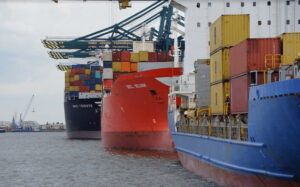
Commercial vessels can be dangerous places. They can catch fire, explode, capsize, run aground, or have any of a number of incidents happen that place their crews in harm’s way. When these incidents occur, they also endanger the environment and any passengers the vessel may be carrying. Vessels and their cargo may be lost at sea, and maritime companies stand to lose millions when this happens. With this article, we’ll shed light on the types of commercial vessel incidents, the harm they cause, and what can be done to prevent them.
At sea, accidents don’t just “happen.” They can’t be blamed on Mother Nature alone. They have real, identifiable causes, and that means that they can be avoided.
The Main Types of Commercial Boat Incidents
Barges, tugs, fishing vessels, cargo ships, ferries, supply boats, and cruise ships are all examples of commercial vessels. They traverse oceans, seas, rivers, and lakes. They transport cargo and passengers, take crews to offshore platforms, tow other vessels, fish for salmon and crab, and perform many different essential functions that we all rely on every day – whether we know it or not.
When commercial vessels are negligently operated or are not seaworthy, they may experience significant problems that put everyone on board in danger. The sea is unforgiving and unpredictable. There are no minor mistakes.
Here are the seven main types of commercial vessel incidents:
Foundering/Sinking
In a maritime sense, founder means to sink. A ship that has foundered has sunk to the bottom of the ocean, sea, or other body of water. Ships may founder because of heavy weather, particularly hurricanes or tropical storms. They may also founder after fires or explosions that cause them to take on too much water to stay afloat. Smaller vessels, such as fishing boats, may founder if they try to lift too-heavy loads and capsize.
Foundering is the most serious type of commercial vessel incident because it means the ship has been lost completely. The entire crew may go down with the ship, its cargo may be lost, and it may release fuel or other pollutants into the environment.
One of the most famous and catastrophic sinkings of a commercial vessel was the loss of the Titanic in 1912. The British passenger liner struck an iceberg and sunk in the Atlantic Ocean on her maiden voyage, resulting in the loss of more than 1,500 of the 2,224 passengers and crew members on board.
While we haven’t seen a disaster like the foundering of the Titanic in some time, dozens of commercial vessels are lost each year, most often cargo ships. According to Statista, 876 vessels were lost at sea from 2011 to 2020 across the planet. 348 were cargo ships. Rounding out the top 5 types of vessels lost during that time were: fishing vessels (120), bulk carriers (76), passenger ships (69), and tug boats (51).
Missing
Oceans are vast, and there are times when commercial vessels are lost without any indication of what happened or where they may be. Ships can go missing even with modern radar and global positioning technology. A ship is considered missing if there has been no news of its location or status for a reasonable amount of time. When a ship disappears in this way, it is usually assumed that its entire crew has been lost and that it has foundered.
Many vessels that are still missing today disappeared over immense search areas or deep water that would make location and recovery astronomically expensive – if at all possible.
One of the most famous maritime disappearances was the loss of the USS Cyclops in 1918. There were 309 men aboard the Navy vessel when she went missing sometime after March 4. Nothing was ever heard from her, no survivors were located, and the wreck was never found.
Another infamous disappearance involved a vessel named the Intrepid. In October 1996, the 65-foot yacht sent out a distress signal off the coast of Fort Pierce, Florida, saying the vessel was sinking and the 16 passengers were abandoning ship. The Coast Guard searched 6,000 square miles, but the vessel and her passengers were never located.
Throughout the centuries, vessel disappearances have spurred the creation of maritime folklore and theories about regions like the Bermuda Triangle, where ships and planes simply vanish without a trace. More likely, however, is the fact that the cost and undertaking of finding missing vessels is a burden that most companies and governments cannot – or will not – shoulder.
*To be concluded