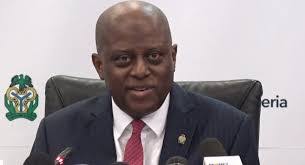
Mr Yemi Cardoso, the Governor of the Central Bank of Nigeria (CBN), says cross‑border payments are becoming the backbone of the international monetary and financial system globally.
Cardoso, in his plenary speech, said this in Abuja on Thursday at the G‑24 Technical Group Meetings (TGM) themed “Mobilising Finance for Sustainable, Inclusive, and Job‑rich Transformation’’.
The title of his speech was, “Digital Cross-Border Payments, Global Finance, and Economic Transformation – Opportunities and Risks”
Cardoso said, “for G‑24 economies, inefficiencies in these systems translate directly into higher remittance costs, costly FX transactions, fragmented settlement processes, and barriers to MSME participation in global trade.”
He said that improving cross‑border payments was, therefore, not simply a technical reform, but a macroeconomic and development priority.
“The channels through which capital, remittances and trade flows move, now form a critical part of global financial stability architecture.
“Today, cross‑border payments remain too slow, too costly, and too fragmented, especially for developing economies.
“With global remittance corridors costing over 6.0 per cent, settlement lags of several days, and compliance burdens that exclude MSMEs, millions remain disconnected from global opportunity,” he said.
The CBN governor said that digital innovation now presented a historic opportunity to correct these frictions.
He said that modern payments infrastructure, instant payment systems, interoperable digital platforms, distributed ledger technology, and robust digital identity frameworks, could reduce transaction costs for remittances and trade.
He said that such assets could also shorten settlement times, improve transparency, compliance, and auditability and expand access for households and MSMEs traditionally excluded from the formal financial system.
”Interoperable digital systems also strengthen the transmission of monetary policy, expand financial inclusion, and reduce informality, if designed with resilience and strong governance.
“These opportunities are not theoretical. They are happening around the world,” he said.
Cardoso said India’s Unified Payments Interface (UPI) now linked with Singapore and the UAE, had slashed remittance costs and enabled ubiquitous real‑time settlement.
He said that Brazil’s PIX, adopted by over 70 per cent of adults within two years, was being integrated into cross‑border pilots across Latin America.
“These examples demonstrate what is achievable for G‑24 members, including lower costs, better liquidity, stronger SMEs, job creation, and deeper regional integration,” he said.
According to him, Nigeria’s experience demonstrates that this potential can be realised through deliberate and sustained policy action.