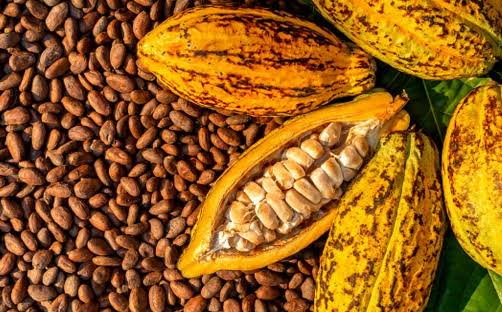
Cocoa farmers and dealers across Oyo, Ogun and Kwara states have bemoaned the sharp fall in price of the commodity, describing the development as unexpected and a major setback to the industry.
Cocoa prices in Nigeria plummeted by 70 per cent from historic highs of N2.5 million per tonne to N700,000 per tonne in many parts of the country between late 2024 and early 2025.
In a survey conducted by the News Agency of Nigeria (NAN), the stakeholders called for a revisit of the Executive Bill presented to the National Assembly in 2025 for the creation of the National Cocoa Board.
Those spoken to said that the shock due to the fall in price had led to the faint hearted investors and newbie farmers scampering back and cutting their losses.
The stakeholders called on the federal government to urgently support the industry by representing the bill to the National Assembly for creation of the cocoa board in order to sustain the sector.
Mr Adeola Adegoke, President, Cocoa Farmers of Nigeria (CFAN) said “we are back to where we started from.
“In our build up between 2003 and 2024, you realise that spike in prices of cocoa created a good enthusiasm, better income, whereby farmers had more money to send their children to school and do lots of other things.
“Many youths left the city and other urban places for farming and took over farm lands abandoned by their parents to rehabilitate or reactivate them.
“Many even bought farmlands, meaning that a lot of investors ventured into cocoa, and the move was so massive that additional 10 per cent of farmers joined the existing farm structures,” he said.
Adegoke said that the downturn in price of cocoa has now forced many newbie farmers back to where they came from.
“I mean the current situation is not encouraging. When you invest, you expect a good return in terms of profit.
“If you go to the open market, you will realise that the prices of agro inputs have not changed despite the 70 per cent drop in cocoa prices,” he said.
The CFAN President said that a solution to the current challenge was the creation of a clear cut justifiable price regime for cocoa per tonne that bears in mind the cost of producing one tonne.
“The farmers must be supported. It’s a matter of obligation. Any country that does not support or subsidise agriculture is in serious problem.
“The government and it’s policies must be geared to support farmers in the provision of subsidise inputs, and cocoa varieties because whatever you are producing per tonne must be justifiable.
“The varieties must be one that can survive the present climate change because many of the varieties we are having presently are dying. When you plant, 50 to 60 per cent do not survive.
“The government must invest in infrastructure, that is how we can have two tonnes per hectare. This is what is happening in Barzil, Ecuador and others.
“We must have tested varieties and it’s non negotiable.
The income of our farmers must be supported with initiatives like subsidise agro inputs and loans because when you look at the cost of hiring labour, it is a problem,” he said.
Adegoke, who is also the President, Cocoa Farmers Alliance Association of Africa (COFAAA), wondered what became of the Executive Bill for the establishment of the National Cocoa Board sent by the President to the National Assembly in November 2025
He said that the Bill was withdrawn to make some amendments and since then, nothing had been heard of it.
Also, Mr Felix Oladunjoye, Chairman, Cocoa Processors Association of Nigeria (COPAN) attributed the fall in price to lack of a coordinating agency to develop and harmonise the supply chain along the cocoa sub sector.
He said that the problem started since the dissolution of the Nigeria Cocoa Board in 1986.
“This has exposed the Nigerian cocoa industry to various challenges,” he said.
According to him, there are various trade organisations in the cocoa industry which are privately managed, but non is legally backed.
Oladunjoye said that he was a member of National Cocoa Management Committee (NCMC) inaugurated by the federal government in 2025 to provide institutional framework to guide and protect the cocoa industry.
“At the Federal government level, we have not had a coordinating agency for almost 40 years to manage what’s going on in the cocoa industry,” he said.
Oladunjoye said that in 2025, the committee went to Ghana and Ivory Coast to understudy how they manage their cocoa industry, but decried the situation in Nigeria where when there were problems in the international market, there was no agency to approach for solutions.
“We have European Deforestation Regulation (EUDR) that the European Union is trying to ensure that all cocoa exports to the European territory are free from deforestation, which is on the front burner.
“There is a body to drive that. And what that means is that every cocoa exported to Europe will have to be registered and ensured that the produce is free from deforestation,” he said.
According to Oladunjoye, in 2022/2023, cocoa price per tonne was locally around N1.3 million and N1.5 million and in 2024 all of a sudden, there was price surge because of demand inter play.
“It rose to N15 million per tonne and before the end of 2024 season, the price started dropping. The international price dropped and also Nigeria naira tried to appreciate and this is market inter play.
“There was excess stock of cocoa in the world market that caused price to drop and also the lack of demand for chocolate because of crises like war and just as the industry is yet to fully recover from the impact of COVID-19.
“These and many other factors are affecting the demand for final product of cocoa, which is chocolate.
“The farmers that have enjoyed buoyancy in 2024 will now have to face the draught due to the fall in price and such is a discouragement, but at the same time the market has to rebound.
“The regional wars are contributing more and I don’t know when the price will recover because right now you can’t export to middle east because of the war, but I pray there’s resolution soon for normalcy to return,” he said.
Oladunjoye said that in all of these, the farmers are suffering. Imagine someone who sold cocoa last year for N12 million now getting less than N3 million.
“Some even borrowed money to plant. Assuming there are institutional frameworks, all these would have looked into the situation and proffer possible solutions,” he said.