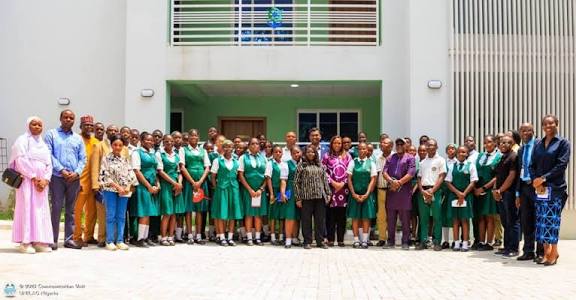
The Institute of Maritime Studies (IMS) and the University of Lagos (UNILAG), on Thursday, hosted the International Maritime Organisation (IMO) and the Nigerian Maritime Administration and Safety Agency (NIMASA) on emerging opportunities in the maritime sector.
The visit, according to a statement on the university’s website, was part of an awareness and sensitisation campaign on emerging opportunities in the maritime industry.
The visit aimed to expose young people to the vast potential within the global maritime sector and to encourage early interest in maritime education and careers.
Addressing senior secondary school students from the UNILAG International School (ISL) at the IMS-UNILAG Building, Mr Subaskar Sitsabeshan, highlighted IMO’s functions.
Sitsabeshan delivered an engaging presentation on the fundamentals of shipping and its critical role in driving the global economy.
He highlighted the IMO’s function as the regulator of international shipping, and examined Nigeria’s strategic maritime position within continental trade.
He also discussed growing sustainability concerns, particularly in relation to greenhouse gas emissions.
Sitsabeshan also provided insights into the IMO’s Green Voyage 2050 Programme, emphasising the need to inspire greater interest among young students in maritime studies.
He noted that attracting the next generation was essential to bridging generational gaps, improving gender diversity, and meeting the evolving workforce demands of the maritime industry.
The Director of IMS-UNILAG, Prof. Mary Odukoya, described the engagement as a strategic platform to raise awareness about maritime opportunities while stimulating interest among young learners.
The delegation also paid a courtesy visit to the Deputy Vice-Chancellor, Development Services, Prof. Foluso Afolabi-Lesi.
Afolabi-Lesi spoke on the potential collaborations and partnerships, particularly with the World Maritime University.
He said the visit underscored UNILAG’s commitment to strengthening maritime education, fostering global partnerships, and positioning Nigeria’s youth to take advantage of opportunities within the blue economy.