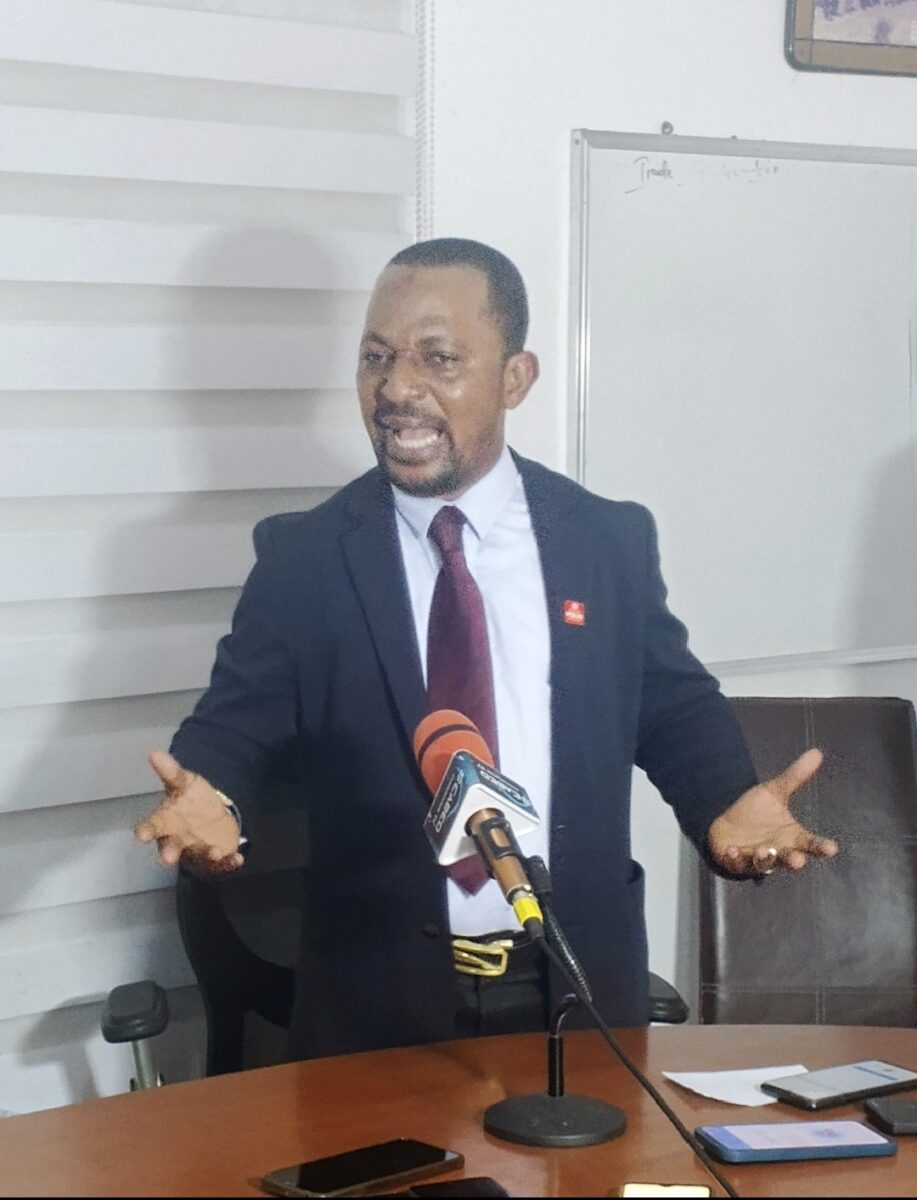
The National Deputy President, Air and Logistics of the National Association of Government Approved Freight Forwarders (NAGAFF), Dr. Segun Musa speaking during a recent engagement with members of the Maritime Reporters Association of Nigeria (MARAN) in Lagos, examines the critical relationship between transportation and economic development, while offering a candid assessment of Nigeria’s current transport landscape. He explores key issues ranging from infrastructure gaps and policy inconsistencies, to the need for stronger private sector participation and improved trade facilitation systems. He also shares insights on port automation, the Single Window initiative, stakeholder engagement in customs reforms, and Nigeria’s broader participation in regional trade frameworks.
- “Nigeria needs a fully automated cargo clearance system”
- “Nigeria Does Not Yet Have A Viable Transport System”
- “Nigeria’s waterways represent enormous economic potential, yet they remain largely neglected”
Why do you believe transportation is so critical to economic development?
Transportation is the starting point of every economy in the world. It is the driving force behind economic advancement and the catalyst that connects production with consumption. Without transportation, there can never be an economy. When you look at how resources are distributed globally, you will realize that nature deliberately places certain resources in some regions while others are scarce in different locations. This distribution compels countries and communities to depend on one another. Transportation facilitates that exchange. It moves resources from where they are abundant to where they are scarce. That is why I often say that transportation is like the heart of an economy. Just as blood must circulate in the body for life to exist, transportation must function effectively for an economy to thrive.
How would you assess Nigeria’s current transport system?
If we are honest with ourselves, Nigeria does not yet have a viable transport system that can be compared with what exists in developed countries. When a country’s transport system fails to advance, the economy gradually begins to weaken. At first, the effects may not be obvious, but over time it becomes clear that things are not moving as they should. Nigeria has often developed impressive economic policies, but many of them fail because they are not integrated with effective transport policies. No matter how good an economic policy is, if the transport system cannot support it, the policy will not deliver meaningful results.
Nigeria has signed several regional trade agreements. Why do you think their impact has been limited?
Nigeria has been part of several economic initiatives, including the Common External Tariff and more recently the African Continental Free Trade Area. However, many of these policies have not delivered the expected results because the supporting transport infrastructure and policies are weak. When the African Continental Free Trade Area was introduced, I appeared on television several times to analyze its potential. While I acknowledged the opportunities it presented, I also warned that Nigeria might struggle to benefit from it because the necessary supporting systems were not in place. Without the political will and the right people to drive these policies, they will remain largely ineffective.
Let’s talk about the different transport modes. What are the key issues with Nigeria’s road transport system?
Nigeria’s road transport system has not advanced significantly over the years. In many ways, it still operates in an outdated manner. As the population grows and the number of vehicles increases, governments must plan accordingly by expanding infrastructure and adopting modern transport management systems. Stakeholders such as commercial transport operators — often dismissed as informal actors — actually possess valuable practical knowledge. Many of them are “qualified by experience.” They understand road operations and traffic dynamics better than many policymakers. Instead of sidelining them, government should engage them and align their experience with international best practices.
What is your view on the rail sector?
The rail sector has shown some progress in recent years, but the government alone cannot finance and manage the entire rail network. Private sector participation is essential. Government should create an enabling environment for investors to build rail lines and connect them to existing networks. Such partnerships can operate on a royalty system, where operators pay fees for using government infrastructure and vice versa. Without private sector involvement, expanding the rail network nationwide will be difficult.
Inland waterways are often described as underutilized. Do you agree?
Absolutely. Nigeria’s waterways represent enormous economic potential, yet they remain largely neglected. In many cases, waterways are treated as land that can be reclaimed and converted into residential estates. But in countries like Singapore, waterways are major economic assets that drive commerce and transportation. If Nigeria properly develops its water transport corridors, it can significantly reduce pressure on roads and improve logistics efficiency.
Do you think Lagos is moving toward an effective multimodal transport system?
Yes, Lagos has strong potential to develop a multimodal transportation system that integrates road, rail, sea, and air transport. A good example is the Oshodi Interchange project. An interchange is not simply a bus stop or a parking garage. It is a hub where multiple modes of transportation meet and connect. For example, a traveler could drive to the interchange, take a train to the airport, and then board a flight. Similarly, someone arriving by air could take a train to the interchange and continue their journey by road. This type of integrated transport system exists in many global cities such as Dubai and Singapore. The Oshodi Interchange was strategically designed to serve as such a hub. Ideally, projects like this should be driven by the private sector. Private investors have the resources to build and manage such infrastructure efficiently, while government resources can be directed toward social sectors like education and healthcare.
You have previously spoken about the Cabotage Vessel Financing Fund. What is your current position on the issue?
I remember the last time I was here, I spoke about the Cabotage Vessel Financing Fund and I was very emphatic about my concerns. Some people misquoted me and said I was accusing the leadership of the Nigerian Maritime Administration and Safety Agency. But I was not accusing anyone. I was simply speaking from a realistic point of view.
For years, we have been hearing that the fund will soon be disbursed, yet nothing has happened. Every year, we are told that preparations are ongoing and that certain approvals are delaying the process. But the reality is that the public deserves transparency. The first step should be to publish an audited report showing how much money has been accumulated in the fund since the cabotage regime began. The public has the right to know how much has been collected, how much will be disbursed, and what percentage will remain in the fund. There is a Freedom of Information Act, so there should be no reason to hide such information.
Some policymakers argue that the government should not own ships or aircraft. What is your view?
I disagree with the idea that the government should completely stay away from strategic sectors like shipping or aviation. It is not necessarily about the government owning everything, but about ensuring that the country has the capacity to participate meaningfully in sectors that drive the economy. If a country refuses to participate in shipping or aviation, it is indirectly saying it does not care about economic competitiveness. Economic strength comes from being an active participant in global logistics and transportation networks.
What reforms do you believe are necessary for trade facilitation?
Nigeria needs a fully automated cargo clearance system. Ideally, importers and freight forwarders should be able to submit documents online, make payments electronically, and receive approvals digitally without unnecessary physical interaction with officials. If there are no discrepancies in documentation, cargo should be released automatically and communicated electronically to shipping companies and terminal operators. Such automation would eliminate delays, reduce corruption, and significantly improve efficiency at the ports.
What is your perspective on Nigeria’s participation in African trade policies, particularly the African Continental Free Trade Area?
When we talk about policy, it must be impartial and holistic. Unfortunately, many of the policies we currently operate in Nigeria are not holistic, and that is why their performance is difficult to evaluate. For instance, when discussing participation in the African Continental Free Trade Area (AfCFTA), the first question should be: What are the benefits and how prepared are we to participate? Nigeria has a large population, but the real question is whether we have sufficient products to trade. In many cases, what we produce locally does not even satisfy our domestic consumption. When a country in such a position opens its borders to international trade, it risks becoming a dumping ground for goods produced by more industrialized economies. The African market is indeed huge, and if we truly developed the capacity to produce competitive goods, we would not need to depend heavily on imports from Asia or the Middle East. Many of the goods we import could actually be sourced within Africa.
AfCFTA was designed to encourage intra-African trade so that African nations can exchange goods among themselves, especially during global disruptions such as conflicts or supply shortages that drive up the cost of imports. However, our level of participation is still extremely low. If we assess export statistics under the scheme, Nigeria should have exported thousands of containers by now. Instead, we celebrate when one or two containers are exported, with heavy media coverage. That is not meaningful participation. It is, frankly, embarrassing for a country of Nigeria’s size and potential.
There has been a lot of discussion about the Single Window system in port operations. Do you think it will bring significant change?
People often describe the National Single Window as a “game changer,” but the truth is that it will only work if the necessary structures are already in place. A Single Window system is highly technical. It requires that all participating agencies have functional digital systems that can seamlessly integrate into a unified platform. My concern is that many agencies are not yet ready for such integration. Before introducing the system, each agency should test its internal processes and confirm that their platforms work effectively. If you force agencies into a centralized digital platform without adequate preparation, the system will not function as intended. Instead, we will end up managing inefficiencies rather than solving them. Therefore, my position is simple: agencies must first develop and test their systems independently. Once they are confirmed to be functional and compatible, then integration into a Single Window platform can occur.
What role should stakeholder engagement play in Customs reforms?
Stakeholder engagement is extremely important. Industry players possess valuable technical knowledge that can improve policy implementation. I have always advocated for regular town hall meetings between the Comptroller-General of Customs and industry stakeholders. Such interactions would create opportunities for open dialogue and collaborative problem-solving. Government officials often face heavy workloads, but engaging stakeholders helps them understand practical issues affecting the industry. No matter how knowledgeable an official may be, practical insights from those working daily within the system can significantly improve decision-making.
What is your overall message regarding Nigeria’s transport and trade policies?
Nigeria has enormous potential in trade, logistics, and transportation. However, policy implementation must be realistic, technically sound, and inclusive. We must develop production capacity before expecting to benefit from international trade agreements. Government reforms must also prioritize proper planning, stakeholder engagement, and technical expertise. If these principles are followed, Nigeria can fully harness its economic potential and play a major role in regional and global trade.