By Oluyinka Onigbinde
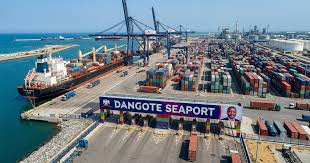
Maritime experts, economists, and shipping stakeholders have thrown their weight behind plans by billionaire industrialist Aliko Dangote to build an additional deep seaport in Nigeria.
Speaking in the wake of the recent Port Management Association of West and Central Africa (PMAWCA) meeting, key industry leaders stated that the country needs more deep seaports to tackle severe port congestion and reclaim multi-billion dollar transit cargo businesses currently being lost to West African neighbors like Togo and Benin Republic.
Reacting to the developments, Dr. Muda Yusuf, Chief Executive Officer of the Centre for the Promotion of Private Enterprise (CPPE), emphasized that criticisms of capacity oversupply misjudge the trajectory of the Nigerian economy. He noted that when building capacity, one must think of the future rather than just the present, highlighting that the nation’s economic growth prospects remain bright. According to Dr. Yusuf, Nigeria has lost lucrative transit cargo businesses to regional neighbors because local infrastructure has lagged behind. He argued that with ongoing federal investments in rail networks connecting Lagos to the hinterland, Nigeria must build the infrastructure required to berth larger vessels and serve landlocked African nations. Dr. Yusuf added that Dangote’s strategic focus is heavily export-oriented, targeting commodities like cement, petroleum products, and fertilizer, which justifies the massive scale of the investment.
Echoing this support, Dr. Chris Ebare, former Chairman of the Institute of Chartered Shipbrokers, declared that Nigeria needs more than four deep seaports to remain competitive. He urged the Federal Ministry of Marine and Blue Economy and the Nigerian Ports Authority (NPA) to grant Dangote maximum cooperation.
Dr. Ebare pointed out that traditional ports like Apapa, Tin Can, and Port Harcourt are severely congested, forcing mega-vessels to transship cargoes on the high seas. He emphasized that a new deep seaport would allow these massive ships direct access to Nigeria, which would drastically increase government revenue, create jobs, and drive development in host communities.
For local shipowners, the choice to back a domestic champion like Dangote is both practical and geographic. Otunba Sola Olatunji, a prominent shipowner, noted that apart from Lagos, the entire southern region lacks functional deep seaport infrastructure. He praised Dangote as a proven local investor who delivers on his promises, stating that the country cannot afford to wait for illusive foreign investors when a dependable local alternative is ready to execute.
This sentiment was supported by Engr. Matthew Alalade, former President of the Merchant Navy, who emphasized that private sector-driven ports guarantee operational efficiency and job security. Drawing a sharp contrast with struggling state-owned infrastructure, Engr. Alalade pointed to the success of the operational Dangote Refinery against the backdrop of underperforming state refineries like Okrika, Warri, and Kaduna. He asserted that Nigeria does not need idle ports, but rather private, job-oriented shipping opportunities that secure the future of local seafarers. As the federal government continues its push under the Marine and Blue Economy mandate, industry consensus indicates that a Dangote-backed deep seaport could be the definitive catalyst to cement Nigeria as the leading maritime hub of West Africa.
Meanwhile, the Federal Government has completed approvals, certifications and compliance processes for five proposed deep seaport projects for investment and implementation as part of efforts to reposition the country to reclaim the over 70 per cent of Nigerian-bound cargo transported to Africa.
The Managing Director of the Nigerian Ports Authority, Dr. Abubakar Dantsoho, listed the approved projects as the Badagry Deep Sea Port in Lagos State, Olokola Deep Sea Port in Ondo State, Ibom Deep Sea Port in Akwa Ibom State, Bakassi Deep Sea Port in Cross River State and Bonny Deep Sea Port in Rivers State.
Dantsoho disclosed this at the close of a three-day Meeting of Managing Directors of Port Management Association of West and Central Africa (PMAWCA), Member Ports and the Port Statisticians Network held in Lagos.
Dantsoho, who is also the President of PMAWCA, explained that although negotiations with investors were still ongoing due to the huge financial commitments required for such port projects, the government had already laid the regulatory and administrative groundwork necessary for implementation.
“In terms of approvals, certifications and compliance issues, we have taken care of five different deep-sea ports in Nigeria,” Dantsoho said.