The signs are there, that the much-expected National Single Window (NSW) is not living up to expectation. And this is causing apprehension among the various stakeholder groups in the Nigerian maritime industry.
Reports indicate that, due to technical integration issues, the National Single Window is yet to integrate critical relevant government agencies, terminal operators and shipping companies.
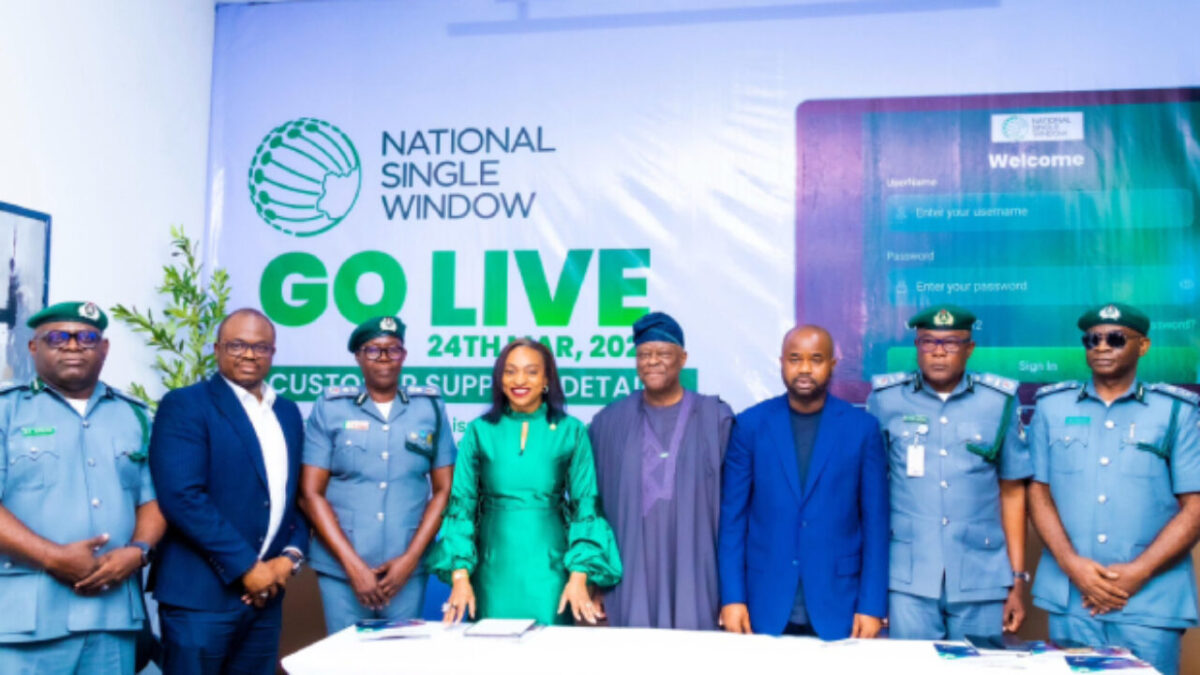
According to our findings, nearly two months after the NSW was officially launched on March 27, 2026, the platform is yet to manifest. This is despite earlier assurances given at the launching, that pilot operations would begin immediately, albeit with selected shipping lines.
By its simple design, a ‘Single Window’ platform links individual seaports and all supply chain actors in a loop offering firsthand information on cargoes. This unique platform automates data and knowledge real-time sharing and allows better interaction management within the network.
The Nigeria Single Window Trade Portal is expected to be a cross-government website that is will open a new era for trade facilitation by offering a single portal for trade actors, both Nigerian and international, to access a full range of resources and standardized services from different Nigerian government agencies.
It is expected to operate like an open electronic platform that connects individual existing systems and databases of distinct companies and organizations. It enables a secure and intelligent operational data exchange and consolidation within the port network.
On paper, the Single Window also entails that shipping lines’ e-booking of containers or space for general and bulk cargo, monitoring of physical movements of containers or goods, e-manifest data submission, release of carrier Delivery Order and tracking of cargo status for importers or check ocean vessel schedules for exporters
For the agencies operating the port system, the arrangement entails e-settlement of all bills: handling costs, logistics fees, demurrage charges, and seamless release of Terminal Delivery Order.
While waiting for the NSW initiative in Nigeria, importers and clearing agents were forced to contend with challenges in the cargo delivery chain, a development which causes staggering demurrage costs and inconveniences. Sadly also, government agencies directly involved in the cargo reception, handling, clearance and delivery carry out their statutory duties rather blindly, resulting into loss of revenue and influx of unwholesome goods into the country.
We recall that, in 2019, the Federal Government gave approval for the setting up of the Steering Committee to be chaired by the Vice President for the design and implementation of a National Single Window.
Three years later, the Federal Government agencies under the auspices of the then- Federal Ministry of Transportation came out in 2022 to give support to the establishment a National Single Window regime. There was silence gain.
This inertia led key agencies like the Nigeria Customs Service, NIMASA, NPA and Nigerian Shippers’ Council to begin competition for the control of the Single Window; striving to warehouse it. This division and protectionism denied the nation’s economy of the desired benefit.
However, the hope that Nigeria would soon have Single Window platform was actually rekindled in April 2024 by President Bola Tinubu, with the inauguration of a Committee. The full roll out was fixed for the first quarter of 2026.
Even though the National Single Window was officially launched in March 2026, it is still a far cry from what was promised, and cargo importation and clearance procedure in Nigeria is still lacking coordination.
After several weeks of what the National Single Window ‘drivers’ call stakeholders’ engagement and after giving assurances of a comprehensive launch, that reality is that, there has been no onboarding of any agency in the maritime industry, unto the National Single Window platform.
Officials of the NSW have blamed the delay on technical hitches, which have made it impossible to integrate the any co-participating agency or stakeholder. This is unacceptable.
The industry embraced the project, everyone was enthusiastic, but about two months down the line, what has been delivered is not commensurate. We are quite perturbed that, after so many engagements with many industry groups, there is little to show in terms of actual roll out.
We are told that the NSW is facing technical integration challenges and that there may be mismatches between systems used by government agencies and the NSW platform. There are allegations that different agencies operate varying digital architectures, which has made integration with Customs, terminals, and shipping companies more complex than initially anticipated. The question is – were these not envisaged in the several months build up?
Since the National Single Window is all about that data collation and sampling, it is dangerous to learn that the project is facing inconsistencies in data formats and programming environments used across agencies. These are the technical hiccups that are impeding the full roll out and onboarding of the scheme since March. This is disgraceful and unacceptable, given the fact that the NSW handlers had enough time to anticipate and handle these challenges that can not be explained as teething problems.
We are worried that, the National Single Window may go the way of other well-thought out projects of the Federal Government, which have failed under the ineptitude of their handlers, simply because they were rushed and were given to incompetent hands to actualize.
While we agree that there may be unforeseen challenges, but these do not have to overwhelm the implementation of a project as important as the NSW. While we also agree that the complexity of Nigeria’s shipping environment, particularly the handling of mixed cargo manifests involving both containerised and general cargo within single billing documents, may have added to the difficulty of achieving seamless integration, we state unequivocally that this is not peculiar to Nigeria.
Needless to remind the team that the NSW is at the centre of the President Bola Tinubu administration’s goal to achieve a $1Trillion economy, by drastically reducing trade bottlenecks and lower the cost of doing business.
Unlike previous administrative attempts, the NSW is firmly backed by national tax and trade legal frameworks, ensuring long-term institutional commitment.
Just like the President said while inaugurating the National Single Window initiative, it is expected to link our ports, government agencies, and key stakeholders, creating a seamless and efficient system that will facilitate trade.
The President gave a March 27, 2026 roll out deadline, he also gave more than one year for this to be achieved. It is already well past the one year deadline, and the nation is yet to see the manifestation.
The National Single Window is too dear to Nigeria to fail. The consequences of this will be too devastating to the economy.
We still maintain that the NSW Coordinator and his team had enough time to anticipate the challenges that are coming up. It is sad that, at the moment cargo importation and clearance procedure still lacks a one stop shop digital coordination. Yet, this is what the NSW was created to address.