By Oluyinka Onigbinde
Findings by Shipping Position Daily have revealed deepening concerns within Nigeria’s maritime industry over certificate racketeering, the prolonged absence of seafarer training, inadequate sea-time opportunities and the alleged abuse of Nigerian seafarers onboard foreign vessels.
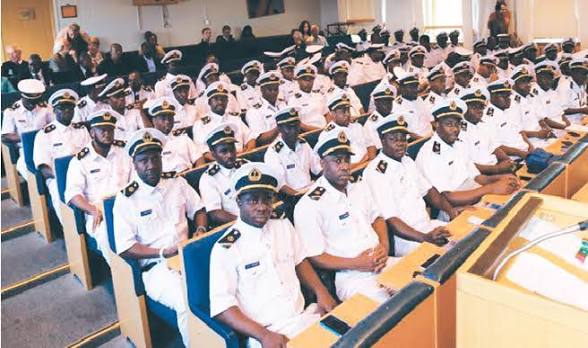
The issues came to the fore during the commemoration of the 20th anniversary of the Maritime Labour Convention (MLC, 2006), organised by the National Seafarers Welfare Board of Nigeria in Lagos, where seafarers openly confronted representatives of the Nigerian Maritime Administration and Safety Agency (NIMASA) over what they described as longstanding challenges threatening the future of their profession.
From allegations that NIMASA has not sponsored the training of seafarers for more than three years, to complaints about the proliferation of fraudulent Certificates of Competency (CoCs), participants painted a picture of an industry grappling with systemic challenges that continue to hinder the career progression and global competitiveness of Nigerian seafarers.
The interactive session also featured disturbing accounts from some seafarers who alleged that Nigerian crew members are subjected to intimidation, discrimination and other forms of abuse while serving onboard foreign vessels.
One of the recurring concerns raised at the event was the alleged absence of sustained training programmes for Nigerian seafarers. Some participants claimed that for more than three years, NIMASA had not organised or sponsored meaningful training for seafarers, leaving many young professionals without opportunities to upgrade their skills or remain competitive in the global maritime labour market.
Others drew attention to what they described as the increasing menace of certificate racketeering, alleging that fake or irregularly-obtained Certificates of Competency were finding their ways into the industry. They warned that the development not only tarnishes Nigeria’s image internationally but also puts lives, vessels and cargoes at risk, by allowing unqualified persons to occupy positions meant for trained professionals.
The issue of sea-time training also generated heated discussions, with several cadets lamenting that despite completing their academic studies, they remain unable to obtain the mandatory onboard experience required to qualify as licensed seafarers.
Some participants argued that without practical sea-time training, many graduates of maritime institutions remain stranded, unable to secure employment or advance professionally.
The meeting also heard emotional testimonies from seafarers who alleged that Nigerian crew members working onboard foreign vessels are often subjected to intimidation, racial discrimination and poor welfare conditions.
An aged seafarer claimed he had experienced verbal abuse, unfair treatment and excessive workloads, while others alleged that complaints made onboard were ignored for fear of losing their jobs.
Responding on behalf of NIMASA, the Head of the Support Services Unit, Maritime Labour, Dr. Emmanuel Alfred, acknowledged the concerns raised by the seafarers and assured participants that the agency was aware of the challenges confronting the sector.
Addressing the allegations of certificate racketeering, Alfred said NIMASA had continued to strengthen its certification processes to preserve the integrity of Nigerian Certificates of Competency.
According to him, the agency has introduced stricter verification procedures to ensure that only candidates who meet all statutory requirements are issued certificates, while efforts are ongoing to eliminate fraudulent practices within the certification system.
On reports of abuse of Nigerian seafarers onboard foreign vessels, Alfred urged affected seafarers to report such incidents to NIMASA, through the appropriate channels.
He explained that the agency can only intervene effectively when formal complaints are lodged, adding that NIMASA remains committed to enforcing the provisions of the Maritime Labour Convention, which protects seafarers against harassment, discrimination and unfair treatment.
Responding to a question from Shipping Position Daily on the prolonged shortage of sea-time opportunities for Nigerian cadets, Alfred admitted that sea-time training remains one of the most pressing challenges facing the country’s maritime industry.
He explained that sea-time placements are largely dependent on the availability of vessels and the willingness of shipowners to take cadets onboard for practical training.
According to him, NIMASA continues to engage indigenous and foreign shipowners as well as other stakeholders with a view to expanding opportunities for Nigerian cadets to acquire the mandatory sea-time experience, required for certification.
He noted that the challenge is not peculiar to Nigeria, but acknowledged that more needs to be done to bridge the gap between classroom learning and practical onboard training.
While appreciating the frank contributions from participants, Alfred assured the gathering that the concerns raised would be conveyed to the appropriate authorities within the agency for necessary action.