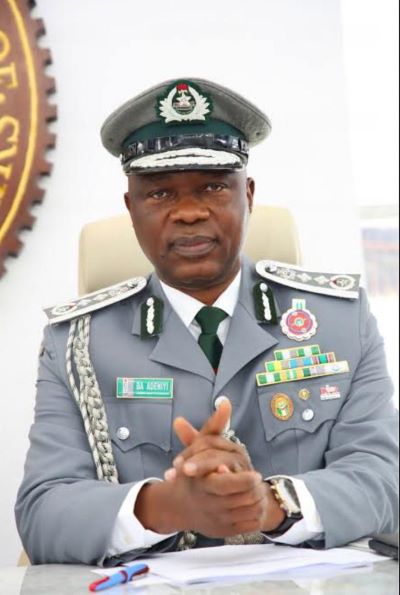
Bashir Adewale Adeniyi was appointed as the Comptroller General of Customs in June 2023, at a time when the Service was highly demoralized and was relatively an isolated agency of the Federal Government, known only for revenue collection.
No doubt, at that time, the Service faced persistent revenue leakages, cumbersome cargo clearance procedures, promotion backlogs, low staff morale and widespread allegations of corruption.
Coming on board shortly after the Nigeria Customs Service Act (NCSA) 2023 was enacted, Adeniyi had a new law to work with in a service filled with stereotype officers.
The Act completely overhauls Nigeria’s trade and maritime operations by repealing the 63-year-old Customs and Excise Management Act (CEMA) of 1958. Enacted precisely on April 20, 2023, this modern framework aims to maximize revenue collection, curb smuggling, institutionalize full digital automation, and facilitate smoother international trade
Although the Nigeria Customs Service Act 2023 had opened the door for sweeping reforms, translating the legislation into practical improvements required decisive leadership. That was the cross which Wale Adeniyi has been carrying since his appointment.
President Bola Tinubu initially granted him a one year tenure extension in August 2025. Adeniyi’s first tenure extension was to expire on August 1, 2026.
But, recently, the President granted another six-month extension, which will expire in February 2027. But, unlike the in the first extension, the statement issued by the Presidency specifically directed him to consolidate the implementation of the National Single Window and ensure an orderly succession in the service.
The six months extension was made public via a statement by the Special Adviser to the President on Information and Strategy, Mr. Bayo Onanuga. The statement specifically directed that: “During the transition period, Adeniyi, working with the Nigeria Customs Service (NCS) Board, will ensure the promotion of eligible officers to the rank of Comptroller of Customs and the compulsory retirement of officers who have attained 60 years of age or have served 35 years”.
This development is seen as part of efforts to maintain stability within the Customs Service at a time when the agency is implementing critical reforms aimed at modernising trade procedures and boosting government revenue.
This development also affords the opportunity to appraise Adeniyi’s three years in the saddle as the CG of Customs.
When Adeniyi assumed office in June 2023, the Service faced persistent revenue leakages, cumbersome cargo clearance procedures, promotion backlogs, low staff morale and widespread allegations of corruption. Although the Customs Act 2023 had opened the door for sweeping reforms, translating the legislation into practical improvements require decisive leadership.
Three years later, the narrative has changed considerably.
Perhaps the most remarkable achievement has been in revenue generation. Within his first year, Customs recorded a 74 per cent increase in collections, generating N4.49 trillion between June 2023 and May 2024, compared to N2.58 trillion in the corresponding period before his appointment. This trajectory continues in subsequent years. The figures are there for all to see.
The excellent performance is attributable to tighter enforcement, improved valuation systems, enhanced compliance, exchange rate reforms and sustained efforts to block long-standing revenue leakages.
Beyond revenue, Adeniyi’s administration has also aggressively pursued technology-driven reforms aimed at reducing human interference and improving transparency.
Central to this effort is the deployment of the indigenous tech platform B’Odogwu, which was designed to replace the aged Nigeria Integrated Customs Information System. The platform automates cargo processing, improves efficiency and minimises opportunities for leakages.
The administration has also expanded the Authorised Economic Operator (AEO) Programme, introduced improved risk management systems, deployed additional non-intrusive inspection technology and strengthened collaboration with other government agencies to facilitate trade.
Although stakeholders acknowledge that full automation is still evolving, many agree that cargo clearance has become more predictable and efficient, than it was three years ago.
The Service has also strengthened its national security role.
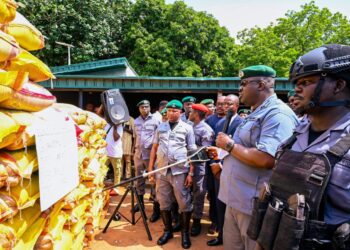
Under Adeniyi, anti-smuggling operations have led to major seizures of arms, ammunition, narcotics, petroleum products and other prohibited items.
For years, delayed promotions had frustrated officers across the Service. But, Adeniyi responded with one of the largest promotion exercises in Customs history. In December 2024 alone, the Customs Board approved the promotion of 1,419 junior officers, while subsequent exercises advanced hundreds of senior officers.
The promotions boosted morale and restored confidence among personnel who had experienced years of career stagnation.
However, some stakeholders have expressed concerns that the accelerated promotions have created competency gaps in certain management positions, underscoring the need for continuous leadership training and capacity development.
And this is where the challenge of the CG of Customs in the next six months begins. From available records, there has been stagnation in recruitment in the service for about 16 years. Closely connected to this is the fact that the service is presently top-heavy, with several Comptrollers and Deputies Comptroller already due for retirement. This is apart from the topmost hierarchy of Deputies Comptroller General and Assistant Comptrollers General.
Adewale Adeniyi has been given the task to weed the service of officers who have attained 60 years of age or who have put in the statutory 35 years in the service. These are quite many.
There is also the yet-to-be-concluded recruitment of young officers into the service. This exercise, which started more than one year ago, has generated anxiety. Even though it is obvious that the Nigeria Customs Service under Adeniyi is determined to recruit new and younger persons, it is imperative that this is done within the six months extension granted to the Comptroller General.
We are certain that achieving this will save the service the burden of a repeat of what it had not done in the last 16 years, and which has led to the quagmire that the service currently finds itself. We are quite aware of the pressure from several quarters to influence the exercise. Notwithstanding, it is one task that the Adewale Adeniyi-led Customs management must accomplish in the next few months.
The next phase for the Service is going to be a tough one for the Comptroller General. Determining who will go and who will remain in service may not be as easy as being expected. But, it is equally a difficult task that must be achieved in six months.
We know that the 16 years employment lacuna has created a difficult situation for succession in the service, especially in terms of knowledge and competence needed for the expected new management team and the most senior cadre of the service.
Comptroller General Adewale Adeniyi, supported by the Board of the Service will have a tough task bridging that gap with the current crop of Comptrollers and Deputies Comptroller, because the next leadership will come from their rank.
What happens in the next few months will determine the Nigeria Customs Service of the future, vis a vis the various innovations that the Service have witnessed under him. The legacy of Adewale Adeniyi will depend largely on who emerges as his successor. He needs courage, fairness and clear vision to achieve this.