By Joshua Yousouph
Despite the promise of the African Continental Free Trade Area (AfCFTA) to boost intra-African trade since five years after its launch, stakeholders have raised concerns that persistent delays, the absence of direct flight connections, multiple taxation and other logistics bottlenecks are undermining the competitiveness of Nigerian exports across African markets, despite growing trade opportunities under the continental agreement.
Industry and logistics experts who spoke to Shipping Position Daily last week on the development argued that while AfCFTA has expanded market access for Nigerian businesses, weak transport connectivity, prolonged cargo transit times, high freight costs and regulatory barriers continue to make it easier and, in some cases, cheaper to export goods to Europe than to neighbouring African countries.
The stakeholders made the observations while reacting to the Federal Government’s recent partnership with RwandaAir aimed at facilitating the movement of Nigerian exports across Africa, insisting that only comprehensive reforms in logistics, transportation and trade facilitation can unlock the full benefits of the trade pact.
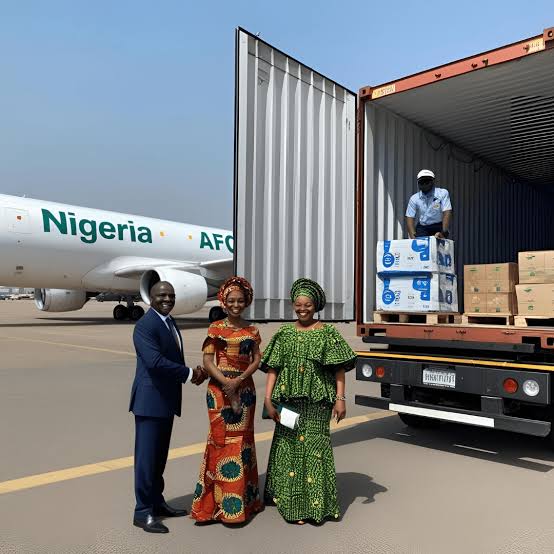
Shipping Position Daily recalls that the Federal Government and RwandAir recently launched an expanded air cargo corridor to reduce export costs and boost intra-African trade under AfCFTA. The Minister of Industry, Trade and Investment, Dr Jumoke Oduwole during the flag-off of the inaugural shipment under the corridor, said the initiative would provide Nigerian exporters with lower freight rates and improved access to key African markets.
She said the partnership expanded the existing corridor by opening export routes to Kigali, Rwanda; Lusaka, Zambia; and Harare, Zimbabwe, while providing additional carrier options on the Nairobi, Kenya, and Johannesburg, South Africa routes. According to her, cargo rates on RwandAir-operated routes have been reduced to below two dollars per kilogramme from previous rates of between three and $10 per kilogramme.
Industry experts, however, argue that while the initiative is a step in the right direction, it falls short of addressing the broader structural challenges confronting exporters.
However, industry experts who spoke with our correspondent last week collectively agreed that while recent efforts such as the RwandaAir partnership demonstrate government’s commitment to improving regional trade, the competitiveness of Nigerian exports will remain constrained by delays, indirect shipping routes, high freight costs and weak transport infrastructure unless comprehensive logistics reforms are implemented.
They called for accelerated investments in maritime and rail connectivity, expansion of direct cargo flight routes across Africa, simplification of customs procedures, elimination of non-tariff barriers and the creation of an integrated continental transport network capable of supporting the ambitions of AfCFTA.
Speaking on the issue, trade logistics expert and export consultant, Dr. Obiora Madu stressed that logistics and supply chain efficiency remain the deciding factors in whether AfCFTA opportunities translate into tangible economic benefits.
He recalled a failed attempt around 2016 to facilitate coffee exports from Kenya to Nigeria, noting that the business case collapsed because shipments had to pass through Europe before reaching Nigeria.
According to him, the indirect routing significantly increased costs and wiped out potential profits. “If you have to ship coffee from Kenya to Nigeria, it has to go to Europe first before it comes to Nigeria. At the end of the day, the profit is gone,” he explained.
Dr. Obiora argued that signing trade agreements alone is insufficient, insisting that governments must deliberately invest in logistics infrastructure capable of supporting seamless trade across the continent. He advocated for the development of coastal shipping services, intercontinental highways and rail networks to facilitate the movement of goods within Africa.
He warned that unless African countries focus on moving cargo more efficiently and cost-effectively, the gains recorded under AfCFTA may not be sustainable.
Similarly, Chief Executive Officer of the Centre for the Promotion of Private Enterprise (CPPE), Dr. Muda Yusuf, said five years after its implementation, AfCFTA has not generated the level of intra-African trade and economic integration originally envisaged.
He attributed the slow progress to structural constraints within African economies, inadequate transport connectivity, non-tariff barriers and uneven political commitment among member states.
According to Dr Muda, transport and logistics infrastructure across Africa remains grossly inadequate for continental trade, with maritime connectivity weak, rail links between countries almost non-existent and road transportation hampered by cumbersome border procedures and numerous checkpoints.
While acknowledging efforts to improve air connectivity through airline partnerships, he argued that isolated bilateral arrangements would not be sufficient to unlock AfCFTA’s full potential. “Air connectivity, while improving in some corridors, remains prohibitively expensive for most businesses,” he noted.
He further observed that administrative bottlenecks, border delays, inconsistent regulatory practices and protectionist measures continue to undermine the objectives of AfCFTA and weaken the competitiveness of African exports.
For Dr Muda, addressing domestic competitiveness remains critical, as manufacturers continue to contend with high energy costs, expensive financing, poor transport infrastructure and elevated logistics expenses.
On his Head of Research at Sea Empowerment and Research Center (SEREC), Mr. Eugene Nweke, described logistics inefficiency as one of the greatest barriers facing Nigerian exporters.
According to him, although AfCFTA has expanded legal market access across Africa, Nigerian businesses continue to struggle with weak transport connectivity, high logistics costs, prolonged cargo transit times, multiple regulatory charges, and inadequate trade facilitation infrastructure.
He noted that exporters frequently face the challenge of having no direct cargo or passenger flight connections to several African destinations, forcing shipments to transit through Europe or the Middle East before reaching their final destinations within Africa.
“Exporters have consistently reported the absence of direct cargo and passenger flight connections to several African destinations, forcing shipments through third-country hubs in Europe and the Middle East. This significantly increases freight costs, delivery timelines, and the overall cost of doing business,” Nweke stated.
He further lamented that maritime shipments to African destinations often take more than 40 days, despite the relatively short geographical distances involved, a situation that erodes the competitiveness of Nigerian products in continental markets.
According to him, these inefficiencies have created a paradox where exporters sometimes find it easier and cheaper to ship goods to Europe than to neighbouring African countries.
Nweke maintained that the RwandaAir partnership should be viewed as part of a wider logistics reform agenda, rather than a standalone solution, stressing that Nigeria requires an integrated transport ecosystem linking aviation, maritime, rail, road infrastructure, customs modernisation and digital trade systems.