By Oluyinka Onigbinde
The Nigeria Customs Service (NCS), in collaboration with the National Single Window (NSW) Secretariat, has commenced the maritime manifest submission phase of the National Single Window project, stepping up stakeholder engagement aimed at preparing shipping companies and other maritime operators for full implementation of the digital trade platform.
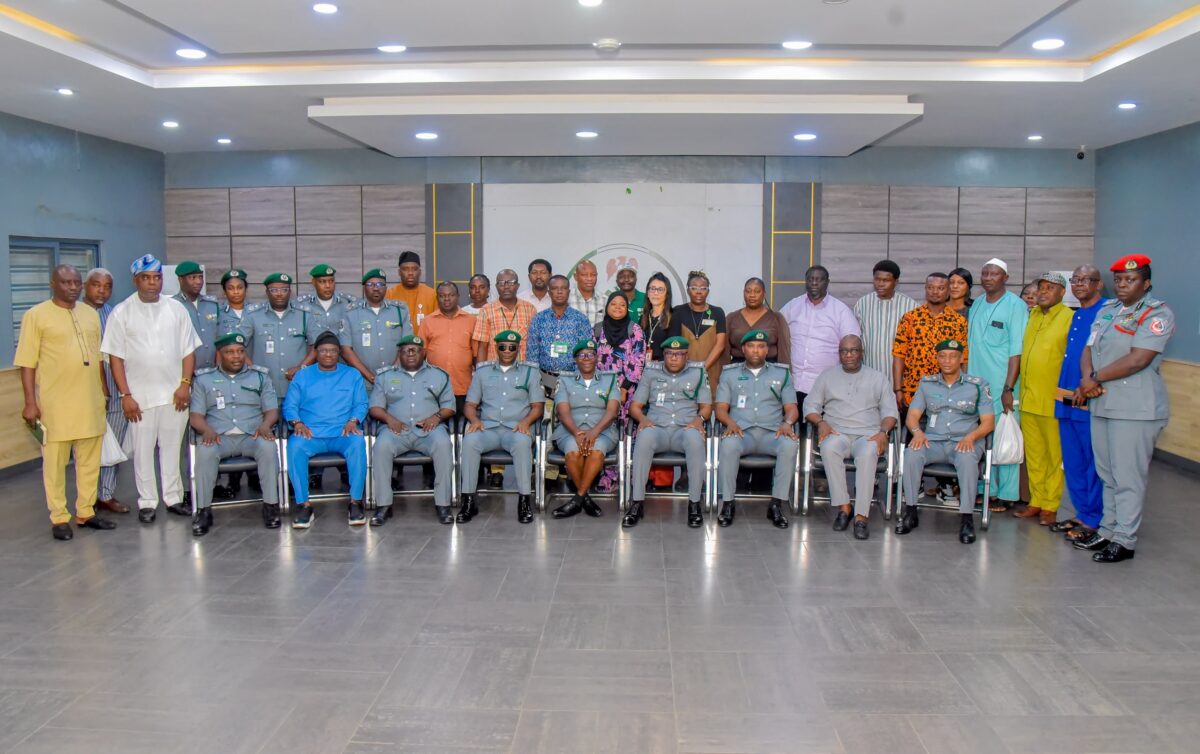
The sensitisation programme, held on Tuesday at the Apapa Area Command in Lagos, brought together Customs officers, shipping lines, terminal operators and other key maritime stakeholders as the Service sought to deepen awareness of the electronic manifest submission process, which forms a critical component of the National Single Window initiative.
Speaking at the event, the Deputy Comptroller-General of Customs in charge of ICT and Modernisation, Oluyomi Adebakin, said the sensitisation was a continuation of engagements with stakeholders before and after the successful launch of Phase One of the National Single Window on March 27, 2026.
According to her, the implementation of the National Single Window aligns Nigeria with global best practices in trade facilitation and is expected to improve the country’s competitiveness in international commerce.
She noted that the benefits of the initiative are already becoming evident, stressing that the platform is designed not only to improve Customs operations but also to enhance the efficiency of the entire trade ecosystem.
“Since the introduction of the National Single Window, the country as a whole, not only the Nigeria Customs Service, has begun to experience its benefits. Nigeria’s standing in international trade is improving, and the NCS remains committed to supporting the successful implementation of this initiative,” she said.
Adebakin explained that the electronic submission of maritime manifests would not create additional obligations for shipping companies but would simply digitise an existing process.
She said the initiative would strengthen trade facilitation, improve the quality of trade data, enhance transparency and support anti-smuggling efforts through better cargo profiling and risk management.
“It is simply a more efficient and transparent method of submitting the same documents,” she added.
Also speaking, the Zonal Coordinator of Customs Zone ‘A’, Assistant Comptroller-General Mohammed Babandede, said continuous consultation with stakeholders has remained a key strategy of the Nigeria Customs Service whenever new policies or digital reforms are introduced.
Describing the sea manifest as one of the most important documents in cargo clearance, Babandede urged shipping companies to ensure timely and accurate submission of manifests to enable effective cargo declaration, risk profiling and faster clearance of goods at the ports.
“The sea manifest is central to cargo declaration and risk management. I urge shipping companies to submit compliant manifests promptly to support faster cargo clearance and efficient risk profiling,” he said.
In his remarks, the National Coordinator of the National Single Window Project, Tola Fakolade, commended the Nigeria Customs Service for driving the implementation of the initiative, noting that significant progress has already been made since the platform was introduced.
According to him, the National Single Window has so far facilitated the issuance of more than 100,000 licences and permits while over 1,000 users have been successfully registered on the platform.
He described the achievements as evidence of growing stakeholder acceptance and the government’s commitment to creating a seamless digital trade environment capable of reducing bottlenecks associated with import and export transactions.
The Customs Area Controller of Apapa Area Command, Comptroller Emmanuel Oshoba, called on shipping companies, terminal operators and other stakeholders to sustain collaboration with the Nigeria Customs Service and the National Single Window Secretariat to ensure the successful implementation of the maritime manifest submission phase.
He said stronger cooperation among all actors in the maritime industry would accelerate trade facilitation, improve regulatory compliance, enhance transparency and further position Nigeria as a competitive destination for international trade.
The maritime manifest submission phase is regarded as one of the critical components of the National Single Window project, which seeks to integrate government agencies involved in international trade into a single electronic platform, allowing traders to submit information and documents through one portal instead of multiple agencies.
When fully implemented, the system is expected to reduce cargo clearance time, eliminate duplication of processes, lower the cost of doing business at Nigerian ports and improve the country’s ranking in global trade facilitation indices.