By Oluyinka Onigbinde
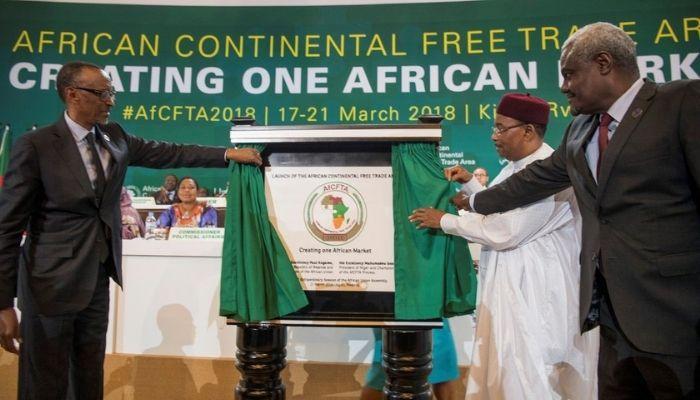
Stakeholders in Nigeria’s trade and maritime sector have continued to react to findings by Shipping Position Daily that Nigeria has issued only about 37 Certificates of Origin under the African Continental Free Trade Area (AfCFTA), compared to more than 4,000 issued by South Africa, deepening debate over the country’s readiness to fully benefit from the continental trade framework.
While the initial report raised concerns about weak implementation and poor utilisation of the AfCFTA framework in Nigeria, new reactions from industry leaders suggest that the issue cuts across competitiveness challenges, regulatory caution, and structural infrastructure gaps.
Speaking on the development, the Chief Executive Officer of the Centre for the Promotion of Private Enterprise (CPPE), Dr. Muda Yusuf, attributed Nigeria’s low participation to weak export competitiveness, particularly in the non-oil sector.
According to him, Nigeria’s export base remains heavily dependent on crude oil and primary commodities, while manufactured exports—which are key beneficiaries of preferential trade agreements—remain limited due to structural constraints.
He explained that despite repeated policy emphasis on value addition, Nigerian manufacturers continue to face high production costs, inadequate infrastructure, and logistics bottlenecks that undermine their competitiveness in regional markets.
“Competitiveness is the real issue,” Yusuf said. “We are still extremely weak in manufactured exports. Most of what we export is primary products. The entrepreneurs are willing, but many of the constraints are outside their control.”
He added that while trade facilitation reforms such as digital platforms and single-window systems are ongoing, they are not sufficient to resolve deeper structural challenges affecting production and export capacity.
Yusuf also rejected suggestions that the Nigeria Customs Service should be blamed for the low issuance of Certificates of Origin, stressing that the real limitation lies in the country’s export structure.
However, Vice President of the Manufacturers Association of Nigeria (MAN), Mr. John Aluya, offered a different perspective, linking the slow issuance of certificates to strict compliance with AfCFTA Rules of Origin.
According to him, the certification process is deliberately rigorous to ensure that only products meeting the required local content threshold qualify for preferential trade treatment.
He explained that manufacturers must demonstrate that a significant proportion of raw materials used in production originate locally before certification is granted.
“The Rule of Origin is a complicated issue in trade,” Aluya said. “We are being very careful to ensure compliance. That is why the process appears slow. We do not want to compromise standards.”
He further argued that Nigeria’s cautious approach may be necessary to preserve the integrity of the AfCFTA framework, noting that there are ongoing disputes among African countries regarding the interpretation of origin rules and local content thresholds.
Aluya suggested that some countries with higher certificate volumes may not necessarily have stricter verification processes, raising questions about uniformity in implementation across the continent.
He called for stronger government-to-government engagement to ensure harmonised application of AfCFTA rules among member states.
Adding a broader structural dimension to the debate, a Chieftain of the Association of Nigerian Licensed Customs Agents (ANLCA), Mr. Pius Ujubuonu, said AfCFTA was designed to promote seamless regional cooperation and expose hidden economic potentials across participating countries.
He noted that trade liberalisation under AfCFTA is intended to reward countries that deliberately invest in infrastructure and economic accessibility, while exposing weaknesses in those that fail to do so.
“Trade without boundaries is intended to create seamless regional cooperation,” he said. “Any participant that does not pay special attention to building structures that give it trade advantage will most likely become an audience, not a player.”
Ujubuonu argued that Nigeria’s economic structure is already divided into distinct comparative advantage zones, particularly the blue economy and terrestrial logistics systems.
He explained that the maritime sector, which represents Nigeria’s blue economy, offers significant but underutilised opportunities, while road and rail infrastructure remain critical to inland trade development.
According to him, Nigeria must intensify efforts to identify and strengthen its areas of comparative advantage, particularly within its maritime and aquatic ecosystems, to enhance its role in regional trade.
He further noted that Nigeria is not performing poorly in its efforts to integrate into regional trade, but must take more intentional steps to consolidate its strengths and address infrastructural deficits.
The differing perspectives highlight the complexity surrounding Nigeria’s low utilisation of AfCFTA Certificates of Origin.
While some stakeholders point to weak competitiveness and structural economic constraints, others emphasise strict compliance requirements and infrastructural limitations as key influencing factors.
Despite the divergent views, there is a growing consensus that Nigeria must accelerate reforms in manufacturing, logistics, trade facilitation, and infrastructure development if it is to move from the margins to a more dominant position within Africa’s emerging single market.