By Oluyinka Onigbinde
In the wake of the disappointing outcomes of an earlier attempt, the Federal Government is contemplating the re-establishment of a National Flag Fleet, which sources disclosed is aimed at safeguarding local shipowners against escalating foreign competition in the maritime sector.
Findings by Shipping Position Daily have revealed that the proposed National Flag Fleet will consist of privately-owned vessels registered and pooled together under the Nigerian flag, thereby ensuring that local operators are prioritized for domestic affreightment of cargoes, particularly in the lucrative movement of petroleum products.
The urgency for this initiative, our correspondent gathered, has heightened as the Nigerian economy continues to grapple with the challenges posed by global shipping dynamics.
The renewed idea of a National Flag Fleet is coming about two years after the then Minister of Transportation; Muazu Sambo received the report of a similar committee on the establishment of a National Fleet.
While submitting the report, the then-Executive Secretary, Nigerian Shippers’ Council, and Chairman, Nigerian Fleet Implementation Committee (NFIC), Emmanuel Jime, said the Committee was constituted by the immediate past Minister of Transportation, Mr Chibuike Rotimi Amaechi, to implement the recommendations in the report by an earlier Ministerial Committee on Modalities for the Establishment of a Nigerian Fleet. He was represented by the Managing Director, Sea Transport Group and a member of the committee; Mr Aminu Umar
While turning-in its interim report to the Minister of Transportation, the committee recommended the establishment of a strong and sustainable national fleet for Nigeria’s maritime industry.
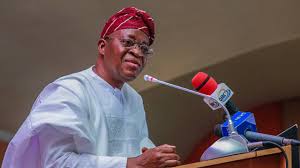
Investigations by our correspondent revealed that, at a meeting held recently, the Minister of Marine and Blue Economy, Adegboyega Oyetola, urged ship owners and maritime industry stakeholders to discuss the framework for this initiative.
A shipowner who attended the meeting but pleaded anonymity, articulated a sense of cautious optimism about the prospects of the National Flag Fleet.
“At the meeting, the Minister emphasized the need for collaboration between the government and shipowners. He acknowledged the challenges we face and encouraged us to present our ideas on how the National Flag Fleet can be effectively implemented to benefit local operators.”
However, while there is hope, the shipowner expressed deep concerns that the government must ensure that the initiative does not become another unfulfilled promise. “We need the Nigerian government to protect our interests, especially with the Dangote refinery set to produce massive volumes of refined oil.”
Confirming the planned National Flag fleet arrangement, Dr. Edward Sowho, a ship owner and chieftain of Nigerian Shipowners Association (NISA) elaborated on the distinctions between the proposed National Flag Fleet and the moribund National Carrier initiative, which had garnered much public attention but ultimately failed to materialize.
“The difference lies primarily in ownership and operational structure,” he explained. “In the case of the national line, the federal government typically owned the majority of shares or even 100%. But with a national flag carrier, the government would own a minority share; perhaps less than 10%.”
He highlighted that while discussions are ongoing, the initiative is still in its elementary stage. “This is a significant development, but we must ensure it progresses effectively, with real commitments from all parties involved,” he stressed.
Prince Ayorinde Adedoyin, a ship owner and member of the NISA however, raised critical questions about the feasibility of forming a united front among local operators.
“What assets do we have?” he queried, emphasizing the pressing need to assess the current capabilities of Nigerian ship owners. “This is the most important thing. Coming together may not be the right solution if there isn’t a defined strategy.”
Adedoyin articulated concerns about the complexities of merging different companies; each with its unique interests and business models. “If you’re putting about 20 or 25 people together, how do you create a concept that makes everyone comfortable? These are all crucial issues that need to be defined and resolved to ensure effective collaboration.”
Adding to the discourse, another shipowner; Mr Lawrence Abati echoed sentiments of skepticism regarding the government’s commitment to supporting local shipowners. “We’ve seen many initiatives that started with great promise but fell flat,” he remarked.
“What guarantees do we have that this will be any different? There has to be a clear plan, not just talk. Without a robust framework that genuinely addresses the needs of local operators, we risk repeating past mistakes.”
He further pointed out the potential pitfalls of establishing a national fleet without addressing existing challenges in the sector. “We have to consider the realities on the ground,” he said. “There’s a lot of competition out there, and many local operators are already struggling to keep their heads above water. If the government is serious about this initiative, they must provide the necessary support, such as access to financing, infrastructure development, and incentives to ensure a level playing field for local operators.”
He cautioned against relying solely on partnerships with foreign ship owners. “While partnerships might seem attractive, they often result in profits flowing out of Nigeria, rather than benefiting our economy,” he noted. “We need to focus on empowering local operators, so they can thrive and contribute to the nation’s maritime sector. If we fail to build our capacity, we risk being overshadowed by foreign entities.”