Findings by Shipping Position Daily have revealed that truck drivers accessing Lagos ports are beginning to experience relief from years of harassment and multiple illegal levies, for which major stakeholders commended the introduction of a harmonized daily charge by the Lagos State Truck and Cargo Operators Committee (LASTCOC).
Speaking on the development, a Chieftain and member of the committee, Mr. Seyi Adekanbi, revealed that while incidents of extortion by hoodlums and multiple checkpoints along port access roads have not been completely eradicated, there has been a significant decline compared to the past.
Before the intervention, truckers plying routes from Apapa to destinations like Ikorodu were often forced to part with between ₦30,000 and ₦40,000 in multiple payments to different local government agents and roadside gangs.
Adekanbi explained that LASTCOC has now introduced a harmonized levy of ₦3,000 per truck, payable once per day, which covers the entire journey without further payments at any point. “Once you pay it in a day, you don’t pay anywhere else. In fact, the truckers have not had it so good,” he stated.
He, however, admitted that some “pockets of resistance” still exist, particularly at night, when hoodlums take advantage of limited security coverage. These lingering challenges, he noted, are being tackled gradually through targeted enforcement, with zonal leaders mobilizing security agents to intervene whenever incidents occur.
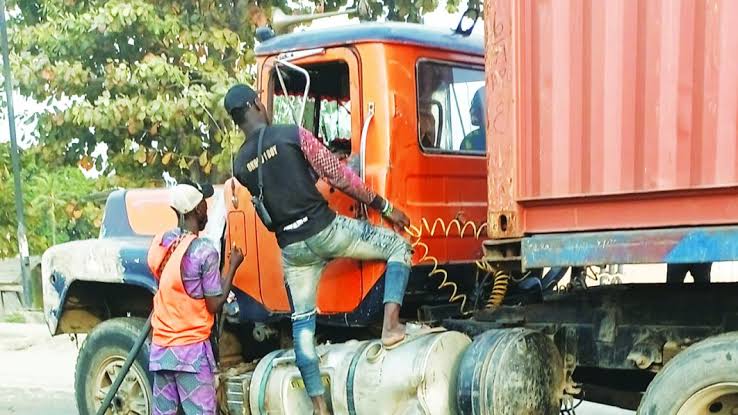
According to Adekanmbi, proceeds from the harmonized levy are used to sustain enforcement operations, including logistics for rapid response and Police deployment to trouble spots. He stressed that the committee’s long-term goal is to completely eliminate thuggery and illegal toll collection on port access roads across Lagos State, ensuring a safer and more predictable environment for truckers and cargo operators.
Speaking on the committee’s operational challenges, Adekambi, revealed that the body is currently running at a financial deficit despite the introduction of a harmonized ₦3,000 daily levy for trucks. According to him, the committee had deliberately discouraged the practice of stopping trucks on the road to collect dues, advocating instead for payments to be made at designated terminals. However, he lamented that most terminals have not been cooperating, making it difficult to collect the necessary levies to fund enforcement operations.
“Thank God, members of the committee are people of means; that is why we have been able to stay afloat. For now, we are operating largely from our individual resources. We can’t allow ourselves to go back to the old days of harassment and illegal toll collection, so we are working round-the-clock to find sustainable solutions.”Adekambi explained.
On his part, the Secretary General of Association of Maritime Truck Owners (AMATO).Mr. Muhammed Sani Bala noted that a series of complaints from trucking unions and associations had prompted a coordinated response aimed at eliminating obstacles that hinder cargo evacuation and frustrate ease of doing business at the ports.
According to Muhammed, these interventions have led to a significant reduction in the activities of what he described as “governmental and non-governmental extortion bandits” who had previously mounted multiple checkpoints on logistics corridors.
“This proactive approach has brought about a notable decline in the number of illegal roadblocks targeting truckers. However, the problem has not been completely eradicated. There are still some checkpoints within and outside the Apapa logistics rings where our members face extortion despite possessing valid call-ups to access the ports.” he explained.
The AMATO scribe stressed that the association remains committed to eradicating the menace, pledging continued engagement with relevant authorities and collaboration with other stakeholders until extortion on port access roads is reduced to the barest minimum. He however dismissed claims regarding any alleged “sharing formula” among union groups, stating that he had no knowledge of such arrangements.