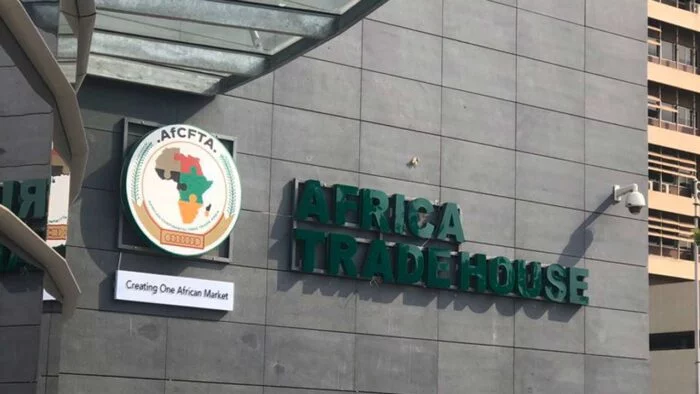
The Federal Government has intensified efforts to ensure that Nigeria fully harnesses the opportunities presented by the African Continental Free Trade Area (AfCFTA), with a renewed focus on building the technical capacity of trade agencies and private-sector operators to effectively implement the agreement and position the country as a leading player in intra-African commerce.
The National Coordinator of the Nigeria AfCFTA Coordination Office, Mr. Olusegun Awolowo, said the government has stepped up implementation through an advanced training initiative on the Rules of Origin — a vital component that determines goods’ eligibility for preferential treatment under AfCFTA.
Awolowo explained that the initiative is part of a strategic partnership with the World Customs Organisation (WCO) under the EU-WCO Rules of Origin for Africa Programme and is being facilitated by the Nigeria Customs Service, led by Comptroller-General Adewale Adeniyi. He noted that the training reflects the Tinubu administration’s determination to make AfCFTA work for Nigerian manufacturers, exporters, and service providers.
According to him, the renewed effort aligns with President Bola Tinubu’s Renewed Hope Agenda, which prioritises economic diversification, industrial expansion, and regional integration. Awolowo maintained that effective implementation of AfCFTA could increase Nigeria’s Gross Domestic Product (GDP) by as much as 40 per cent by 2030 if the right structures and human capacity are developed.
“In line with President Tinubu’s mandate, we are driving AfCFTA implementation through targeted capacity building for businesses and developing a new cadre of experts who understand the practical application of the AfCFTA Rules of Origin,” Awolowo said. “This initiative forms part of a nationwide intervention aimed at demystifying AfCFTA instruments for Nigerian enterprises and ensuring that our private-sector players can compete effectively within Africa’s single market.”
He added that the programme aims to empower Nigerian enterprises to master product-specific rules, enhance compliance with trade requirements, and gain greater access to markets across the continent.
Awolowo stressed that without building local expertise, other African countries could benefit more from AfCFTA than Nigeria. He said the Coordination Office is working closely with the Customs Service and private sector to ensure local businesses are not left behind as Africa moves toward a borderless trade environment.
Also speaking, a representative of the WCO, Ms. Faith Mathenge, highlighted the importance of human capital development in unlocking AfCFTA’s full potential. She said the WCO and European Union are providing technical assistance and continuous training to bridge knowledge gaps in Rules of Origin and customs procedures.
Mathenge noted that the EU-WCO Programme aims to enhance the capacity of customs administrations and private operators to implement AfCFTA efficiently. She said Nigeria’s active participation demonstrates its commitment to regional trade integration and competitiveness.
“The EU-WCO Origin for Africa Programme is fully committed to supporting the Nigeria AfCFTA Coordination Office and its stakeholders,” she said. “We will continue to provide technical assistance, knowledge exchange, and institutional support to ensure that Nigeria maximises AfCFTA’s immense opportunities.”
Representing the National Coordinator, Mr. Olusegun Olutayo, a senior trade expert, reaffirmed that a deeper understanding of Rules of Origin would help local industries reduce dependence on imports, expand production, and compete favourably in the continental market. He emphasized that Nigeria’s vast population and industrial potential give it a natural advantage in AfCFTA, provided its human and institutional capacities are well developed.