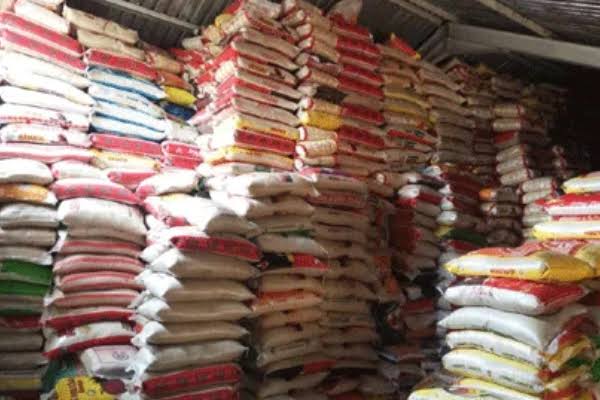
Nigeria is witnessing a sweeping decline in the price of foreign parboiled rice across major markets even as the Nigeria Customs Service (NCS) intensifies its technology-driven border security operations ahead of the yuletide season.
Market findings by Shipping Position Daily show that the price of a 50kg bag of foreign rice—sold for between ₦90,000 and ₦100,000 in December 2024, has fallen sharply to ₦55,000 to ₦70,000 nationwide. In key border communities, prices are as low as ₦49,000 to ₦50,000.
The unexpected price drop has stirred conversations among traders and border stakeholders, many of whom say the trend is unusual at a time when Customs enforcement has been significantly strengthened.
Former Chairman of the Seme Chapter of the Association of Nigerian Licensed Customs Agents (ANLCA), Onyekachi Ojinma, told Shipping Position Daily that while the cheaper prices offer relief to consumers, they have also raised curiosity about supply patterns.
“In Imo State today, foreign rice is between ₦50,000 and ₦55,000. In Lagos, it goes for ₦60,000 to ₦62,000,” he said. “But at the Seme border, enforcement is extremely tight. Not even a cup of rice passes through officially. So people are naturally asking what is driving the current market prices.”
Ojinma noted that although small-scale re-bagging occurs in spots such as Badagry and Okokomaiko (in Lagos state), this does not fully explain the nationwide trend. He suggested that alternative supply routes, particularly around the Kano–Niger corridor, may be influencing market dynamics.
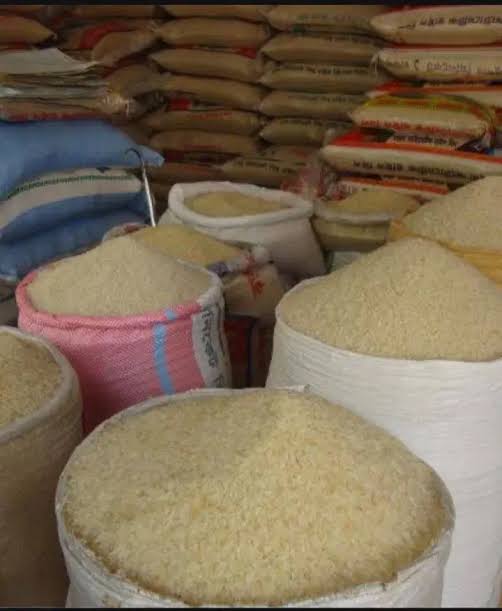
In Badagry, local trader Senayon Ajose confirmed that while Customs has intensified patrols and surveillance in recent weeks, the movement of foreign rice into markets has not stopped completely.
“After the recent incidents, enforcement became visibly tougher,” she said. “But the product still finds its way into markets, which is why prices in Badagry are now around ₦49,000 to ₦50,000.”
Meanwhile, the Nigeria Customs Service maintains that border tightening is being reinforced through modern, intelligence-led approaches. National Public Relations Officer, Abdullahi Maiwada, said the Service has deployed advanced tools such as geospatial intelligence, satellite tracking and real-time analytics to identify and intercept suspicious movements without disrupting legitimate trade.
“It is not every strategy that can be openly discussed, but our operations are now more precise and intelligence-driven,” he noted. “We have also stepped up sensitisation to discourage smuggling and to protect local industries, food security, and public health”, he said.
Maiwada added that the Federal Operations Units across various zones have been reinforced to respond rapidly as smugglers typically become more active during the festive season.
While consumers welcome the lower prices, traders and analysts say the underlying supply dynamics will remain an issue of interest as the yuletide rush intensifies