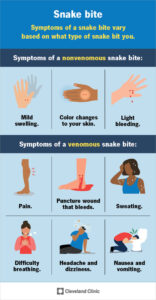
Dr Chukwuma Anyaike, a retired Director of Public Health in the Federal Ministry of Health, has warned that snakebite envenoming, classified as a highest-priority Neglected Tropical Disease (NTD), is a major public health threat in Nigeria.
Anyaike, said this in an interview with the News Agency of Nigeria (NAN) on Monday in Abuja, describing snakebite as a “silent killer” that disproportionately affects farmers, herders and rural dwellers, groups critical to the nation’s food security and economic stability.
Recent data presented during the World NTD Day 2026 indicate that Nigeria remains one of the world’s high-burden countries for snakebite envenoming, with the Carpet Viper (Echis ocellatus) accounting for over 60 per cent of reported cases.
He noted that inspite of the availability of effective treatment, outcomes remain poor due to delayed hospital presentation, inadequate health facility capacity and widespread reliance on traditional remedies.
“About 82 per cent of snakebite victims first seek traditional treatment. “These delays significantly increase the risk of death or permanent disability,” he said.
He emphasised that snakebite is not just a medical emergency but a socio-economic crisis.
“When a farmer is bitten, the impact goes beyond the individual. It affects household income, food production, and community resilience,” he said.
According to him, findings also reveal that nearly half of health facilities in high-burden areas lack the full capacity to administer antivenom, citing shortages of trained personnel, cold-chain systems and consistent antivenom supply.
“Specialised centres such as the Kaltungo Snakebite Hospital in Gombe State, as well as facilities in Bauchi State, have become referral points for severe cases, highlighting the limited distribution of functional snakebite treatment centres across the country,”.
He stressed that prevention remains one of the most effective strategies to reduce snakebite incidence, particularly among farmers and rural residents.
He advised residents to use torches or flashlights when walking outdoors at night, wear thick knee-high boots and long trousers when working on farms or in tall grass, and keep surroundings free of debris, woodpiles and overgrown weeds where snakes often hide.
He also highlighted the importance of a correct first-aid response in the event of a bite. “If a bite occurs, time is life. Victims should stay calm, move away from the snake, immobilise the affected limb and seek immediate medical care,” he said.
He cautioned against harmful practices such as tying tourniquets, cutting or sucking the wound, and applying herbs, noting that such actions often worsen injuries and increase the likelihood of infection and amputation.
“These practices do not neutralise venom. Delays in getting antivenom remain the leading cause of snakebite deaths in Nigeria,” he said.
He called for improved antivenom access, strengthened rural health infrastructure, and sustained public awareness campaigns as Nigeria aligns with the World Health Organisation’s target of halving snakebite deaths and disabilities by 2030.
He urged governments, development partners and communities to treat snakebite envenoming with urgency, stressing that awareness, early treatment and health system investment could save thousands of lives annually/
The WHO also said Nigeria is among the countries worst affected by snakebites, with an estimated 15,000 to 20,000 cases and roughly 2,000 deaths annually.
Some estimates of the WHO, suggested that the burden was higher, with 43,000 cases and 1,900 deaths reported in 2025 data.
—-How To Keep Snakes Away From Your Home—–
Snakes do not like the hot temperature of harmattan any more than most of us do. In fact, on particularly hot days, snakes have to scramble for refuge in cooler places or they will overheat and die.
Therefore, you might run into snakes as they move back and forth from sunny places to shade.
Snakes come to your home for the cover, moisture, darkness, and food it provides. To drive them away, you have to take all these things away from them. Take as many steps to deprive snakes of cover in your home as possible.
- Cut the grass short, clear bushes around your house. Snakes hate feeling exposed and avoid open, highly-visible areas.
- Inspect your home, paying special attention to the gaps under the door. Seal cracks in the foundation of your house or wall and patch the holes.
- Move your wood piles, these are great spots for snakes as they hate being exposed.
- Avoid opening your front doors, leaving your windows open for too long (some of these snakes can reach high heights and they are very quiet, you would not see or hear them enter your house.
- Before sitting under that tree that has that cooling shades, check if there are no snakes lurking around the branches, they love the cool shades too.
- Check your bed, under your sheets and surrounding before going to bed.
- Avoid chilling outside the house with mattresses, mats, and wrappers in the evening.
- Get a snake repellent.
What to do if bitten by a snake
- Give analgesic for local pain which may be severe, and might be helpful for calming effects.
- The site of the bite should be wiped but not incised, because incisions can aggravate bleeding.
- Remove anything tight from around the bitten part of the body.
- Avoid traditional first aid methods, herbal medicines and other unproven or unsafe forms of first aid.
- Transport the person bitten to a health facility as soon as possible.
- Vomiting may occur, so place the person on their left side in the recovery position.
- Closely monitor airway and breathing and be ready to resuscitate if necessary.
- If the snake has been killed, it should be taken along to the hospital, in order to identify if it is poisonous or not and what kind of anti-poison is most appropriate.
- During transit, the body generally and the bitten limb, in particular, should be moved as little as possible, to minimise the spread of venom.