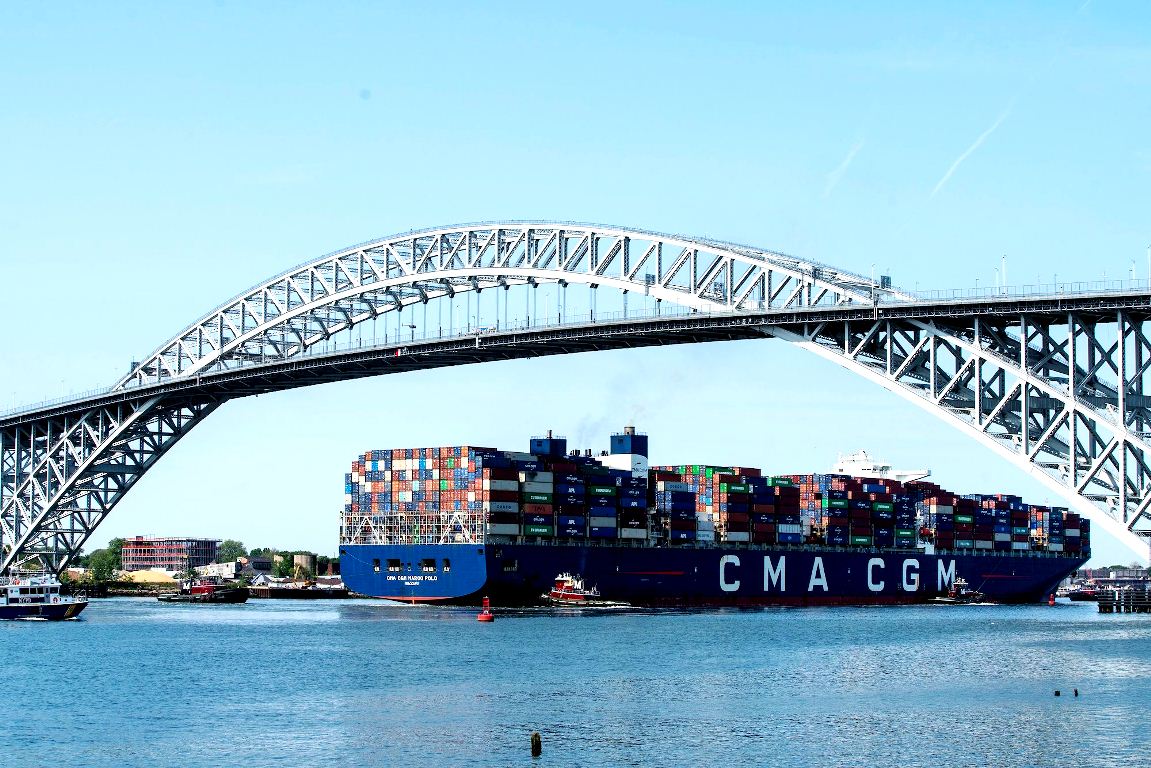
Importers and freight forwarders have strongly condemned the $500 peak season surcharge recently introduced by French shipping giant, CMA CGM, on cargoes destined for Nigeria and other West African ports, describing the levy as exploitative and inimical to trade.
Recall that CMA CGM, in a statement posted on its website last week, said the surcharge will take effect from September 15, 2025, and will remain in force until further notice.
According to the company, the charges will apply to twenty-foot equivalent units (TEUs) of dry and reefer cargoes under short-term contracts from North East Asia, South East Asia, China, and Hong Kong & Macau SAR. The company explained that the surcharge was being introduced “in a continued effort to provide customers with reliable and efficient services” during the peak season period.
But Nigerian traders and freight forwarders have cried out, warning that it will add to costs at the ports and frustrate government’s drive to ease the cost of doing business.
In a chat with our correspondent an importer at the Alaba International Market, Emmanuel Amaife, described the surcharge as “a terrible thing” that will directly impact businesses and consumers.
“To me, it’s like selling a product at N300, then suddenly adding another N100 just because people are buying more. It will raise the cost of doing business, increase the price of goods and services, and undermine government’s efforts to reduce the cost of doing business,” he said.
He called on the Nigerian Shippers’ Council, the National Assembly, and other government agencies to intervene, warning that the surcharge will eventually affect not only importers, but also manufacturers and local producers who may rely on imported raw materials.
Former National Secretary of the Association of Nigerian Licensed Customs Agents (ANLCA), Babatunde Mukaila, also faulted the decision, describing it as illogical.
“I see this as an antithetical situation. How do you surcharge customers with peak purchases?” he queried.
On his part, the Deputy President of the National Association of Government Approved Freight Forwarders (NAGAFF), Segun Musa, said the levy would have far-reaching implications.
“It is going to add to the cost of doing business, and it is going to frustrate the efforts of the government in reducing the cost of doing business in the port. It might look small, but it is a lot of money when you add it to the cost of importing into Nigeria,” Musa said.
Also reacting, a former interim National President of ANLCA, Pius Ujubuonu, who is now Head of Planning and Strategy at the association, described the surcharge as “absolute exploitation.”
“Peak service surcharge is supposed to be to their (CMA CGM) own advantage since they are having more transactions, but instead of raking in the profit, they now want to exploit the people who are at that particular time they are having a boom. Just like the bill they charge for the War Risk Insurance premium. The problem we are having is that we have a Nigerian Shippers’ Council that does not know what step to take and what not to take. We will call the attention of the NSC to it,” he said.
A clearing agent at Tin Can Island Port, who simply identified himself as Mr. Olatunji, Muftau also told Shipping Position Daily that the surcharge would be counterproductive to Nigeria’s economic recovery efforts. “Importers are already struggling with high exchange rates and multiple charges at the ports. Adding $500 per container will make things worse and discourage trade. The regulators need to rise up to their responsibility,” he said.