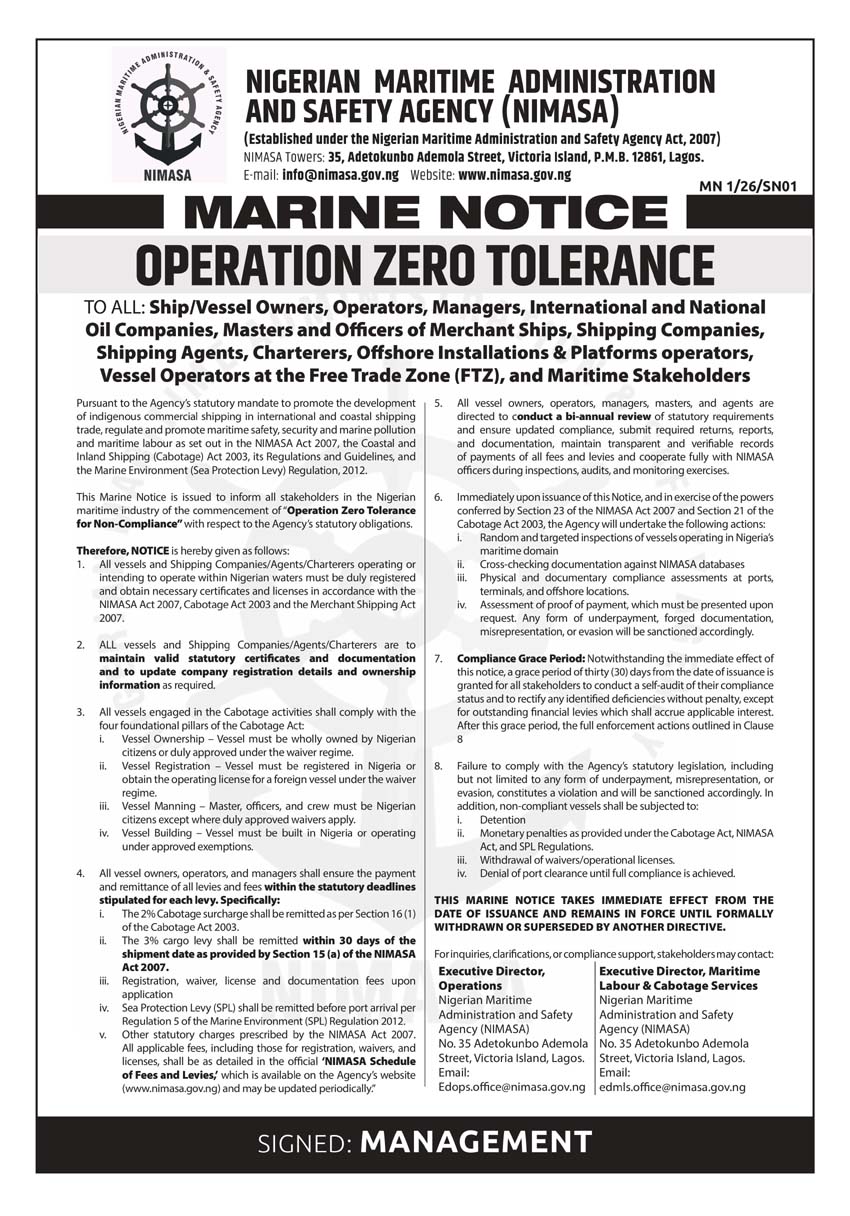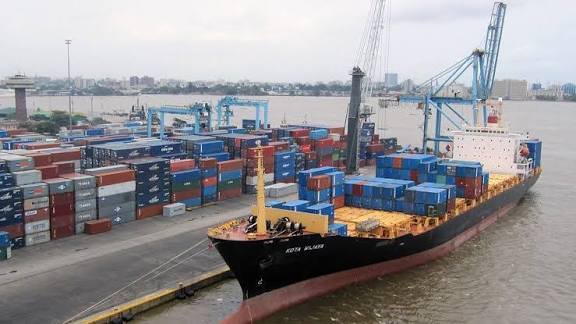
Boat operators in Nigeria’s inland waterways are calling on the National Assembly to amend the Cabotage Act to enable indigenous boat owners access the Cabotage Vessel Financing Fund (CVFF), improve vessel safety, and strengthen local maritime capacity, even as they cited declining indigenous fleet numbers and rising boat accidents as urgent reasons for reform.
Experts have further argued that if the fund is insufficient to acquire large ocean-going vessels due to high capital requirements, it would be pragmatic to allocate part of it towards inland waterways, where the impact on safety and operational capacity would be more immediate and significant. With inflows into the CVFF valued at around $700 million, they noted that its proper deployment could substantially strengthen indigenous capacity, improve safety standards, and restore public confidence in Nigeria’s water transportation system.
Speaking exclusively with Shipping Position Daily last week, Head of Desk, Corporate Communication and Strategy at Sustainable Waterways Awareness Advancement Advocacy (SWAAADO), Chief Gold Raymond noted that over the past two decades, the CVFF was originally intended to promote indigenous ship ownership and provide credit facilities to maritime operators, including those operating inland water transport.
Chief Gold noted that a recent research report commissioned by SWAAADO revealed that approximately $700 million has been accumulated for CVFF, highlighting that inland ferry services and coastal mass transportation fall within the mandate of the CVFF, supporting the inclusion of local boat operators under the scheme.
According to him, the report also cites successful implementation of similar projects in countries such as India, the Philippines, and Tanzania, where funds initially meant for seagoing ships were partially redirected to improve the safety and quality of vessels used for local transportation. He argued that, these initiatives delivered positive results, demonstrating that strategic deployment of such funds can enhance maritime capacity and public safety.
Citing directly from the report, Gold said: “The coastal inland shipping lines capitalized and defined sea areas for post-worldly purposes as promoting indigenous ship ownership and providing credit facilities to maritime operators, including inland operators. Perseverance ferries for mass transportation clearly fall within this mandate, especially for coastal and inland waterways.” He emphasized that this clearly supports the inclusion of local boat operators under the fund’s provisions.
SWAAADO’s proposal includes a revolving loan scheme that would enable boat operators to acquire standard vessels and repay the loans over a period of five to 10 years. The organisation stressed that flexibility in the interpretation of the fund’s provisions is critical to addressing the ongoing safety challenges on Nigeria’s waterways.
The report also notes a sharp decline in Nigeria’s indigenous fleet, from approximately 24 active vessels in 2005, to fewer than four in 2024. This reduction, according to him, has contributed to widespread unemployment among more than 4,000 trained Nigerian seafarers and has coincided with over 3,000 boat accidents in the past decade, highlighting the urgent need for investment in safer, standardised vessels.
Chief Gold however called on the National Assembly to urgently review the Cabotage Act to allow indigenous boat operators to benefit from the CVFF for the acquisition of standard vessels and enhancement of safety on Nigeria’s inland waterways.
Also speaking, Larry Osaeren a board member Waterfront Boat Owners and Transporters Association of Nigeria (WABOTAN) supported the call for amendment of the Cabotage Act, stating that boats used on inland waterways and coastal routes are conventional means of transportation and should not be exempted from benefiting under the law. He described the frequent loss of lives in boat mishaps as unacceptable, noting that the death of even one breadwinner can destabilize an entire family.
Osaeren further argued that if the fund may not be sufficient to acquire large ocean-going vessels due to high capital requirements, it would be pragmatic to channel part of it towards strengthening inland water transport, where the impact would be more immediate and visible.