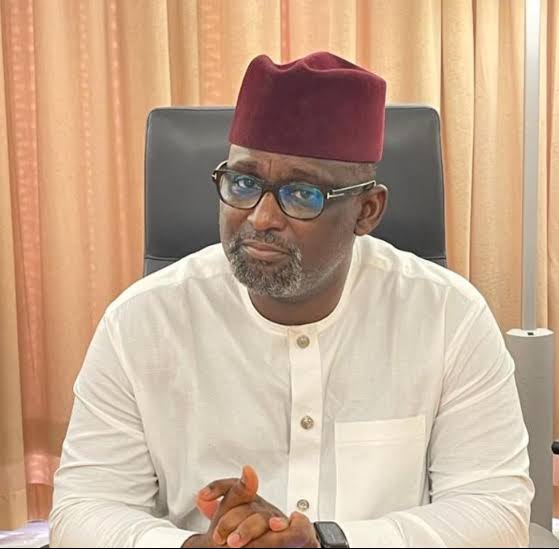
In this interview, Managing Director of NLNG Shipping and Marine Services Limited (NSML), Abdul-Kadir Ahmed, engages our Assistant Editor; Oluyinka Onigbinde on the company’s efforts to strengthen Nigeria’s maritime manpower capacity through internationally accredited training programmes at the Maritime Centre of Excellence (MCOE). He speaks on NSML’s collaboration with NIMASA in supporting the Nigerian Seafarers Development Programme (NSDP), the significance of domesticated maritime certifications, opportunities for Nigerian seafarers, environmental sustainability initiatives, and the critical role of human capital development in advancing the nation’s blue economy.
· We have actively supported sea-time opportunities for NSDP
· A successful blue economy depends heavily on human capacity
NSML has consistently supported maritime journalism training. Are there plans to expand this support?
Capacity development remains a critical aspect of industry growth. Over the years, we have supported workshops, conferences, and training programmes for maritime journalists because we believe the media plays a vital role in shaping public understanding of the industry. Training is not a one-off exercise. It is a continuous process that requires sustainability and collective effort. We are constantly exploring additional ways to create platforms where journalists can better understand the nuances of the maritime industry, including emerging global issues such as greenhouse gas emissions, energy transition, and environmental regulations championed by the International Maritime Organization (IMO). Understanding these developments enables journalists to report accurately and contribute meaningfully to policy discussions. We will continue to evaluate opportunities to expand our support in this area.
What impact will the Dynamic Positioning (DP) accreditation and the NSDP have on Nigeria’s maritime sector?
First and foremost, our relationship with the Nigerian Maritime Administration and Safety Agency remains very strong. NIMASA is the industry’s regulator, and we work closely with the agency on several initiatives, particularly in support of the Nigerian Seafarers Development Programme (NSDP). The NSDP provides foundational maritime education for cadets. Participants undergo academic training, obtain sea-time experience onboard vessels, and subsequently acquire Certificates of Competency (CoC). That framework remains unchanged. Dynamic Positioning certification represents a more advanced stage of professional development. It is a specialised qualification designed for seafarers who have already acquired foundational competencies and wish to advance into highly specialised operational areas.
The MCOE is not intended to replace primary maritime training institutions. Rather, it complements them by providing advanced maritime certifications, specialised courses, and recertification programmes that meet international standards. One of the major challenges facing Nigerian seafarers has been access to internationally recognised certifications. Historically, many professionals had to travel abroad to obtain such qualifications. Through MCOE, we are working to domesticate these certifications, making them more accessible and affordable while maintaining international standards.
How does MCOE complement the NSDP?
The NSDP comprises three key elements. The first is academic education. The second is sea-time experience onboard vessels. The third consists of mandatory professional courses and certifications. We have actively supported sea-time opportunities for NSDP cadets and continue to work closely with NIMASA in this regard. Additionally, we are investing heavily in obtaining international accreditations that allow more of these specialised courses to be delivered locally. International certification remains a critical requirement for seafarers seeking global employment opportunities. Without local accreditation centres, every candidate would have to travel overseas for training. Our goal is to eliminate that barrier by making internationally recognised maritime education available within Nigeria.
How many seafarers are currently being trained at MCOE?
The number varies depending on the programme because MCOE offers multiple courses across different levels and specialisations. There is no single training stream. For example, Dynamic Positioning alone consists of several courses, while other specialised maritime certifications cater to different professional needs and experience levels. What is important is that the centre continues to accommodate a significant number of trainees across various programmes, and the numbers continue to grow as additional accreditations are secured.
Can you tell us about your Corporate Social Responsibility initiatives?
Our flagship CSR initiative is the Clean Waterways Programme. The initiative is built around three pillars: awareness, advocacy and action. The awareness component focuses on educating the public about the dangers posed by indiscriminate disposal of waste and plastics into waterways. Such practices affect marine ecosystems, shipping operations, public health and environmental sustainability. The advocacy component involves engagement with government agencies, regulators and stakeholders to encourage stronger environmental policies and enforcement mechanisms. We believe measures such as restrictions on single-use plastics represent positive steps that should be strengthened nationwide.The third pillar is action. This includes cleanup exercises and practical interventions aimed at improving environmental conditions in and around waterways. While such activities alone cannot solve the problem, they represent important contributions toward addressing a longstanding environmental challenge. Beyond environmental sustainability, we also support community development through training opportunities, maritime education initiatives and skills development programmes.
What do these international accreditations mean for Nigeria’s maritime industry?
The significance is substantial. A successful blue economy depends heavily on human capacity. Infrastructure is important, but people remain the most critical asset. Without competent and properly trained professionals, industry growth becomes impossible. Nigeria has a population exceeding 200 million people, with a significant youth population. This presents enormous potential. However, potential alone is insufficient; it must be supported by quality education and internationally recognised training. The international accreditations secured by MCOE enable us to deliver world-class maritime education within Nigeria. This not only prepares Nigerian seafarers for international opportunities but also reduces the need for costly overseas training.
Currently, many maritime professionals travel to countries such as Ghana, South Africa, India, the United Kingdom and other European destinations for certification and recertification. This results in significant foreign exchange outflows. By offering equivalent certifications locally under internationally recognised standards, we can retain those resources within the Nigerian economy while providing the same quality of training.
What additional support is being provided for cadets?
We currently maintain partnerships with maritime academies to provide sea-time opportunities for cadets onboard our vessels. Additionally, we are sponsoring a fully funded cadetship programme involving 30 cadets. The programme covers academic training, sea-time experience and competency certification requirements. The initiative commenced in January and is expected to run until 2028. Our objective is to produce highly skilled maritime professionals capable of competing globally.
How much is Nigeria saving by domesticating these maritime training programmes?
It is difficult to provide a precise figure, because the maritime training ecosystem involves multiple stakeholders and variables. However, what is certain is that every certification delivered locally represents money that would otherwise have been spent abroad on tuition, visas, flights, accommodation, feeding and related expenses. Since obtaining our recent accreditations, several batches of trainees have already completed programmes locally, rather than travelling overseas. As we expand the range of accredited courses, the cumulative savings to both individuals and the national economy will continue to increase.
Is MCOE staffed by expatriates or Nigerians?
The centre is operated entirely by Nigerians. This reflects decades of investment in human capital development. Over the years, thousands of Nigerian seafarers have been trained to international standards, many of whom now occupy critical positions across offshore platforms, terminals and maritime operations. Our philosophy has always been to develop local talent. While trained personnel may sometimes move on to other organisations, the broader objective is to strengthen Nigeria’s maritime workforce as a whole.
What are the entry requirements for the specialised training programmes?
Requirements vary depending on the course and level of certification. Generally, maritime training follows a progressive structure comprising entry-level, intermediate and advanced or master-level qualifications. For specialised programmes such as Dynamic Positioning, candidates typically require prior maritime qualifications, including a Certificate of Competency (CoC), along with relevant sea-time experience. The Certificate of Competency functions similarly to a pilot’s licence in aviation. It certifies that an individual possesses the professional qualifications required to operate within the maritime industry. In Nigeria, these certificates are issued by NIMASA and serve as the foundation upon which advanced international certifications are built. As professionals gain experience, they become eligible for higher-level qualifications and specialised training programmes.
What are your Final Thoughts?
Our long-term vision is to transform MCOE into a globally recognised maritime training centre capable of delivering internationally accredited courses across multiple disciplines. Countries such as India and the Philippines have become leading exporters of maritime manpower because they invested heavily in training institutions and certification systems. Nigeria possesses the human resources to achieve similar success. By strengthening training infrastructure, expanding international accreditation, and increasing access to quality maritime education, we believe Nigeria can become a major supplier of highly skilled maritime professionals to the global industry.