For decades, Nasarawa State was defined by a paradox: It sat on a literal goldmine of solid minerals and shared a border with Nigeria’s power center, Abuja, yet it remained largely a “dormitory” for Federal Capital Territory (FCT) workers and a source of raw, unrefined ore.
However, a series of strategic shifts in 2025 and early 2026 indicate that the tide has turned. Nasarawa is no longer just waiting for greatness; it is building the infrastructure to command it.
The reason Nasarawa may now excel is the death of the “extract and export” model, which had been its bane for decades.
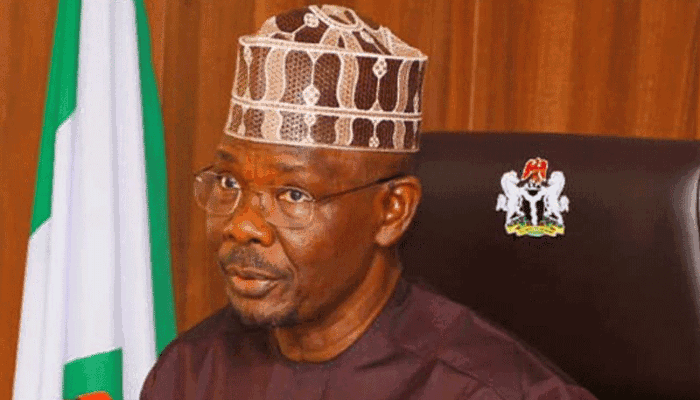
Under the leadership of Governor Abdullahi Sule, the state has enforced a value-addition policy. This has monumentally transformed the state’s economy.
For instance, the commissioning of the $250 million Ganfeng Lithium Industry plant and the Avatar New Energy Materials factory has turned the state into Africa’s lithium processing hub. By insisting that minerals be refined locally, Nasarawa is securing thousands of industrial jobs and ensuring that the “White Gold” revolution benefits not only the youths of Lafia, Karu, and Udege, but across the state. This is a remarkable departure from previous years, when such natural resources are mined locally, and shipped to refineries overseas.
Historically, the Karu-Mararaba axis was a bottleneck of vehicular and human traffic and unplanned settlements.
Today, it is being intentionally re-planned as a Silicon Corridor. The Nasarawa Technology Village (NTV) is a masterclass in Public-Private Partnership, training 10,000 youths in digital skills to service the FCT’s massive demand for tech talents. By providing world-class housing and high-speed internet within just minutes from the nation’s capital, Nasarawa is capturing the high-income residents and corporate taxes that used to slip through its fingers.
Execution is often where Nigerian states falter, but Nasarawa has backed its vision with law. The Harmonization and Administration of All Revenue Law 2025 has moved the state toward a ₦5 billion monthly IGR target by eliminating the “middlemen” of illegal taxation. This fiscal discipline, combined with the Nasarawa State Investment and Development Agency (NASIDA), has created a “one-stop-shop” for investors that is arguably the most efficient in Northern Nigeria.
Perhaps most crucially, the state has recognized that excellence is impossible without peace. By prioritizing the National Livestock Transformation Plan (NLTP) and deploying technology-driven surveillance along its borders with Benue and Kaduna states, the government is tackling the farmer-herder conflicts that once crippled its agricultural “Food Basket.”
Nasarawa’s excellence is no longer a matter of “if,” but of “how fast”. With a ₦545.2 billion budget for 2026 which is focused on completion and consolidation, the state has moved past the era of ground-breaking ceremonies into the era of commissioning and commerce.
Indeed, Nasarawa is no longer just a neighbour to the federal capital; it is fast becoming a capital of industry in its own right.