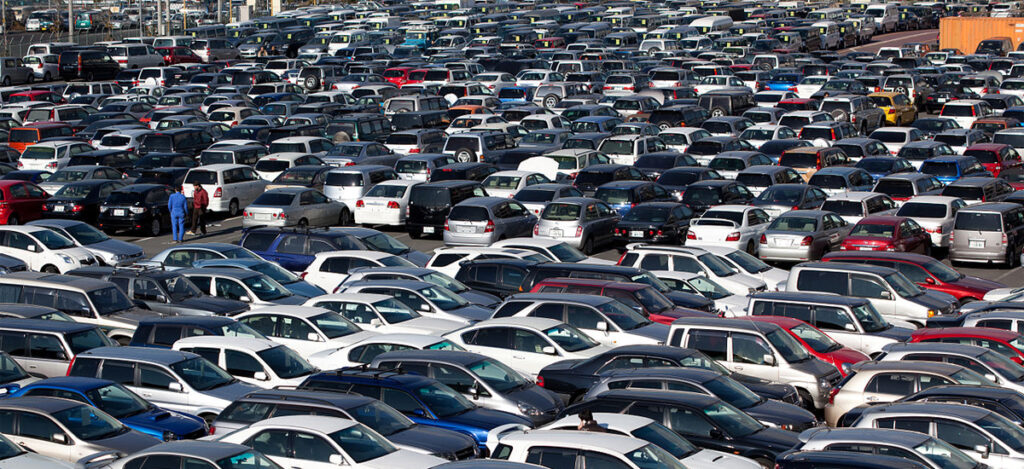
Findings by Shipping Position Daily have revealed that car imports into Nigeria declined significantly in 2024 as rising inflation, a weakening naira, and high import duties made vehicle importation more expensive.
According to the latest foreign trade report from the National Bureau of Statistics (NBS), our correspondent noted that the total value of imported passenger vehicles fell from ₦1.47 trillion in 2023 to ₦1.26 trillion in 2024, representing a sharp 14.3% decrease.
The decline marks a dramatic reversal from the previous year when vehicle imports surged by 124.7% amid increased demand and inventory buildup by auto dealers.
However, in 2024, findings by our correspondent revealed that harsh economic realities forced businesses and consumers to cut back on non-essential spending, with imported vehicles among the most affected.
For instance Nigeria recorded its worst inflationary year in decades, with headline inflation reaching 34.8% in December 2024, up from 24.7% in 2023. Food inflation also soared to 39.4%, pushing more Nigerians to prioritize basic needs such as food, rent, and healthcare over luxury purchases like vehicles.
The depreciation of the naira further worsened the situation, making imported cars even more expensive. The official exchange rate closed at ₦1,535/$ at the end of 2024, reflecting a 40.9% depreciation from ₦907.11/$ in 2023. The parallel market was even worse, with the naira falling 26.8% to ₦1,660/$ from ₦1,215/$ at the close of 2023.
Findings further revealed thatThe World Bank ranked the naira among the worst-performing currencies in Sub-Saharan Africa, citing strong demand for U.S. dollars, limited forex inflows, and delays in forex disbursement by the Central Bank of Nigeria (CBN).
Our correspondent who went round some auto dealers shops noted that the sharp drop in imports has affected car dealerships across Nigeria, with many struggling to sell their inventory.
A car dealer, in a chat with our correspondent lamented the downturn, stating that sales had dropped significantly since 2024.
He noted that customers are now prioritizing essential needs, and demand for vehicles has plummeted. He added that it now takes longer to sell a single unit, with some cars remaining unsold for months, while more Nigerians are opting for locally used vehicles due to rising clearing costs and import duties.
The General Manager of PTML, Tunde Keshinro, confirmed that high import duties have been a major factor discouraging car importation. He revealed that import volumes dropped from 45,000 units in the first half of 2023 to just 18,000 units in the first half of 2024, highlighting the impact of increasing levies and the rising cost of doing business.
Findings also show that with the cost of brand-new and foreign-used vehicles rising sharply, many Nigerians turned to the local second-hand car market. The trend reflects a shift in consumer behavior, as prospective buyers either delayed purchases or opted for more affordable locally-used cars.
A clearing agent and member of the Association of Nigerian Licensed Customs Agents (ANLCA), Fatai Ojo, in a chat with our correspondent noted that the decline in car imports reflects broader economic challenges facing the country.
He stated that as inflation and currency depreciation erode consumer purchasing power, more Nigerians are being forced to adjust their spending priorities.
Recall that the Federal Government has introduced policies aimed at reducing Nigeria’s dependence on imported vehicles, citing environmental concerns and the need to boost local car manufacturing.
However, higher levies and stricter regulations have further discouraged imports at a time when Nigerians can barely afford new vehicles. Critics argue that without affordable auto-financing schemes and a stronger local manufacturing sector, imported vehicles will remain the preferred choice for many Nigerians despite rising costs.
Stakeholders in the automobile industry warn that without significant improvements in the economy and policies that make vehicle ownership more accessible, the downward trend in car imports may persist for the foreseeable future.