 The Chairperson of the World Customs Organization (WCO) Council, Dr Adewale Adeniyi, said his recent election signals a broader recognition of the growing reform-driven credibility of African Customs administrations, with Nigeria’s recent modernization efforts serving as a strong example of the continent’s readiness to influence global customs policies.
Speaking exclusively on WCO Global interview session, Adeniyi said the confidence expressed in him by member nations reflects not only personal honour, but also the significant progress made by Nigeria in aligning its systems, procedures, and priorities with international best practices.
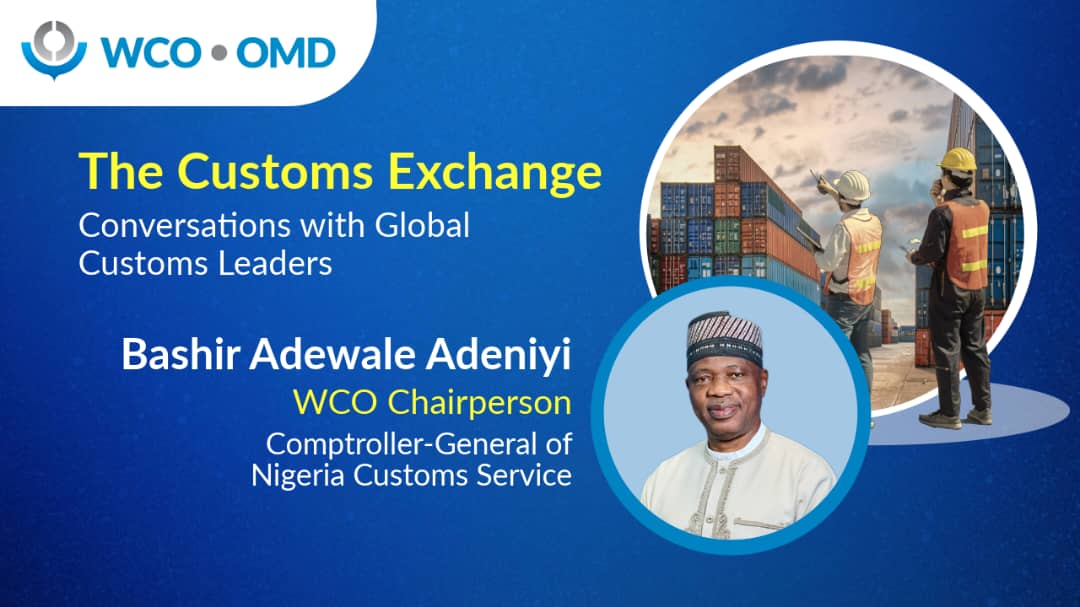
Answering questions on the WCO flagship interactive forum tagged “The Customs Exchange: Conversations with Global Customs Leaders, Adeniyi who is also, Comptroller General of the Nigeria Customs Service (NCS) said: “It’s a kind of endorsement by the global customs community that we are on track. We have been undertaking reforms and modernization programmes in the last two years, and this validates the direction we are taking.” he said.
He noted that Africa’s customs landscape is rapidly changing, with several administrations leveraging WCO guidance to strengthen trade facilitation, improve revenue outcomes, and enhance border security. Nigeria’s experience, he said, demonstrates how structured reforms, supported by international frameworks, can reposition a national customs service.
Speaking further on the Nigeria experience, Adeniyi pointed to the Authorised Economic Operator (AEO) programme as one of the most transformative initiatives Nigeria has implemented with support from the WCO. According to him, the scheme has reduced clearance times at ports, improved revenue performance and fostered trusted partnerships with compliant traders—outcomes that reflect the effectiveness of global standards when domesticated with commitment.
He described the SAFE Framework of Standards, the Time Release Study (TRS), and recent work on advance rulings as additional markers of how global customs programmes can change narratives, especially in developing economies.
Adeniyi also underscored the importance of the WCO as a stabilising force for customs administrations around the world, saying its ability to unify diverse countries around shared priorities—economic prosperity, national security, and environmental sustainability—makes it a unique institution.
He affirmed that his appointment as WCO is a honour for him and a recognition for the Nigeria Customs Service. He disclosed that the Nigerian Customs administration has been undertaking some reforms and mordernisation programmes in the last two years.
“So it will also mean that this appointment is a kind of validation of the reforms that we are doing. It a kind of endorsement by the global Customs community. that we are on track and we are aligning our priorities with that of World Customs Organisation”, he said.
On the appointment, he said, “I feel so excited. Of course, I know that it’s a very big responsibility on my part and on the part of Nigeria for us to shoulder this and provide quality leadership for the world Customs community
As the first Nigerian to hold the position in nearly two decades, Adeniyi said he is aware of the responsibility his chairmanship places on his country and the African region. He pledged to use the platform to elevate the continent’s contributions while fostering an inclusive governance approach within the global customs system.
He encouraged member administrations to continue embracing diversity, describing it as the core strength that will enable the WCO to advance global trade and security objectives. “Our uniqueness is our strength,” he said. “We must let this diversity continue to create opportunity and progress for us.” he noted.