The Nigerian Ports Authority (NPA) has intensified efforts to boost activities at the nation’s Eastern ports in a bid to decongest Lagos and strengthen Nigeria’s participation in the African Continental Free Trade Area (AfCFTA).
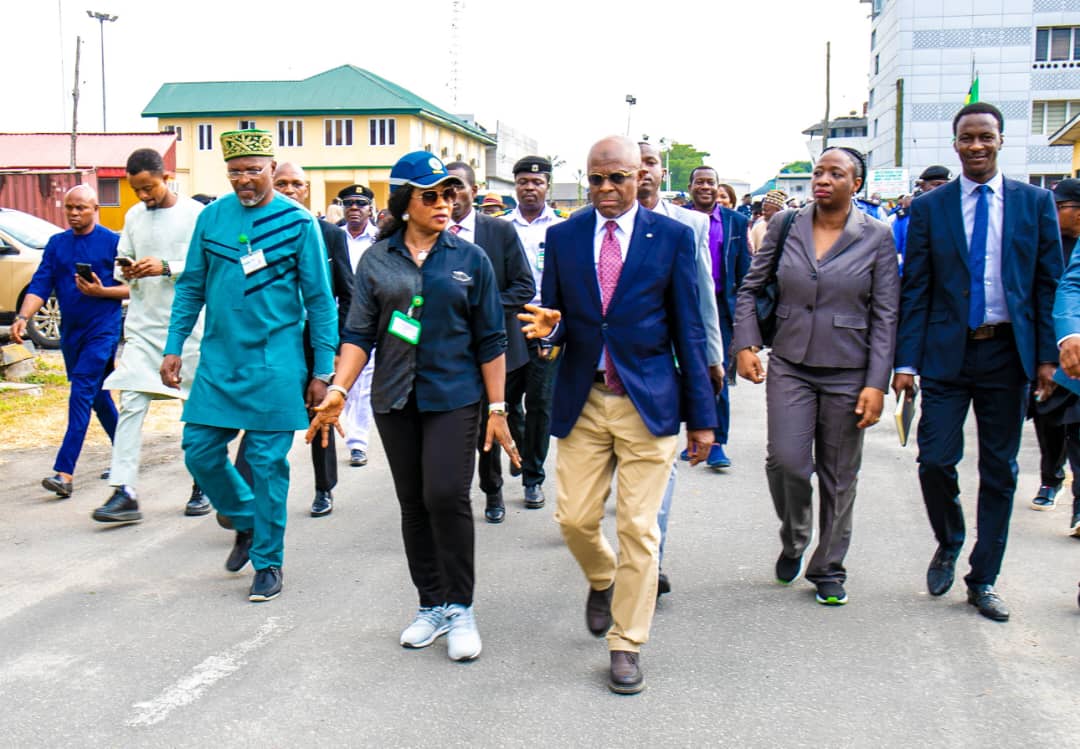
The Authority’s Managing Director, Dr. Abubakar Dantsoho, has introduced a series of reforms covering tariffs, infrastructure rehabilitation, security, and strategic partnerships to reposition the ports of Onne, Port Harcourt, Warri, and Calabar.
For decades, Lagos ports handled more than 90 per cent of Nigeria’s maritime traffic, leaving the Eastern ports underutilised due to shallow drafts, poor infrastructure, and security concerns. NPA said current interventions are beginning to change the narrative.
One of the milestones was recorded on July 31, 2025, when the Nigerian-owned MV Ocean Dragon, with a capacity of 349 TEUs, berthed at Onne’s West African Container Terminal (WACT). The vessel is expected to ply routes within West, Central, and Southern Africa.
In March, NPA rolled out new tariffs designed to reflect operational realities while maintaining competitiveness. The move is tied to the Authority’s 25-year master plan, which prioritises automation, cybersecurity, and environmentally sustainable operations.
Shipping services at the Eastern ports have also expanded. Hapag-Lloyd recently launched a weekly service at Onne, linking the region to international trade routes. In addition, the Authority is working with the Nigeria Customs Service to implement 24-hour operations, with the aim of reducing clearance times and curbing cargo diversion to neighbouring countries.
Official records show rising activity at the Eastern ports. Service boat Gross Registered Tonnage (GRT) increased by 129.3 per cent to 4.58 million tons in 2024. Stakeholders, including Indorama, have also reported increased export volumes. On the revenue side, NPA projects ₦1.28 trillion for 2025, compared with ₦894.86 billion generated in 2024.
On infrastructure, the Authority has secured $1.1 billion for rehabilitation projects covering Onne, Rivers, Warri, and Calabar ports. At Onne, a $2.9 billion expansion project is in progress, with 62 per cent of Terminal B (Berths 7 and 8) already completed through a partnership with West African Container Terminal Nigeria Limited. Dredging and rehabilitation works are ongoing at Calabar and Warri to improve vessel access.
To improve efficiency, NPA has deployed new harbour crafts, including two 80-tonne Bollard Pull tugboats, the first of their kind in Africa. The Authority has also expanded use of the electronic call-up system and Export Processing Terminals, which officials say have improved export flows.
Security patrols and navigational aids have been reinforced at Warri and Calabar pilotage districts, while tariff rebates and terminal concessions have been introduced to attract users.
NPA said the measures are expected to ease cargo movement for manufacturers in Aba, traders in Onitsha, and other industrial clusters in the South-East and North-Central regions, who have long depended on Lagos ports for imports and exports.
Despite these efforts, industry observers note that dredging depth and infrastructure deficits remain major challenges. However, the Authority maintains that the ongoing interventions will position the Eastern ports as competitive gateways and reduce overdependence on Lagos.