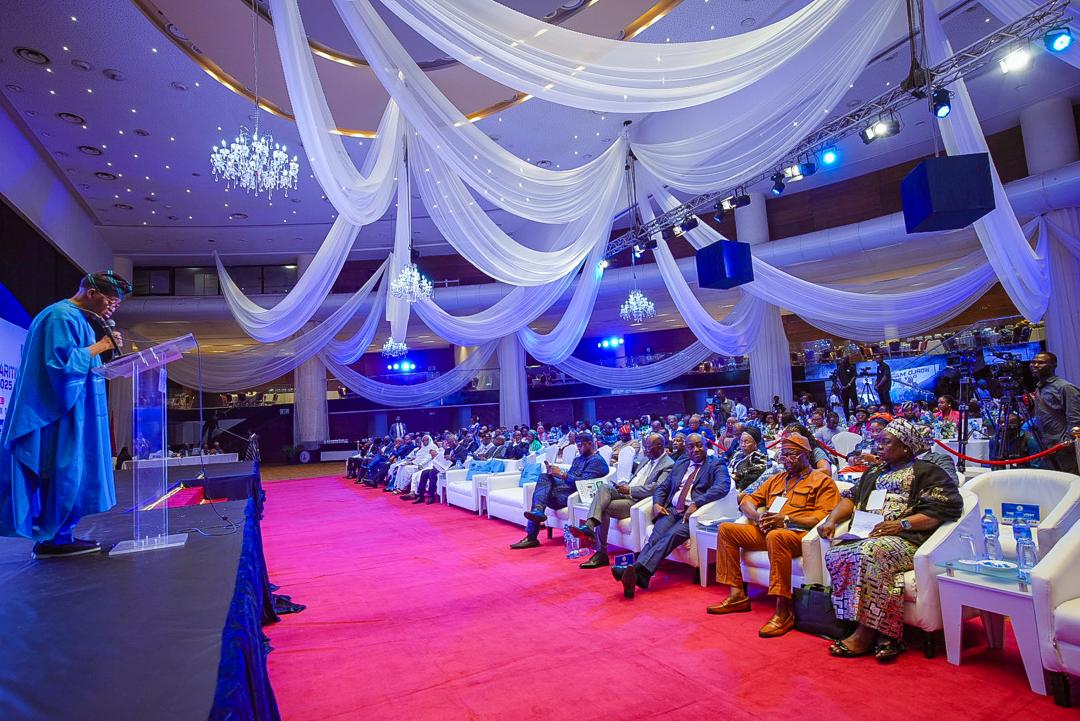
The Minister of Marine and Blue Economy, Adegboyega Oyetola, has called for sustainable financing and stronger partnerships to drive Nigeria’s blue economy agenda, even as he disclosed that interventions in marine infrastructure boosted non-oil exports by 18.6 percent in the first half of 2025.
Speaking at the 2nd Citizens and Stakeholders Forum held in Lagos on Thursday, Oyetola said that while the Federal Executive Council’s approval of Nigeria’s first-ever National Policy on Marine and Blue Economy on May 15, 2025, was a milestone, its implementation requires collective efforts and significant investment.
“Vision without finance may be no more than a dream,” the minister declared, warning that government alone cannot shoulder the enormous resources needed to modernise ports, strengthen maritime security, expand aquaculture, and build resilient coastal infrastructure. According to him, finance is the catalyst that transforms policy into progress, making it essential for private investors, development partners, and global financiers to align with Nigeria’s blue economy agenda.
He outlined priority areas requiring finance, including sustaining Nigeria’s zero-incident piracy record in the Gulf of Guinea, modernising ports through smart technologies, scaling up aquaculture and fisheries, and unlocking opportunities in marine tourism and infrastructure projects such as the Lagos-Calabar coastal highway. The Minister further stressed the importance of investing in marine research, renewable energy, and environmental resilience through instruments like blue bonds and sustainability-linked loans.
Oyetola linked these priorities to recent achievements, pointing to Nigeria’s three-year zero piracy record in the Gulf of Guinea made possible by the Deep Blue Project, the ongoing rehabilitation of Lagos ports to attract larger vessels and reduce turnaround time, and scaling up aquaculture and fisheries following consultations with industry stakeholders. He also noted that interventions in marine infrastructure had contributed to an 18.6 percent rise in non-oil exports in the first half of 2025.
“Our policies are clear, our results are proven, and our capacity is demonstrated. What remains is to scale up and unlock finance — the key to accelerating delivery and securing Nigeria’s leadership in Africa’s marine and blue economy,” the minister concluded.
In her welcome address earlier, the Director of the Department of Planning, Research and Statistics, Hajia Ralthum Ibrahim, described the forum as a crucial opportunity to deepen dialogue, exchange ideas, and mobilize collective efforts for the sector’s growth.
She highlighted the timeliness of the theme, “From Policies to Impact: Financing Issues,” and stressed that the approval of the national policy earlier in the year had provided Nigeria with a comprehensive blueprint for the development, regulation, and management of its marine and blue economy. “Now, our focus has shifted to implementation, a critical phase that requires our collective efforts,” she said.
Ibrahim revealed that the ministry had developed a template to track policy initiatives, ensuring accountability and alignment with strategic objectives. This monitoring tool, she explained, would evaluate progress across key areas such as port efficiency, marine tourism, and fisheries and aquaculture.
She noted, however, that finance remains the lifeblood of impact. According to her, the ministry is exploring innovative financing models, encouraging private sector partnerships, and working with international development partners to mobilize resources.
“This engagement is a call to action for every stakeholder — government, private sector, civil society, academia, and communities — to contribute to unlocking the potential of our marine and blue economy. The ocean is our shared heritage, and its sustainable development is a collective responsibility,” she said.
Also lending his voice, the former Minister of Interior, Captain Emmanuel Iheanacho, commended the Ministry’s efforts in harnessing the power of oceans and waterways to drive innovation, growth, and prosperity. He emphasized that unlocking the blue economy’s potentials holds immense promise for advancing sustainable development and improving the lives of citizens.
Captain Iheanacho added that the deliberations at the forum would play a critical role in shaping the future of the sector and Nigeria’s overall sustainable development agenda.
“Our dedication towards unlocking the blue economy’s potentials will undoubtedly yield significant benefits for our citizens and future generations.Let us work together to unlock the vast opportunities that our oceans offer,” Iheanacho urged.
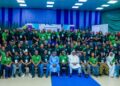
The forum brought together government officials, industry stakeholders, civil society groups, academia, and community representatives, all united by the shared goal of driving Nigeria’s blue economy from vision to measurable progress.