shippingposition
  • Home
  • News
  • Editorial
    • Vox Pop
  • Maritime safety
  • Oil and Gas
  • Personality
  • Health
No Result
View All Result
shippingposition

Home » PORT MODERNIZATION: Repairing The Leaking Bucket Of Nigeria’s Trade

PORT MODERNIZATION: Repairing The Leaking Bucket Of Nigeria’s Trade

“A smooth sea never made a skilled sailor, but a congested port can sink an entire economy”

by Joshua
March 25, 2026
in Featured, News

By Chief Ibrahim Nasiru

(A Public Affairs Analyst)

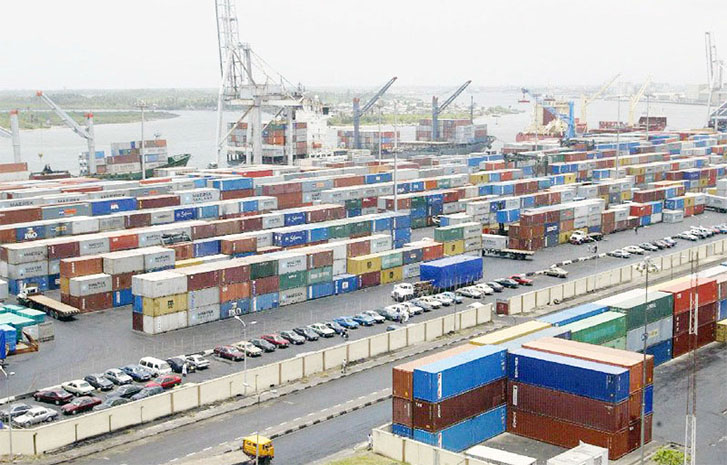
For decades, Nigeria’s maritime gateways-specifically the aging titans of Apapa and Tin Can Island Ports have functioned less like engines of growth and more like bottlenecks of bureaucracy. The air at the Lagos lagoon has long been thick with the scent of saltwater, pure water sachets, human waste, diesel, and the stagnant frustration of thousands of containers trapped in manual clearing loops. However, a new tide is coming in.

The Federal Government’s recently inked a £746 million ($997million) modernization deal with the UK government, which marks the first systematic overhaul of these ports in nearly half a century.

This isn’t just about painting warehouses or buying bigger cranes. Backed by UK Export Finance (UKEF) and coordinated by Citibank, the project targets total replacement of the 1970s-era infrastructure with 21st-century automation.

By integrating a National Single Window (NSW) and digitalizing cargo tracking, the deal aims to eliminate the “invisible taxes”-demurrage and corruption-that inflate the price of every consumer goods and services in Nigerian markets.

The impact of this deal is expected to ripple through every layer of the Nigerian economy, beginning with a drastic reduction in logistics costs.

Currently, the “Lagos bottleneck” adds a significant premium to everything from imported medicine to locally manufactured textiles. As automation slashes vessel turnaround time from weeks to mere days, the cost of doing business in Nigeria will finally begin to align with global standards.

Beyond the docks, the project is a massive engine for human capital development. It is projected to support thousands of skilled jobs in engineering, data management, and port operations. Crucially, the deal ensures that Nigerian talent remains at the forefront, involving local giants like Hitech Construction and ITB Nigeria. This ensures that while the financing is international, the expertise and economic retention remain domestic.

Furthermore, this port modernization project is a strategic move in the high-stakes game of West African maritime dominance. For years, Nigeria has watched as shipping traffic detoured to regional rivals like Cotonou Port in Benin or Lome Port in Togo, driven away by Lagos Ports’ notorious delays.

This newfound efficiency will not only reclaim the lost cargo, but also boost non-oil revenue through customs duties.

If Nigeria is to achieve its ambitious goal of a $1 trillion economy, the maritime sector must evolve from a passive gatekeeper into a proactive wealth creator.

The potential is staggering: with the right infrastructure, the maritime industry could rival the oil sector in its contribution to the GDP.

However, to maximize this momentum and ensure this isn’t just another signed paper, the government must move with strategic precision. A modern port is only as good as the roads and rails leading to it, or away from it. One cannot fly a jet engine on a wooden cart; therefore, the government must synchronize this hardware upgrade with improved intermodal connectivity.

The Nigerian Railway Corporation (NRC) and the Federal Ministry of Works must ensure that cleared cargo can move seamlessly to the hinterlands without being strangled by the same old road congestion.

Furthermore, while the current focus remains on the Lagos axis, the port modernization standard set by this £746 million deal must eventually be mirrored in the “Eastern Ports” of Port Harcourt, Warri, and Calabar. Decongesting Lagos requires a national strategy, not just a citywide one.

Success also hinges on the steadfast implementation of the National Policy on Marine and Blue Economy. This policy framework is the “software” that will run the new “hardware” that is being installed at Apapa. It requires a culture of transparency where digital systems are protected from human interference. When a container can be tracked from the moment it leaves a ship in the UK to the moment it arrives at a warehouse in Kano, without a single bribe being paid, it is then we will know that the modernization has truly succeeded.

If the government successfully aligns this massive financial investment with structural integrity and policy consistency, Nigeria won’t just be clearing containers, it will be clearing the path to a new era of prosperity.

After 50 years of near-stagnating, the nation has finally realized that in the race for global trade, you either automate the gates or remain the ghost in the machine. Ultimately, we spent decades waiting for our ship to come in, only to realize we hadn’t built a dock fast enough to receive it.

*Chief Ibrahim Nasir- a Public Affairs Analyst focuses on electoral reforms, democratic governance and blue economy in Nigeria.

Related Posts

NSC Pushes Fast-Track Clearance of Power Project Cargo at Ports

NSC Pushes Fast-Track Clearance of Power Project Cargo at Ports

April 17, 2026
Oyetola Commissions NIMASA–UNILAG Institute of Maritime Studies Building, Reaffirms Commitment to Blue Economy Growth

Oyetola Commissions NIMASA–UNILAG Institute of Maritime Studies Building, Reaffirms Commitment to Blue Economy Growth

April 17, 2026
Maritime Sector Faces Priority Alignment Challenges – Centre The Sea Empowerment and Research Centre (SEREC) has raised concern over alleged policy misalignment and weak coordination in Nigeria’s maritime sector. It said the sector was at a critical crossroads, shaped not by limited capacity but by weak prioritisation discipline. SEREC made this known in a policy bulletin and presidential advisory memo made available to newsmen by its Head of Research, Mr Eugene Nweke, on Thursday in Abuja. Nweke said the sector had prioritised projects over systems, announcements over outcomes and revenue over value creation, describing the trend as a national economic risk. “Nigeria’s maritime sector has repeatedly prioritised visibility over viability, expansion over optimisation and announcements over execution. This has resulted to congestion in spite expansion, digitalisation without integration and revenue growth without efficiency gains,” he said. He said policy inconsistency and institutional fatigue had weakened the sector, resulting in reform fatigue and stakeholder distrust. According to him, Nigeria is losing economic momentum and regional relevance, with annual losses estimated at between N2.5 trillion and N4 trillion due to inefficiencies. He said with proper reforms, the sector could generate over one trillion in annual savings, recover between N500 billion and one trillion naira in revenue from cargo retention. The sector, he said, could unlock three billion to six billion dollars in export growth, with gains expected to boost jobs and GDP. Nweke said the sector had suffered from port expansion without adequate evacuation systems, poor connectivity and underperforming inland container depots. Several depots, he said, were licenced based on geographic considerations rather than economic demand, leaving many underutilised. He called for their conversion into export logistics hubs to support agro-export growth, cold-chain systems and structured export aggregation, critical for AfCFTA competitiveness. Nweke also warned against uncoordinated deep seaport development and fragmented digital trade reforms, noting that it could undermine smooth implementation of the National Single Window. He noted that to reposition the maritime sector, focus must shift from revenue obsession to trade efficiency, export competitiveness and cost reduction. According to him, Nigeria’s maritime system remains import-driven, with weak export infrastructure, poor logistics integration and limited export terminals. He said this had led to cargo diversion to neighbouring ports saying, ‘Nigeria is losing cargo not by geography but by inefficiency’. He stressed the need for a strong independent regulator to enforce global standards and curb tariff abuses, describing regulation as key to a functional port economy. Nweke urged proper implementation of the Cargo Tracking Note (CTN), warning it could fail without transparency and coordination. He said maritime reforms must prioritise system integration, measurable outcomes and coordination over fragmentation. “Nigeria is approaching a tipping point. It is either we fix our maritime system or continue to finance the efficiency of neighbouring economies,” he said.

Maritime Sector Faces Priority Alignment Challenges – Centre The Sea Empowerment and Research Centre (SEREC) has raised concern over alleged policy misalignment and weak coordination in Nigeria’s maritime sector. It said the sector was at a critical crossroads, shaped not by limited capacity but by weak prioritisation discipline. SEREC made this known in a policy bulletin and presidential advisory memo made available to newsmen by its Head of Research, Mr Eugene Nweke, on Thursday in Abuja. Nweke said the sector had prioritised projects over systems, announcements over outcomes and revenue over value creation, describing the trend as a national economic risk. “Nigeria’s maritime sector has repeatedly prioritised visibility over viability, expansion over optimisation and announcements over execution. This has resulted to congestion in spite expansion, digitalisation without integration and revenue growth without efficiency gains,” he said. He said policy inconsistency and institutional fatigue had weakened the sector, resulting in reform fatigue and stakeholder distrust. According to him, Nigeria is losing economic momentum and regional relevance, with annual losses estimated at between N2.5 trillion and N4 trillion due to inefficiencies. He said with proper reforms, the sector could generate over one trillion in annual savings, recover between N500 billion and one trillion naira in revenue from cargo retention. The sector, he said, could unlock three billion to six billion dollars in export growth, with gains expected to boost jobs and GDP. Nweke said the sector had suffered from port expansion without adequate evacuation systems, poor connectivity and underperforming inland container depots. Several depots, he said, were licenced based on geographic considerations rather than economic demand, leaving many underutilised. He called for their conversion into export logistics hubs to support agro-export growth, cold-chain systems and structured export aggregation, critical for AfCFTA competitiveness. Nweke also warned against uncoordinated deep seaport development and fragmented digital trade reforms, noting that it could undermine smooth implementation of the National Single Window. He noted that to reposition the maritime sector, focus must shift from revenue obsession to trade efficiency, export competitiveness and cost reduction. According to him, Nigeria’s maritime system remains import-driven, with weak export infrastructure, poor logistics integration and limited export terminals. He said this had led to cargo diversion to neighbouring ports saying, ‘Nigeria is losing cargo not by geography but by inefficiency’. He stressed the need for a strong independent regulator to enforce global standards and curb tariff abuses, describing regulation as key to a functional port economy. Nweke urged proper implementation of the Cargo Tracking Note (CTN), warning it could fail without transparency and coordination. He said maritime reforms must prioritise system integration, measurable outcomes and coordination over fragmentation. “Nigeria is approaching a tipping point. It is either we fix our maritime system or continue to finance the efficiency of neighbouring economies,” he said.

April 17, 2026
Reforms Drive Maritime Turnaround, Position Nigeria for Blue Economy Leadership — Dantsoho

Reforms Drive Maritime Turnaround, Position Nigeria for Blue Economy Leadership — Dantsoho

April 16, 2026

Latest News

NSC Pushes Fast-Track Clearance of Power Project Cargo at Ports

NSC Pushes Fast-Track Clearance of Power Project Cargo at Ports

April 17, 2026

Oyetola Commissions NIMASA–UNILAG Institute of Maritime Studies Building, Reaffirms Commitment to Blue Economy Growth

Maritime Sector Faces Priority Alignment Challenges – Centre The Sea Empowerment and Research Centre (SEREC) has raised concern over alleged policy misalignment and weak coordination in Nigeria’s maritime sector. It said the sector was at a critical crossroads, shaped not by limited capacity but by weak prioritisation discipline. SEREC made this known in a policy bulletin and presidential advisory memo made available to newsmen by its Head of Research, Mr Eugene Nweke, on Thursday in Abuja. Nweke said the sector had prioritised projects over systems, announcements over outcomes and revenue over value creation, describing the trend as a national economic risk. “Nigeria’s maritime sector has repeatedly prioritised visibility over viability, expansion over optimisation and announcements over execution. This has resulted to congestion in spite expansion, digitalisation without integration and revenue growth without efficiency gains,” he said. He said policy inconsistency and institutional fatigue had weakened the sector, resulting in reform fatigue and stakeholder distrust. According to him, Nigeria is losing economic momentum and regional relevance, with annual losses estimated at between N2.5 trillion and N4 trillion due to inefficiencies. He said with proper reforms, the sector could generate over one trillion in annual savings, recover between N500 billion and one trillion naira in revenue from cargo retention. The sector, he said, could unlock three billion to six billion dollars in export growth, with gains expected to boost jobs and GDP. Nweke said the sector had suffered from port expansion without adequate evacuation systems, poor connectivity and underperforming inland container depots. Several depots, he said, were licenced based on geographic considerations rather than economic demand, leaving many underutilised. He called for their conversion into export logistics hubs to support agro-export growth, cold-chain systems and structured export aggregation, critical for AfCFTA competitiveness. Nweke also warned against uncoordinated deep seaport development and fragmented digital trade reforms, noting that it could undermine smooth implementation of the National Single Window. He noted that to reposition the maritime sector, focus must shift from revenue obsession to trade efficiency, export competitiveness and cost reduction. According to him, Nigeria’s maritime system remains import-driven, with weak export infrastructure, poor logistics integration and limited export terminals. He said this had led to cargo diversion to neighbouring ports saying, ‘Nigeria is losing cargo not by geography but by inefficiency’. He stressed the need for a strong independent regulator to enforce global standards and curb tariff abuses, describing regulation as key to a functional port economy. Nweke urged proper implementation of the Cargo Tracking Note (CTN), warning it could fail without transparency and coordination. He said maritime reforms must prioritise system integration, measurable outcomes and coordination over fragmentation. “Nigeria is approaching a tipping point. It is either we fix our maritime system or continue to finance the efficiency of neighbouring economies,” he said.

Vessels Expected At Lagos Ports As At 17th April, 2026

Reforms Drive Maritime Turnaround, Position Nigeria for Blue Economy Leadership — Dantsoho

Tariff Hike: Freight Forwarders Demand Policy Review, Stronger Local Content Protection

Customs Boss Pledges Multimedia Centre, Radio Station For NIJ

MWUN, Maritime Unions Threaten Action Against Temile Over Workers’ Unionisation Dispute

NCS Seizes Smuggled Donkey Skin, PMS Worth N98.3 Million In Adamawa

Vessels Expected At Lagos Ports As At 16th April, 2026

NIJ Honours Customs CG Adeniyi with Fellowship, Announces Landmark Multimedia Centre Donation

NIMASA DG Commends NSDP Graduates As 34 Beneficiaries Obtain CoC

kindly like our Facebook page

Health

Sleep Deprivation Root Cause Of Many Disease – Says Physician
Health

Health Benefits Of Consuming Garden Egg

March 23, 2026

A great source of dietary fibre, minerals and vitamins, garden eggs are a welcomed addition to every meal. This fruit...

Sleep Deprivation Root Cause Of Many Disease – Says Physician

Sleep Deprivation Root Cause Of Many Disease – Says Physician

March 23, 2026
Report Finds Hypertension Affects Up To 40% Of Nigerian Adults In 2025

Stress Management: Psychiatrist Identifies Effective Coping Mechanisms

March 16, 2026
Report Finds Hypertension Affects Up To 40% Of Nigerian Adults In 2025

Report Finds Hypertension Affects Up To 40% Of Nigerian Adults In 2025

March 16, 2026
Lemons Are Among Fruits That Have The Highest Healing Powers Of Diseases On Earth

Lemons Are Among Fruits That Have The Highest Healing Powers Of Diseases On Earth

March 9, 2026
Nigeria Reports Higher Lassa Fever Death Rate

Nigeria Reports Higher Lassa Fever Death Rate

March 9, 2026
The Big Question: Can Diabetes Be Reversed?

Some Early Warning Signs of Diabetes That You Don’t Know, But Should

March 2, 2026
Why Your Favourite Seasoning Cubes May Be Hurting Your Kidneys

Why Your Favourite Seasoning Cubes May Be Hurting Your Kidneys

February 23, 2026
SHOCKING: FIIRO Links High Rates of Organ Failure, Cardiovascular Diseases in Nigeria to Local Grinding Machines

SHOCKING: FIIRO Links High Rates of Organ Failure, Cardiovascular Diseases in Nigeria to Local Grinding Machines

February 23, 2026
MONDAY INTERVIEW: Oyebamiji Did Not See The Media As Adversaries, But As Partners In Development”—Minister Oyetola

DANGER: 11% Of Nigerians Have Kidney Disease – Experts

February 16, 2026

© 2021 Shippingposition

Navigate Site

  • Home
  • About Us
  • Contact us
  • Privacy Policy
  • Editorial Policy
  • Sitemap
  • Terms

Follow Us

No Result
View All Result
  • News
  • Coast To Coast
  • Oil and Gas
  • Maritime Education
  • The Terminals
  • Maritime safety

© 2021 Shippingposition