- Fire/Explosion
Fires and explosions are serious risks on commercial vessels. Even a small fire in any location on a vessel can lead to catastrophic loss of life if improperly managed and controlled. An explosion is a catastrophic event in itself that may lead to the complete loss of a vessel and its crew.
In March 2006, a fire started by a discarded cigarette claimed the life of a passenger and caused significant damage to the Star Princess cruise ship while the vessel was en route to Montego Bay, Jamaica. 13 other passengers were injured.
Earlier that same year, the al-Salam Boccaccio 98 sank after firefighting efforts in the engine room caused a buildup of seawater in the hull of the vessel. The passenger ferry, which was carrying about 1,400 passengers and crew in the Red Sea from Saudi Arabia to Egypt, listed and then capsized. Just 388 people were rescued.
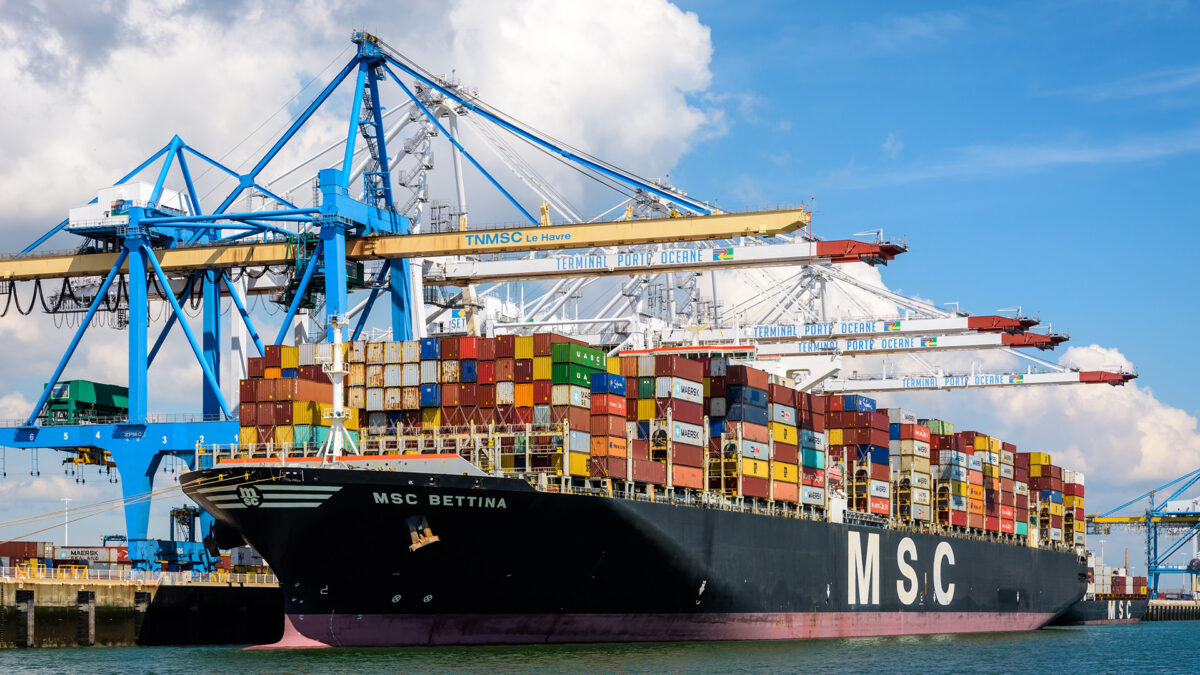
Those are two examples of the impact that a fire can have on a commercial vessel. While both of those were carrying passengers, cargo ships are at risk of suffering significant losses from fires. According to an analysis of maritime statistics from 2010 to 2019, fires were the third leading cause of cargo losses for container ships, after sinkings and groundings. It’s estimated that there is a major fire aboard a cargo vessel every 60 days, worldwide.
Fires and explosions pose very real threats for offshore workers in the oil and gas industry as well, as they work on platforms or vessels that extract and transport highly volatile substances.
- Collision
On January 14, 2020, an 87-foot commercial fishing vessel, Pappy’s Pride, and a 600-foot tanker, Bow Fortune, collided in dense fog off the coast of Galveston, Texas. The collision claimed the life of the fishing vessel’s captain and two of her crew when the Pappy’s Pride subsequently capsized and sank. Lack of communication was found to be the primary cause of the collision. The Bow Fortune tried to hail the Pappy’s Pride and sounded two danger signals, but the fishing vessel never responded.
Commercial vessel collisions occur when a ship strikes or is struck by another ship. Either vessel may have been in motion, anchored, or moored at the time. The severity of collisions will vary depending on the size and type of each vessel, the location of and speed of impact, weather and sea conditions, the type of cargo the vessels were carrying, and numerous other factors. When the vessels are significantly different in size, as in the case of the Pappy’s Pride and the Bow Fortune, the smaller vessel is more likely to sustain severe damage.
- Contact
Contact in terms of commercial vessel incidents is described as striking an object other than another vessel. It also does not include running aground. This is referred to as an “allision.” When a vessel strikes a dock, bridge, or another stationary object, this may be considered contact or an allision.
Like collisions, allisions can cause vessels to capsize, break apart, or founder. Everyone on board may be in danger, and the vessel may be at risk of causing pollution if it is carrying hazardous cargo or its fuel leaks into the ocean.
- Stranding/Grounding
Although stranding and grounding are technically two different incidents, they are similar enough that we are including them in a single category. Grounding occurs when a vessel strikes the seabed (runs aground). Stranding occurs when a vessel then remains there for some time. Strandings and groundings are serious commercial vessel incidents that can cause considerable damage to the vessels and result in oil spills, depending on the condition of the seabed.
Although one would assume that groundings and strandings should be preventable with modern equipment and technology, they continue to occur.
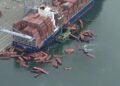
In March 2022, a 1,096-foot container ship called the Ever Forward grounded in the Chesapeake Bay near Baltimore, Maryland. This happened almost a year after another ship owned by the same company, Evergreen Marine Corp Taiwan Ltd, ran aground and blocked the Suez Canal for six days. The Ever Forward remained stranded outside of the canal in 25-foot-deep waters for about a month before it was finally freed.
Also in March 2022, the Norwegian Escape, a cruise ship owned by Norwegian Cruise Lines, ran aground in the Dominican Republic. The 164,000-ton vessel was carrying 3,223 passengers and 1,618 crew members when strong wind reportedly deviated her course toward a sandbar in the shipping channel.
No injuries or environmental impact were reported as a result of the grounding of the Ever Forward or the Norwegian Escape, but other incidents have caused serious harm.
In January 2012, an Italian cruise ship named the Costa Concordia ran aground off the coast of Tuscany. 27 passengers and 5 crew members lost their lives. The vessel deviated from her course and subsequently struck a rock formation on the seabed, which caused the ship to capsize and sink.
- Capsizing/Listing
Capsizing is a devastating incident that involves an overturn of a maritime vessel. When a commercial vessel capsizes, it turns on its side or completely bottom-up in the water. Commercial vessels may capsize because of other events, such as a fire, severe storm, or collision. That’s what happened to the Seacor Power, a 129-foot lift boat that capsized in a severe storm off the coast of Louisiana in April 2021. Only 6 of her 19 crew members were rescued.
Listing is similar to capsizing but does not involve a complete overturn of the vessel. When a vessel lists, it tilts to one side, typically as a result of taking on water or of having an imbalanced weight distribution. A boat may list to port (left) or starboard (right). If a vessel lists too far, it may be impossible to right and may fully capsize and then sink.