The International Maritime Organisation (IMO) says no fewer than 3,000 vessels and 20,000 seafarers are stranded in Middle East over the ongoing war by the U.S. and Israel against Iran.
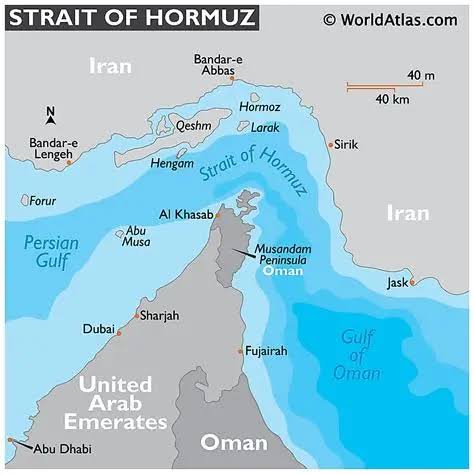
The crucial Strait of Hormuz global shipping corridor marking the entrance to the Persian Gulf, is essentially closed due to the threat of strikes from Iran and elsewhere, IMO declared.
Already, at least four seafarers have been killed and several others injured after a vessel was attacked near the Strait of Hormuz, raising serious concerns about the safety of crews operating in the Middle East. The incident occurred on March 6 when a tug assisting a damaged container ship was reportedly struck by projectiles while operating north of Oman.
According to maritime reports, the tug was helping the container vessel SAFEEN PRESTIGE, which had earlier been hit during a separate attack in the area. During the operation, the tug was struck by unidentified projectiles, resulting in fatalities and injuries among the crew on board.
IMO Secretary-General Arsenio Dominguez, warned of the global “knock-on” effect from the closure of the sea lane responsible for 20 per cent of the world’s oil.
Dominguez confirmed that the Strait of Hormuz was closed after a tugboat assisting another vessel in the strait on Friday morning was struck killing four seafarers.
The UN shipping agency chief condemned the attack and that the overall situation was “deteriorating” and urged ships to avoid navigating in the region.
He urged member states to “find solutions through dialogue in order to de-escalate” and restore free and safe movement across the region.
UN Emergency Relief Coordinator Tom Fletcher further warned that the widening conflict in the Middle East could trigger far-reaching humanitarian consequences well beyond the region.
Fletcher said disruptions to key maritime routes such as the Strait of Hormuz could drive up food prices.
The UN relief chief added that the disruption could strain health systems and make humanitarian supplies harder to deliver, hitting the most vulnerable people first.
With air travel shut down in the much of the region, although a small number of repatriation flights have started, seafarers are stuck on their ships in the Gulf. Even if seafarers were able to fly out of the region shipowners would not want to leave ships worth tens to hundreds of millions of dollars uncrewed.
At least 10 commercial ships have either been struck or involved in near misses in region since the 28 February.
In a statement International Chamber of Shipping (ICS) Chairman Emanuele Grimaldi also highlighted the dangers faced by crew stranded in the region. “I have been deeply concerned about the seafarers who are being put in extreme danger in the Strait of Hormuz and the surrounding region when they are simply trying to do their job. By no fault of their own, their lives are now tragically at risk,” he said.
“We call on all States to take the fundamental steps to ensure their safety. My thoughts are with the seafarers who have tragically lost their lives and their families, as well as the seafarers currently stranded.”
As a result of the dangers faced in transiting the region insurers have either withdrawn war risk cover or premiums have skyrocketed.
“We now see how insurance companies are not ready to provide war risk insurance to vessels or they are five times the price which is of course not affordable,” the IMO Secretary-General said.