By Oluyinka Onigbinde
Rising geopolitical tensions in the Middle East have triggered fresh concerns across global shipping corridors, with industry stakeholders warning that escalating war risk around key maritime routes could drive up freight costs, insurance premiums and disrupt supply chains for Nigerian importers and exporters.
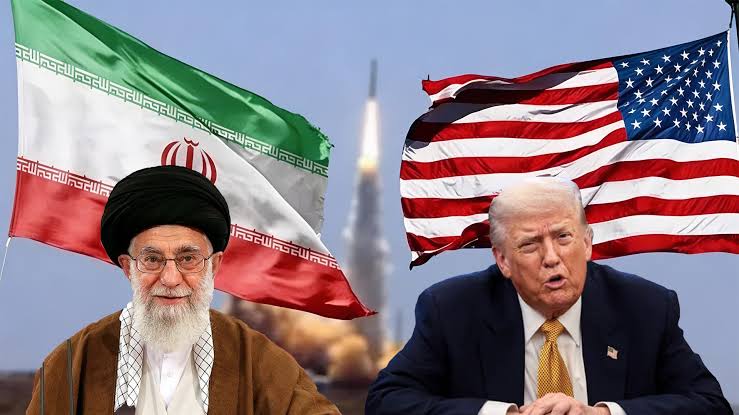
The ongoing conflict involving Iran, the United States and Israel has also heightened fears of potential disruptions along strategic shipping lanes, particularly around the Strait of Hormuz, which is a critical maritime chokepoint through which roughly 20 per cent of the world’s crude oil supply passes daily.
However, checks by our correspondent revealed that most container vessels transporting goods from China, which is Nigeria’s largest trading partner, do not typically pass through the Strait of Hormuz when sailing to West Africa. Instead, these vessels largely transit through the South China Sea, across the Indian Ocean and around the Cape of Good Hope before heading into the Atlantic towards Nigerian ports.
Despite this, maritime experts say the crisis could still significantly impact global shipping operations, due to rising war-risk insurance premiums, fuel price volatility and broader market uncertainty affecting vessel routing and freight charges.
Chief Executive Officer of the Centre for the Promotion of Private Enterprise (CPPE), Dr. Muda Yusuf said the escalating tensions have injected a new wave of geopolitical risk into the global economy, with energy markets expected to be the first transmission channel.
In a statement sent to our correspondent, Yusuf noted that the strategic importance of the Strait of Hormuz makes any potential disruption a serious concern for global trade.
“Any disruption to this corridor would have immediate implications for global oil prices, shipping costs, insurance premiums and supply chains,” he said.
According to him, Middle Eastern countries remain among the world’s largest oil producers, meaning any conflict-driven disruption to production or exports could quickly reverberate through international markets.
“For Nigeria, an oil-dependent economy where crude accounts for over 85 per cent of export earnings and about half of government revenue, the implications are significant,” Yusuf stated.
He explained that geopolitical tensions in the Middle East have historically triggered sharp increases in crude oil prices due to fears of supply disruptions.
Yusuf added that speculative risks surrounding the Strait of Hormuz alone could generate crude oil price volatility ranging between $5 and $15 per barrel within short periods.
“For Nigeria, every increase in crude oil price translates into additional export earnings and fiscal revenues,” he said, adding that such gains could boost foreign exchange inflows, strengthen external reserves and increase allocations to the Federation Account Allocation Committee (FAAC).
However, he warned that Nigeria’s ability to benefit from rising oil prices remains constrained by its current production levels.
“Nigeria’s crude oil production has fluctuated around 1.4 million to 1.6 million barrels per day, which is below installed capacity and remains vulnerable to oil theft, pipeline vandalism and underinvestment in upstream infrastructure,” he said.
He cautioned that without sustained improvement in production efficiency and security, the country may not fully capitalise on any oil price windfall.
Yusuf also highlighted a medium-term risk, noting that if the conflict escalates and weakens global economic growth, crude oil demand could fall, eventually triggering price corrections.
Meanwhile, stakeholders within Nigeria’s maritime and logistics sector say the crisis could significantly raise operational costs for cargo movement, even if the country’s main trade routes remain physically unaffected.
President of the Shippers Association of Lagos State (SALS), Nicodemus Odolo, said shipping companies are likely to adjust freight charges to reflect the rising risks associated with operating in an increasingly volatile global environment.
“If there is a war, shipping lines will review the routes they operate. If those routes pass through areas considered war zones, they will factor in the risks involved before continuing operations,” he said.
According to him, one immediate consequence would be a spike in marine insurance premiums.
“They may decide to re-insure the ship at a higher value and the premium they pay becomes part of their operational cost. That cost will be transferred to cargo owners,” Odolo explained.
“So every cargo they carry will attract additional charges. Freight rates will definitely go up.”
He added that rising fuel prices and increased operational risks could further compound shipping costs.
“The cost of fueling the vessel increases, crew costs increase, insurance costs increase and everything becomes more expensive. So the cost of doing shipping will certainly rise, and that will affect Nigerian shippers,” he said.
Also speaking on the development, Head of Research at Sea Empowerment and Research Centre (SEREC), Eugene Nweke, warned that prolonged geopolitical instability could trigger broader economic disruptions for emerging markets.
He noted that sustained tensions could drive crude oil prices to between $110 and $140 per barrel, while pushing global freight rates up by between 15 and 40 per cent.
Nweke also warned that marine war-risk insurance premiums could surge by between 200 and 400 per cent in high-risk corridors.
According to him, such developments could fuel global inflationary pressures and increase the risk of stagflation — a combination of high inflation and weak economic growth.
“Emerging economies like Nigeria could face renewed inflationary pressure and currency depreciation risks if global shipping and energy costs continue to rise,” he said.
Amid the uncertainty, however, Nweke said Nigeria’s growing domestic refining capacity could provide a strategic buffer for the economy.
He pointed to the Dangote Refinery as a potential stabilising factor capable of reducing Nigeria’s dependence on imported refined petroleum products and lowering exposure to freight and insurance shocks.
By producing petroleum products locally, he said the refinery could ease pressure on foreign exchange demand and moderate imported fuel inflation.
He added that the development also positions Nigeria to expand refined product exports across West and Central Africa under the African Continental Free Trade Area (AfCFTA) framework at a time when several countries are searching for alternative supply sources.
“If strategically managed, the refinery could serve as a national economic stabiliser during external shocks,” he said.
Nweke, however, stressed that the benefits would depend on coherent government policies.
He recommended that potential oil windfall gains be channelled into stabilisation funds and critical infrastructure, while calling for improved maritime security coordination across the Gulf of Guinea, guaranteed crude supply to domestic refineries and deeper regional trade integration to reduce dependence on volatile global shipping routes.