
In early December, the Nave Constellation supertanker was hijacked. Pirates boarded the fully loaded ship, stole its oil cargo, and kidnapped 19 members of its crew about 77 nautical miles (143km) from Bonny Island, a loading terminal in Rivers State, Nigeria.
While attacks on supertankers are rare, piracy is so common in the Gulf of Guinea that, in its July report, the International Maritime Bureau (IMB) described the passage as “one of the most dangerous shipping routes in the world” and a “world piracy hotspot”.
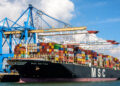
Yet, because it is such a crucial part of the regional economy, ships still sail its waters and assume the increasingly higher costs that come with the threat of maritime piracy.
Ninety percent of trade to West Africa comes by sea, according to the Danish Ministry of Foreign Affairs, so maritime security is a crucial factor in the region’s economy. IMB records show pirates kidnapped 27 crew members in the first half of 2019 alone, and one in four global piracy incidents in 2018 happened within Nigeria’s territorial waters, according to international insurance carrier Allianz Global.
Ideal conditions for pirates
The Gulf of Guinea covers 11,000 square kilometres (4,247sq miles) and stretches from Angola to Senegal. It is one of the world’s most important shipping routes for both oil exports from the Niger Delta and consumer goods to and from Central and West Africa, but it is not very well guarded, a combination that creates ideal conditions for piracy.
“Congestion at Lagos ports and the lack of other options means that ships are spending a long time queuing, meaning there are a large amount of ships in a relatively small area to target,” said Chidi Nwaonu of UK-based security firm, Peccavi Consulting. “Due to that and a lack of naval presence, there is the motive of high financial reward and comparatively low risk of detection or capture.”
In March, 33 countries came together to carry out maritime security training in the Gulf, and some attendees noted the need for more funding, cooperation, and infrastructure.
Nigeria’s navy has installed eight automated, camera-equipped surveillance towers in the waters just off its coast, in an effort to tackle a surge in pirate attacks [File: Stringer/Reuters] Under Nigeria’s federal system, state governments only have a rudimentary capacity to address piracy and must depend on the federal government to police the waters. “Nigeria doesn’t have a plan to tackle this menace yet,” Cheta Nwanze, head of research at Lagos-based security and political analysis firm SBM Intelligence, told Al Jazeera.
Nwaonu concurred. “Nigeria’s navy is the most powerful in the GoG (Gulf of Guinea), but compared to the army and air force, it has been underfunded and neglected.”
That is proving costly for firms: industry experts say kidnappings at sea have become so common, they have increased the cost of operations. Businesses have to factor in the costs of independent security contractors, extra insurance, and, sometimes, ransom money.
All of it adds up. The economic cost of piracy in West Africa through 2017 was $818.1m – up from $793.7m the year before. Nearly a quarter of that $818.1m was spent contracting maritime security, according to the nonprofit Oceans Beyond Piracy’s 2017 State of Maritime Piracy report.
Insurance also represents a huge cost. According to Oceans Beyond Piracy’s analysis, the total cost of additional war risk area premiums incurred by ships transiting the Gulf was $18.5m in 2017 alone, and 35 percent of ships transiting the area also carried additional kidnap and ransom insurance totalling $20.7m.
Insecurity is so rife in the region that global insurance firm Beazley now offers “Gulf of Guinea Piracy Plus,” a bespoke insurance plan for maritime crew travelling through the area.
The plan provides compensation for illegal vessel seizures and crew kidnappings even in the absence of ransom demands. It tracks insured vessels on a 24-hour basis, but because the risks are so high, it limits claims to $15m.
A spokesman for Beazley told Al Jazeera premiums for this type of coverage are decided on a case-by-case basis, however, because the risks are so great.
In June 2019, things reached a crescendo when India’s Directorate General of Shipping issued a restriction on all Indian nationals in the maritime industry, banning them from working in vessels in Nigeria and the Gulf of Guinea at large.
That India would institute such a ban underscores the extent of the problem because, as a group, Indian nationals make up one of the largest contingents of sailors in the region. “India is the second-largest contributor of sailors to the international marine fleet after the Philippines, and Nigeria’s largest trading partner for our oil exports,” explained Nwanze.
And while the ban may be one of the clearest acknowledgements of maritime piracy in the region, it does not appear to be enough of a disincentive for Indians looking for work on such a lucrative shipping route. A few weeks after the ban went into effect, five Indian sailors were rescued from a hijacked ship.
All but one of Nave Constellation’s kidnapped sailors were Indian. A joint statement released by the vessel owner, Navios Maritime Acquisition Corporation, and manager, Anglo-Eastern Tanker Managemen confirms the crewmen were released three weeks after the supertanker was hijacked.
“Since the attack, the prime concern has been the safety, well-being and early return of the seafarers taken by the pirate gang. Owners and managers are now delighted to report that on December 21 all of those taken were released and are now safe and undergoing medical tests and debriefing, following which they will return to their loved ones at home,” the statement read.
And yet, because the risks of maritime piracy are still so great, the companies declined to offer or confirm operational details of the kidnapping.
*Source: Al Jazeera News













Discussion about this post