The $10 billion Nigeria LNG Limited (NLNG) Train 7 gas project is steadily advancing toward its completion phase as contractors intensify efforts to meet the revised project delivery timeline. The company had earlier announced in June that the project had reached 80 per cent completion.
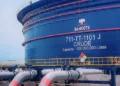
The Train 7 development, a major expansion of NLNG’s facilities on Bonny Island, is expected to increase Nigeria’s LNG production capacity by 35 per cent—from 22 million tonnes per annum (MTPA) to 30 MTPA. The project involves the addition of a complete new liquefaction train, a common liquefaction unit, and several associated utilities. It is designed to help Nigeria harness its abundant gas resources to meet rising global energy demand, while supporting local job creation and extensive technical training programmes.
Since its inception in 1999 with two LNG trains, NLNG has grown to a six-train operation and has delivered more than 6,000 LNG cargoes to international markets, earning the company a reputation for reliability and operational excellence. Train 7 is expected to further strengthen this standing.
The Final Investment Decision (FID) for Train 7 was reached on December 27, 2019, and the Engineering, Procurement and Construction (EPC) contract was awarded in May 2020 to the SCD JV Consortium made up of affiliates of Saipem, Chiyoda and Daewoo.
Project sources confirmed significant progress by the contractors, who have been under pressure from NLNG management and stakeholders to ensure timely delivery. Local capacity development, a core component of the project, has also received strong emphasis.
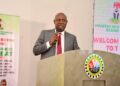
Providing an update on the project, NLNG’s General Manager, External Relations and Sustainable Development, Dr. Sophia Horsfall, said all partners remain focused on completing the project despite several global and domestic hurdles. She noted that overall project completion now stands at about 88 per cent.
“We are on track despite a range of global and local challenges, as with most global organisations involved in similar projects. However, NLNG and its EPC Contractor remain committed to delivering the project within the realigned schedule,” Horsfall stated.
The Train 7 scope includes a new LNG jetty, a new condensate stabilisation unit, utilities, flares and associated infrastructure. Facilities to accommodate up to 7,500 personnel are also being built, alongside a new Marine Offloading Facility and upgrades to the existing Former Aggregates Berth.
The project aligns fully with the Nigerian Oil and Gas Industry Content Development Act (NOGICD) of 2010. A portion of the engineering work is being executed in Lagos, while several materials—including galvanised steel structures, piping components, pressure vessels, cables and other equipment—are being manufactured or procured locally.
A key aspect of the Train 7 programme is human capital development. Recently, 331 young Nigerians graduated from the NLNG Train 7 Human Capital Development (HCD) Basic Training Programme, which is mandatory under the NOGICD Act.
Horsfall emphasised that the company’s investment in domestic capacity is strategic. “The most valuable of all capital is human capital. For us at NLNG, investing in people is not just corporate responsibility; it is a catalyst for a thriving economy and a sustainable future,” she said.
She added that the project has already created over 10,000 direct and indirect jobs and achieved more than 70 million safe man-hours without any Lost Time Injury, while facilitating significant technology transfer to Nigerians.
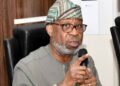
The Executive Secretary of the Nigerian Content Development and Monitoring Board (NCDMB), Felix Omatsola Ogbe, described the HCD programme as a model for building sustainable capacity in the oil and gas sector.
“The Train 7 Project is a testament to the successful implementation of our Human Capital Development Guidelines. It is deliberately designed to secure a sustainable talent pipeline for Nigeria’s oil and gas industry,” Ogbe declared.
He noted that Train 7—one of Africa’s largest ongoing gas infrastructure developments—is reshaping Nigeria’s technical landscape by equipping young Nigerians with advanced competencies needed to drive the future of the gas sector.
The recently graduated Batch A trainees were selected from 848 applicants on the NCDMB NOGIC Joint Qualification System portal. Their year-long programme combined classroom training, professional certifications and hands-on experience at a live LNG facility. Their curriculum covered engineering, ICT, marine services, welding and fabrication, offshore operations, non-destructive testing, facility management, quality management systems and HSE.
Participants also received health insurance, mentorship, laptops loaded with licensed software, housing and feeding allowances during the programme.