By Oluyinka Onigbinde
For many Nigerians, the sharp decline in international crude oil prices was expected to bring immediate relief at the filling station. With Brent crude falling from well above $100 per barrel during the Middle East crisis to about $70, consumers anticipated a corresponding reduction in the price of Premium Motor Spirit (PMS).
That expectation, however, has largely gone unmet.
Across the country, petrol continues to sell above ₦1,000 per litre, leaving many motorists and businesses wondering why fuel prices have remained stubbornly high despite a significant drop in crude oil prices.
Industry analysts say the answer lies in a combination of market realities, old crude inventories, fierce competition between the Dangote Petroleum Refinery and fuel importers, and the complexities of Nigeria’s deregulated downstream petroleum sector.
The Lag Between Crude Prices and Pump Prices
One of the biggest misconceptions among consumers is the assumption that petrol prices should fall immediately once crude oil becomes cheaper.
In reality, fuel sold today is often produced from crude purchased weeks or even months earlier when prices were considerably higher.
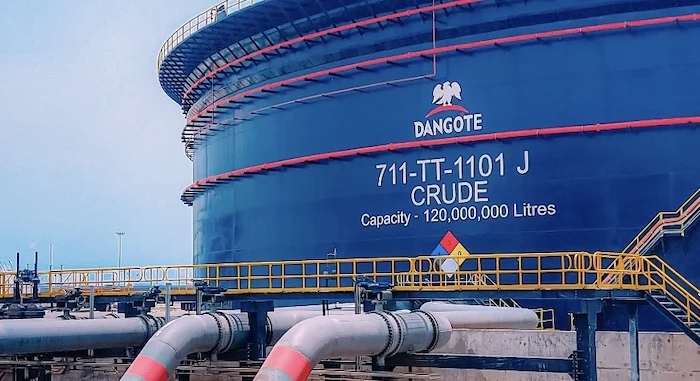
Large refineries such as the Dangote Petroleum Refinery typically maintain substantial crude inventories while additional cargoes are already at sea or secured under long-term supply contracts. As a result, refiners must first process these higher-cost crude stocks before lower international prices can significantly affect production costs.
Industry experts note that reducing prices too quickly could result in heavy financial losses for refiners who paid premium prices for their crude feedstock.
Dangote and Importers Locked in a Pricing Chess Game
Beyond crude costs, competition within Nigeria’s downstream sector is also shaping pump prices.
Since becoming the country’s dominant supplier of petrol following the commencement of local refining, the Dangote Refinery has emerged as the industry’s major price leader.
Importers now closely monitor every pricing decision made by the refinery before adjusting their own prices.
Likewise, the refinery is aware that importers continue to receive licences to bring petroleum products into the country, creating a highly competitive market where every price adjustment carries financial consequences.
This delicate balance has created what many operators describe as a waiting game, with neither side willing to make an aggressive move that could trigger another round of price reductions and wipe out existing profit margins.
Importers Also Face Uncertainty
Although data indicate that imported petrol currently lands in Nigeria at a lower cost than locally refined products, marketers have been reluctant to slash retail prices.
The hesitation is largely driven by fears that any major reduction could be overtaken by another price cut from the Dangote Refinery, leaving importers with expensive stock that can only be sold at a loss.
Several marketers are still recovering from previous rounds of price reductions that forced them to dispose of existing inventories below expected margins.
Consequently, many operators now prefer gradual adjustments rather than dramatic price cuts.
Deregulation Changes the Rules
Nigeria’s downstream petroleum sector now operates under a deregulated market, meaning government no longer fixes petrol prices.
Instead, prices are determined by prevailing market conditions, exchange rates, international crude prices, logistics costs, financing expenses and competition among suppliers.
While deregulation encourages investment and competition, it also means consumers may not immediately benefit from changes in global oil prices.
Industry observers argue that pump prices now reflect a broader range of cost factors beyond crude oil alone.
The Cost Beyond Crude Oil
Petrol pricing is influenced by much more than the international price of crude.
Exchange rate volatility, freight charges, insurance, port handling costs, financing expenses, depot charges, transportation and distribution costs all contribute to the final pump price paid by consumers.
Even when crude prices fall, increases in any of these cost components can offset expected reductions.
For refiners relying on imported crude, foreign exchange fluctuations also play a significant role in determining production costs.
Government Walks a Tightrope
The Federal Government has acknowledged growing public frustration over the slow pace of price reductions.
Authorities have warned against exploitative pricing practices while insisting that deregulation does not remove the responsibility of regulators to ensure fair competition and consumer protection.
However, officials have also recognised that direct government intervention in fuel pricing could undermine the very market reforms introduced to attract private investment into the downstream sector.
This leaves regulators with the difficult task of balancing consumer protection with market freedom.
Will Prices Drop Below ₦1,000?
Analysts believe a substantial reduction in petrol prices remains possible but may not happen immediately.
Much will depend on how quickly refiners exhaust crude purchased at higher prices, the stability of international oil markets, exchange rate movements and the willingness of both Dangote Refinery and fuel importers to compete more aggressively for market share.
Should crude prices remain relatively low over an extended period and competition intensify, consumers may eventually see petrol prices fall below the ₦1,000 per litre threshold.
Until then, the price displayed at filling stations is likely to remain a reflection not only of global oil prices but also of the commercial realities of operating within Nigeria’s evolving deregulated petroleum market.