According to the FAL Convention, a stowaway is “a person who is secreted on a ship, or in cargo which is subsequently loaded on the ship, without the consent of the shipowner or the Master or any other responsible person and who is detected on board the ship after it has departed from a port, or in the cargo while unloading.
From available data, there is no gainsaying that Nigeria is grappling with a rising crisis of stowaways, a development that has serious implications for maritime security and the broader economic stability of the region.
The increasing number of stowaways in Nigerian waters, particularly in the Gulf of Guinea, is a clear indication of the growing desperation among individuals seeking to escape dire socio-economic conditions. However, this desperate attempt to find a better life is coming at a significant cost to the maritime industry and poses a serious threat to the safety and security of shipping operations.
Recent findings by Shipping Position Daily reveal that in 2023 alone, the Gulf of Guinea recorded 143 stowaway incidents, leading to financial losses amounting to approximately $5.9 million.
This alarming data, provided by Africa Risk Compliance Limited (ARC) during a maritime security conference in Lagos, highlights the escalating challenges faced by the shipping industry in dealing with stowaways. The figures represent a sharp increase from previous years, signaling an urgent need for more effective measures to address this growing menace.
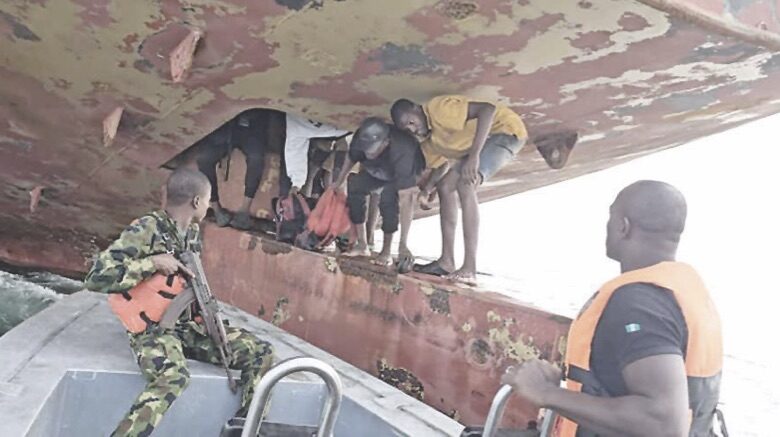
Stowaways, who covertly board vessels without authorization, often hide in dangerous and inaccessible parts of the ship, such as empty containers, cargo holds, or the rudder compartment. Their presence onboard is not only illegal, but also poses significant security risks, as they could potentially sabotage the vessel or cause harm to the crew. Moreover, the discovery of stowaways after a vessel has set sail leads to costly delays, logistical complications, and legal challenges for shipowners, who must navigate the complexities of international law while ensuring the safety of their operations.
While the Nigerian Navy has been at the forefront of efforts to curb this rising trend, reporting the apprehension of 75 stowaways in various locations across Lagos waters between August 2023 and April 2024, the increase in stowaway incidents underscores the need for a more comprehensive approach to tackling the problem.
Despite the deployment of advanced Maritime Domain Awareness (MDA) equipment by the Navy, which has improved the detection and interception of stowaways, the root causes of the issue—poverty, unemployment, and inadequate border security—remain largely unaddressed.
The economic hardship facing many Nigerian youths has left them with limited options, driving them to desperate measures, including stowing away on ships. This socio-economic desperation is a direct result of government policies—or lack thereof—that have failed to provide adequate opportunities for employment, education, and social welfare.
The failure of successive governments to address these fundamental issues has contributed to the rising number of stowaways, as young Nigerians seek to escape a life of poverty by any means necessary.
The financial burden on the maritime industry is substantial. The International Maritime Organization (IMO) reports that stowaway incidents globally cost the industry an estimated $5.9 million in 2021/2022, with each incident costing an average of $17,100.
In Nigeria, the situation is particularly dire, as the rise in stowaway cases compounds the existing security challenges in the Gulf of Guinea, a region already plagued by piracy and armed robbery at sea. Moreover, the cost of repatriating stowaways, which often falls on the shipowners, adds to the financial strain.
According to IMO guidelines, the responsibility for repatriating stowaways lies with the state of the port where they were found, or the shipowner if the state is unable or unwilling to repatriate them. This creates additional economic pressure on an already-burdened maritime industry.
The presence of stowaways on board ships may bring serious consequences. The life of stowaways could be endangered as they may spend several days hidden, with the risk of suffocation and without any water or provisions.
For ships and, by extension, to the shipping industry as a whole; the ship could be delayed in port; the repatriation of stowaways can be a very complex and costly procedure involving masters, shipowners, port authorities and agents.
Furthermore, the involvement of the captain in stowaway cases cannot be overlooked. While the captain may not always be aware of stowaways on board, the ultimate responsibility for the safety and security of the ship lies with them. It is crucial that captains and shipowners ensure that all necessary precautions are taken to prevent stowaways from boarding their vessels. Failure to do so could result in legal liability and further financial losses.
Addressing this crisis requires a concerted effort from all stakeholders, including government authorities, the maritime industry, and the international community. There is an urgent need to enhance port security, improve the detection of stowaways before vessels set sail, and address the underlying socio-economic conditions that drive individuals to embark on such dangerous journeys.
Governments in the region, including Nigeria, must invest in job creation, education, and social welfare programmes to reduce the economic desperation that fuels stowaway attempts. The immigration officers, Nigerian Navy, and other security agencies must also step up their efforts to tighten security at ports and along Nigeria’s coastline to prevent unauthorized access to vessels.
For shipping companies, more stringent security measures are necessary to prevent stowaways from boarding undetected. This includes thorough inspections of cargo and vessel structures, as well as greater collaboration between maritime authorities, port operators, and shipping companies to share intelligence and best practices in stowaway prevention.
The IMO has organised capacity building activities to address stowaway incidents. These have taken place in South Africa, Cameroun, and Cote d’Ivoire for the phenomenon of stowaway in West, Central, East and South Africa. Perhaps, its time Nigeria galvanised such in the Gulf of Guinea
The maritime industry must also work closely with government agencies to develop policies that address the root causes of stowaway incidents, such as poverty and unemployment.
The rising stowaway cases in Nigeria, is a clear danger to maritime security. As the number of stowaways continues to grow, the economic, security, and humanitarian implications become more pronounced.
Addressing this issue requires a comprehensive and coordinated approach to ensure the safety and security of maritime operations in Nigeria and the broader Gulf of Guinea region. Only through such efforts can the maritime industry hope to stem the tide of stowaways and safeguard the region’s economic future.