The Secretary-General of the International Maritime Organization (IMO), Mr. Arsenio Domínguez, has commended Nigeria for its achievements in maritime security and sustainable blue economy development, describing the country’s record of zero piracy incidents in more than three years as a significant milestone for the Gulf of Guinea region.
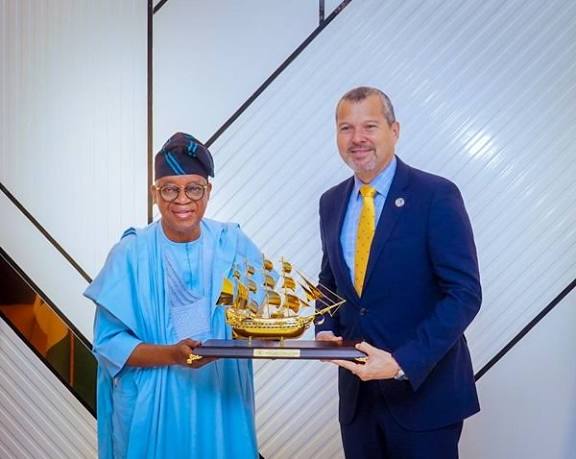
Mr. Domínguez, who arrived in Nigeria on Thursday, made the remarks during a courtesy visit to the Minister of Marine and Blue Economy, Adegboyega Oyetola, in Abuja. He noted that Nigeria’s investment in maritime safety infrastructure, as well as the coordination among security agencies, particularly the Nigerian Navy, has contributed to improved safety within Nigeria’s waters and the Gulf of Guinea.
The IMO chief pointed to Nigeria’s “Deep Blue Project” as a reference point for regional cooperation, stressing that the initiative has become a model for other coastal states in combating maritime crime. He further noted that Nigeria had recently submitted a comprehensive report to the IMO on its security interventions, which highlighted both national and regional efforts to safeguard shipping routes.

While acknowledging the progress, Domínguez emphasized the need for sustained investment in infrastructure and modern security equipment. He assured that the IMO would continue to provide technical assistance to Nigeria, including training programmes, awareness campaigns and capacity-building initiatives for maritime professionals.
He also referenced ongoing IMO-led projects, including a regional conference on the “Safe Seas Project” to be hosted in Ghana in January, as well as discussions with the European Union to launch a new maritime governance programme. Domínguez explained that the IMO was tracking progress in West and Southern Africa through defined performance indicators to ensure accountability in regional cooperation.
Beyond maritime security, the IMO Secretary-General highlighted wider global challenges such as the energy transition, adoption of biofuels, and financing mechanisms for future fuels. He noted that seafarer training and investment in sustainable maritime infrastructure would be crucial for countries like Nigeria to remain competitive. Domínguez also commended Nigeria’s Blue Economy Policy, describing it as a framework with potential to unlock long-term opportunities for jobs, investment and resource sustainability.
He particularly praised the Maritime Academy of Nigeria in Oron, Akwa Ibom State, for its facilities and modern training simulators. He encouraged stronger collaboration between the academy, the Ministry of Education and industry stakeholders to strengthen cadet training and expand career pathways for young Nigerians.
In his remarks, Oyetola welcomed the IMO chief and said the visit underscored the country’s strong partnership with the global maritime body. He attributed Nigeria’s improved security record to collaboration between the government, the Nigerian Navy and stakeholders in the sector. Oyetola added that the country remains committed to consolidating its gains in maritime safety while broadening opportunities in the marine and blue economy space.
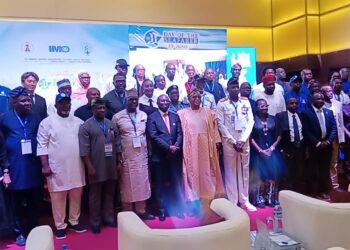
The visit featured presentations from sector stakeholders. The Director-General of the Nigerian Maritime Administration and Safety Agency (NIMASA), Dr. Dayo Mobereola, outlined ongoing reforms in maritime security, regulatory oversight and seafarer welfare. Acting Rector of the Maritime Academy of Nigeria, Dr. Kevin Okonna, highlighted the institution’s modern training facilities and the importance of international partnerships in cadet training. Similarly, the Managing Director of the Lekki Free Trade Zone, Mr. Wang Qiang, showcased the port’s role in expanding Nigeria’s cargo handling capacity, creating jobs and attracting foreign investments.
Domínguez also interacted with cadets of the Maritime Academy, urging them to embrace emerging opportunities in renewable energy, green shipping and maritime technology. He reiterated the IMO’s readiness to continue supporting Nigeria’s efforts in maritime governance, blue economy development and regional security.