At a recent award investiture ceremony of the immediate past Managing Director of the National Inland Waterways Authority (NIWA), Asiwaju Munirudeen Bola Oyebamiji, as the “Most Media Friendly Maritime CEO”, the Honourable Minister of Marine and Blue Economy, Dr. Adegboyega Oyetola, spoke extensively on Oyebamiji’s performance, the strategic role of the media, safety transformation on inland waterways, and the broader future of Nigeria’s blue economy. He also reflects on governance, institutional integrity, and the roadmap for sustainable maritime development. Joshua Yousouph was there.
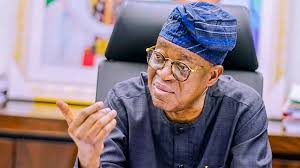
“Oyebamiji Did Not See The Media As Adversaries, But As Partners In Development”
“Oyebamiji combines humility with firmness, accessibility with discipline, and vision with pragmatism”
Honourable Minister, what informed your decision to personally attend and honour Asiwaju Munirudeen Bola Oyebamiji at this investiture?
It is both a responsibility and a pleasure. When a public servant distinguishes himself through service, reform, and accountability, leadership must acknowledge it. Asiwaju Munirudeen Bola Oyebamiji is not just an administrator; he is a consummate professional who brought vision, discipline, and measurable impact into the operations of NIWA. His tenure coincided with a critical period when Nigeria began to fully embrace the concept of the Marine and Blue Economy. In that journey, he played a strategic role in repositioning inland waterways as a viable economic corridor. Recognising him is also recognising excellence in governance, and encouraging others in public service to pursue results-driven leadership.
The award is titled “Most Media Friendly Maritime CEO.” Why is media engagement so important in maritime governance?
The maritime sector is complex, technical, and deeply connected to national economic prosperity. Without informed communication, public understanding becomes shallow and mistrust can grow. The media serves as the bridge between policy, operators, investors, and the public. Asiwaju Oyebamiji understood this. He did not see the media as adversaries, but as partners in development. He promoted transparency, encouraged access to information, supported professional engagement, and allowed journalists to understand NIWA’s operations firsthand.
When leaders work constructively with the media, accountability improves, misinformation reduces, and confidence in institutions grows. That is why recognising media-friendly leadership is critical to institutional credibility.
From your perspective, what were the most outstanding achievements of Oyebamiji’s tenure at NIWA?
There are several, but three stand out clearly. First is revenue transformation. Under his leadership, NIWA improved its internally generated revenue through operational efficiency, stakeholder collaboration, and stronger regulatory oversight. That enhanced financial sustainability and expanded service delivery across inland waterways nationwide. Second is safety reform. For the first time in thirty-five years, NIWA developed and implemented an Inland Waterways Safety Code. That is historic. It introduced standards, compliance mechanisms, and operational protocols that significantly reduced risks and improved navigation safety. Third is institutional order and professionalism. He strengthened enforcement, improved monitoring, and enhanced collaboration with security and safety agencies. These reforms restored public confidence in inland water transportation. Those achievements reflect leadership that translates vision into practical results.
You mentioned the Inland Waterways Safety Code as a milestone. How important is that to Nigeria’s maritime future?
It is extremely important. Safety is the foundation of any transport system. Before the Safety Code, operations on inland waterways lacked uniform standards. That created room for negligence, poor vessel management, and unnecessary loss of lives. The Safety Code introduced operational benchmarks, certification requirements, compliance frameworks, and safety protocols. It professionalised inland water transport. Beyond policy, it changes culture. Operators become conscious of responsibility, passengers gain confidence, and investors see structure. In the long term, it makes inland waterways competitive, safe, and economically viable.
Boat mishaps have been a national concern. How did you think Oyebamiji contribute to tackling that challenge?
As Chairman of the Special Committee on the Prevention of Boat Mishaps in Nigeria, he coordinated a nationwide response to a persistent problem. The approach was not cosmetic. It involved evidence-based policy recommendations, stakeholder sensitisation, enforcement-driven strategies, and collaboration with security agencies. The committee worked on awareness campaigns for operators and passengers, enforcement of safety compliance, and policy alignment across states. The objective was behavioural change, not just regulation. Those interventions significantly improved safety consciousness and reduced avoidable accidents on our waterways.
How did NIWA under Oyebamiji align with the Ministry’s broader Marine and Blue Economy agenda?
The Marine and Blue Economy is about unlocking economic value from maritime resources while ensuring sustainability and safety. Oyebamiji aligned NIWA’s programmes with this vision by expanding water transportation, improving connectivity, enhancing safety architecture, and promoting economic utilisation of inland waterways. He was collaborative, strategic, and policy-driven. Rather than operate in isolation, NIWA became a dependable partner to the Ministry in implementing national objectives. That synergy helped reposition inland waterways as economic infrastructure, not just transport alternatives.
Beyond policies and projects, what personal leadership qualities set Oyebamiji apart?
Leadership is about character as much as competence. He combines humility with firmness, accessibility with discipline, and vision with pragmatism. He listens, but he also acts. He engages stakeholders constructively and insists on standards. His openness with the media, professional bodies, and industry players reflects transparency and inclusiveness. These qualities create trust, and trust is the currency of leadership. That is why the title “Most Media Friendly Maritime CEO” truly fits him.
Oyebamiji is now the APC governorship candidate for Osun State. How does his maritime experience translate to political leadership?
As he now carries the banner of the All Progressives Congress as the Governorship Candidate for Osun State in the August 8, 2026 gubernatorial election, many who have witnessed his track record of service remain confident in his capacity to deliver purposeful and transformational leadership to the good people of Osun State. Public administration and political leadership share common foundations: resource management, reform implementation, stakeholder engagement, and service delivery. Oyebamiji has demonstrated the ability to manage complex institutions, implement progressive reforms, and deliver measurable outcomes.
Asiwaju Oyebamiji possesses the competence, experience, and vision required to reposition Osun State on the path of sustainable growth, infrastructural development, economic revitalisation, and social advancement. His reputation as a prudent manager of resources, a consensus builder, and a development-oriented leader offers considerable assurance that he will bring renewed hope and effective governance to the state. Leadership is ultimately measured not by rhetoric, but by tangible impact. Asiwaju Oyebamji has consistently demonstrated that he is a leader who translates vision into action and policy into results. His contributions to Nigeria’s inland waterways development have left an enduring institutional legacy that will continue to benefit the maritime sector and the national economy for years to come. Osun State needs leadership that understands development, consensus building, and prudent management. His experience at NIWA shows capacity for infrastructural development, economic revitalisation, and social advancement. Those are transferable competencies in governance.
What does this award represent for the Nigerian maritime sector at large?
It represents a culture shift. When excellence, transparency, and professionalism are celebrated, others are motivated to emulate them. The Coalition of Maritime Journalists has done well by institutionalising recognition. Your recognition not only honours the recipient, but also motivates others within the sector to pursue excellence, professionalism, and service with integrity. It sends a message that leadership must be accountable, accessible, and performance-driven. It also strengthens collaboration between regulators, operators, and the media ecosystem. Ultimately, it promotes integrity within the maritime sector.
What are your words from AMBO as he bags this award while leaving NIWA for a greater call to service in Osun?
I offer my warmest congratulations Asiwaju Munirudeen Bola Oyebamji on this well-deserved honour. His contributions to national development, his dedication to institutional reform, and his unwavering commitment to service stand as shining examples of responsible leadership. I have no doubt that greater accomplishments lie ahead for him, and I remain confident that he will continue to serve with distinction, integrity, and visionary purpose. May this recognition serve as further encouragement for even greater service to our nation and to humanity. I wish him continued strength, wisdom, and success in all his future endeavours.
Finally, Honourable Minister, what is your vision for Nigeria’s inland waterways under the Marine and Blue Economy framework?
My vision is a waterways system that is safe, economically productive, technologically modern, and globally competitive. We want inland waterways to reduce pressure on roads, boost trade, improve logistics, attract private investment, and create jobs. Safety, infrastructure, regulation, digitalisation, and stakeholder partnership will remain central. With leaders who understand reform and collaboration, Nigeria’s blue economy will become a powerful pillar of national growth.