In this interview at the sidelines of the recent management retreat, the Executive Secretary/CEO of the Nigerian Shippers’ Council, Dr. Pius Akutah spoke with Joshua Yousouph on the Council’s 2025–2029 strategic plans, progress on the Nigeria Port Economic Regulatory Agency Bill and digital transformation initiatives. He also sheds light on the recent controversy surrounding tariff increments by shipping companies, the role of the Council as port economic regulator, challenges facing the agency, and plans to strengthen its financial sustainability.
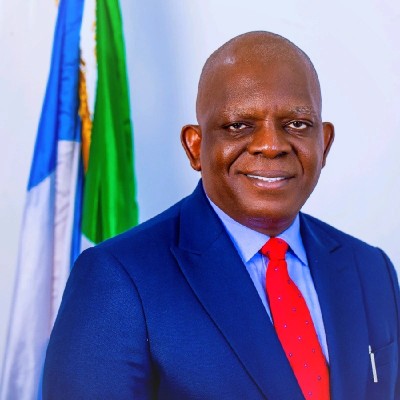
- “Institutional Transformation Cannot Succeed Without Motivated Personnel”
Recently there were uproars in the maritime sector over increase in charges by shipping companies despite your earlier directive that they should engage the government. Where exactly do we stand on the issue of shipping companies’ charges?
When I assumed office as Executive Secretary in 2023, I made it very clear to shipping companies and terminal operators that tariff increments should not become a tool for profit maximization or a means to arbitrarily increase their profit margins. For close to two years, the Council maintained a firm position on this matter. Every request for tariff increment that came to us during that period was declined. This decision followed thorough consultations with shipping companies and terminal operators. Even though the economic indices that typically justify tariff adjustments had manifested over time, the Council was resolute in ensuring that the broader Nigerian economy stabilized, before any discussion of increment could be entertained.
However, earlier this year we reached a point where we had to exercise our regulatory authority more decisively. We undertook a more scientific and analytical approach to the issue by examining the tariff requests alongside the operational realities of the operators. For the first time in the history of the Council, we examined the financial records and investment profiles of shipping companies and terminal operators. We looked closely at the level of investments made in the sector over time and used those findings as part of the basis for assessing the tariff increment requests.
After that comprehensive assessment, we approved a very marginal increase in tariffs. This approval was formally communicated to the operators. One of the key conditions attached to that approval was that the companies must engage their stakeholders before implementing the increment. From our understanding, several of the companies have indeed engaged their stakeholders. There may have been a particular instance where one shipping company experienced disagreements with stakeholders, but that is something they are working to resolve.
It is important to note that as a regulator, we cannot permanently insist that tariffs must never be increased, especially when the economic indicators justify such adjustments. Our responsibility is to ensure that any increment is justified, moderate, and transparent. Other sectors of the economy also review their charges periodically, so the maritime sector cannot be entirely exempt.
What we are trying to achieve is balance. If operators are prevented from adjusting charges, even when their operational costs have significantly increased, it could hinder their ability to deliver services effectively. Ultimately, that could harm the maritime sector as a whole. Therefore, the approach must be one of moderation, understanding, and concessions from all sides, so that the industry can continue to function efficiently.
Some freight forwarders and agents argue that shipping companies did not properly engage them and that the increment was not mutually agreed upon. What is your response to that?
Engagements with stakeholders have been ongoing for quite some time. The Council itself has organised several stakeholder meetings to address these issues. However, the challenge sometimes arises when discussions end in deadlock and no party is willing to make concessions. There is little value in holding repeated engagements if every meeting ends with a stand-off and no progress is made. In negotiations, there must always be a willingness to move forward through compromise. If both sides maintain rigid positions, then no solution will ever emerge.
Let me clarify that I am not speaking on behalf of the shipping companies, nor am I speaking on behalf of the freight forwarders. My position is that both parties must work together in a more harmonious manner. The Council, as the regulator, has already granted approval for a marginal tariff adjustment. It is now the responsibility of the shipping companies and freight forwarders to continue discussions and arrive at mutually acceptable implementation terms.
Nevertheless, the Council is not going to remain passive. If the disagreement persists, we may escalate the matter to the level of the Honourable Minister for further intervention. We are calling on both sides to return to the negotiation table, resolve their differences, and allow the sector to move forward.
The Council held a strategic retreat last year. What were the major outcomes of that exercise?
The management retreat we held in Ibadan in 2025 was a defining moment for the Nigerian Shippers’ Council. It was during that retreat that we collectively charted the future direction of the Council as we prepared for the transition toward a stronger port economic regulatory framework. One of the key outcomes of that gathering was the development of the 2025–2029 Strategic Plan, which now serves as the guiding compass for the Council’s institutional transformation.
At the retreat, we identified several strategic priorities that would shape the Council’s direction over the next five years. These include strengthening stakeholder engagement across the maritime ecosystem, promoting transparency and fairness in port economic regulation, improving operational efficiency and institutional capacity, strengthening digital governance and regulatory systems, and aligning maritime economic growth with sustainability and global best practices. However, strategy alone does not deliver results. What truly matters is disciplined execution. The success of our strategic plan depends largely on the leadership and commitment of our directors and heads of units.
What is the current status of the Nigeria Port Economic Regulatory Agency Bill?
The NPERA Bill represents one of the most significant institutional developments for the Council and the Nigerian maritime sector. As you may recall, the Bill had earlier been passed by the National Assembly and transmitted to the President for assent. However, during the review process, certain provisions were found to conflict with aspects of the Nigerian Tax Administration Act (NTAA) 2025. Based on observations communicated by the President, the Bill was returned to the National Assembly for corrections. I am pleased to inform you that the House of Representatives has addressed those areas of conflict and passed a revised version of the Bill in line with the President’s comments. The amended Bill is now awaiting concurrence from the Senate. Once the process is completed and the Bill receives Presidential assent, it will provide the statutory foundation for strengthening Nigeria’s port economic regulatory framework and reposition the Council for an expanded regulatory mandate.
What is the focus of this year’s management retreat compared to last year’s?
Last year’s retreat was largely about strategic planning—designing the future direction of the Council. This year’s retreat, however, is focused on strategic execution. The theme of the retreat is “Advancing Strategic Execution: Driving Collaboration, Innovation and Excellence for a Future-Ready NSC.” This reflects our determination to translate the vision articulated in the 2025–2029 Strategic Plan into measurable institutional outcomes. I always emphasise that the strength of any institution is not measured by the quality of its plans, but by the discipline with which those plans are executed. Directors and heads of units must therefore see themselves not merely as administrators but as drivers of institutional transformation. Achieving this requires stronger collaboration across departments, greater innovation in how we deploy technology and regulatory tools, and an uncompromising commitment to excellence in service delivery.
What key initiatives is the Council pursuing to improve Nigeria’s maritime and logistics sector?
While strengthening our internal systems, we are also focused on broader sectoral initiatives that will improve Nigeria’s maritime and logistics environment. Among these initiatives is the implementation of the International Cargo Tracking Note (ICTN), which will improve cargo monitoring and transparency within the logistics chain. We are also supporting the development and operationalisation of critical inland transport infrastructure across the country, strengthening trade facilitation and logistics connectivity, and enhancing economic regulatory oversight within Nigerian ports. The success of these initiatives depends heavily on strong collaboration among maritime agencies, logistics operators, and private sector stakeholders. It also requires the deployment of innovative regulatory and technological solutions to improve cargo visibility, efficiency and transparency. Ultimately, these initiatives are designed to strengthen regulatory oversight, improve operational efficiency, and enhance Nigeria’s competitiveness in international trade.
The Council has also mentioned plans to implement the International Cargo Tracking Note. Could you shed more light on that initiative?
Yes, the implementation of the International Cargo Tracking Note (ICTN) is one of the initiatives we are currently discussing with stakeholders. As you may know, the initiative has a complicated history in Nigeria, with previous attempts at implementation not succeeding. This time around, the Honourable Minister is determined to ensure that the system is implemented properly and in a manner that benefits the country. The ICTN will enhance cargo monitoring, improve transparency in trade transactions, and strengthen regulatory oversight. Furthermore, the Nigerian Shippers’ Council is a revenue-generating agency of government. For us to effectively carry out our mandate, we must also develop sustainable internal revenue sources. Currently, much of our operational funding comes from allocations rather than revenue generated directly by the Council. Our enabling law already provides for a one percent freight stabilisation fee as the Council’s primary funding line. The intention is to activate this provision so that the Council can generate its own revenue to support its regulatory functions. Last year, we included this mechanism in the budget, but we were unable to establish the appropriate collection structure. We are now engaging stakeholders again with the aim of setting up that collection mechanism in 2026.
It is important to clarify that this is not a new charge being introduced into the system. Rather, it is a statutory provision that has existed in our law. We have also conducted a cost-benefit analysis, and our findings indicate that implementing this mechanism will provide significant long-term benefits for the maritime sector.
Even international assessments support this approach. For instance, an OECD panel report recognised the importance of the Nigerian Shippers’ Council in overseeing the post-concession regulatory framework of Nigerian ports. However, it also emphasised that the Council should be financially sustainable. This is precisely what we are trying to achieve—ensuring that the Council can fund its activities through legitimate revenue streams while continuing to regulate the port sector effectively for the benefit of the Nigerian economy.
During your presentation, you spoke about innovation, new strategies, and competition in the maritime sector. What are some of the major challenges you face as a public regulator?
One of the biggest challenges we currently face is the absence of a comprehensive legal framework for our role as a port economic regulator. The bill that will formally establish the Nigerian Port Economic Regulatory Agency is still before the National Assembly. Without that law, our progress as an institution is somewhat constrained. At the moment, we are performing the role of port economic regulator based on presidential directives and regulations. While this gives us operational authority, what we truly need is a robust statutory framework that clearly defines the mandate, powers, and responsibilities of the regulatory agency.
The good news is that the process is progressing. The Honourable Minister of Marine and Blue Economy, together with our Board Chairman, is actively supporting the passage of the bill. We recently held discussions in Abuja on the matter. The House of Representatives has already passed the bill, and we are optimistic that the Senate will also conclude its consideration soon.
Beyond the legal framework, there are other challenges such as funding. However, this is not a challenge unique to our organisation; it is a broader issue affecting many government institutions. While our current funding allows us to continue operating, it is not always sufficient to implement some of the strategic initiatives we envision for the sector.
What steps is management taking to improve staff welfare at the Council?
Institutional transformation cannot succeed without motivated personnel. Staff welfare therefore remains a major priority for management. I am pleased to inform you that the proposed salary review for staff of the Council has already received approval from the supervising ministry and the Office of the Head of the Civil Service of the Federation. The proposal is currently undergoing vetting by the Budget Office of the Federation, after which it will be forwarded to the National Salaries, Incomes and Wages Commission for final approval before implementation.
In addition to the salary review, several welfare improvements have already been introduced. These include an upward review of the Children Education Grant, the introduction of Health and Social Club allowances, and the introduction of Proficiency Allowances to encourage professional development. These measures demonstrate management’s commitment to improving staff welfare and boosting institutional morale.