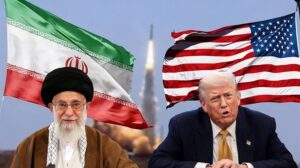
Perhaps, apart from COVID 19, nothing has had as much significant impact on global economy as the ongoing war between United States and Israel on one hand and Iran on the other. Dubbed “Operation Epic Fury”, it started on February 28, and has not shown any sign of abating yet.
As the war rages, nations across the globe are being forced to device appropriate coping mechanism. Nigeria is certainly not exempted from these economic turbulence, occasioned principally by the decision of Iran to shut the very strategic Strait of Hormuz.
Prior to now, perhaps not many know about the Strait of Hormuz, which is a critical 33km-wide maritime chokepoint located between Iran to the north and Oman/United Arab Emirate to the south. It links the Persian Gulf with the Gulf of Oman and the Arabian Sea. It is vital for global energy, as over 20% of global oil and liquefied natural gas (LNG) pass through it every day. This is why it is very important to the world, and it is being controlled by Iran.
Iran has always threatened to close the strait in response to sanctions or conflicts, making it a focal point for international security and naval patrolling. It is the primary route for petroleum exported from Saudi Arabia, Iran, Iraq, Kuwait, Qatar, and the United Arab Emirates.
The Strait of Hormuz is a very important because oil passing through it are usually destined for Asian markets, specifically China and India, among others.
In 2025, about 20 million barrels of oil passed through the Strait of Hormuz per day, according to estimates from the US Energy Information Administration (EIA) – that’s nearly $600bn (£447bn) worth of energy trade per year.
It has always been known in global politics and diplomacy that, disruption to this waterway, for any reason, could cause a massive surge in global oil prices and severely impact global energy supply chains. This is where the world has presently found itself.
There is the fear of escalating war risk along this strait, which could eventually drive-up freight costs, insurance premiums and disrupt supply chains for Nigerian importers and exporters.
As at early last week, three ships have been hit by “unknown projectiles”. This was confirmed by the UK Maritime Trade Operations (UKMTO).
One commercial vessel was said to have been damaged off the coast of the United Arab Emirates, a second north of Oman was evacuated after a fire was ignited, and a third sustained damage in an unreported location on 11 March.
Continuous blockage of the strait could further inflate the cost of goods and services worldwide, and hit some of the world’s biggest economies, including China, India and Japan, which are among the top importers of crude oil passing through the waterway. They are also top Nigerian trading partners.
Yes, most container vessels transporting goods from China, which is Nigeria’s largest trading partner, do not typically pass through the Strait of Hormuz when sailing to West Africa. Instead, these vessels largely transit through the South China Sea, across the Indian Ocean and around the Cape of Good Hope before heading into the Atlantic towards Nigerian ports.
Notwithstanding the above, the war could still significantly impact global shipping operations, due to rising war-risk insurance premiums, fuel price volatility and broader market uncertainty affecting vessel routing and freight charges.
Major global shipping lines, including Maersk, MSC, Hapag-Lloyd, and CMA CGM, have diverted vessels away from the Red Sea and Suez Canal to avoid the conflict zone. On account of this, ships are now traveling around the Cape of Good Hope, adding 10 to 14 days to the arrival time for cargo destined for Nigerian ports like Lagos, Port Harcourt and Onne.
Nigeria, being an oil-dependent economy and where crude oil accounts for over 85 per cent of export earnings and about half of government revenue, the implications are significant. Now, as predicted, the war has triggered sharp increases in crude oil prices due to fears of supply disruptions. This has led to unprecedented spike in the pump price of petroleum products.
It is an unexpected shock to Nigeria, now that petrol now sells for between N1,200 and N1,350 in different parts of the country.
Ordinarily, an increase in crude oil price should translates into additional export earnings for Nigeria, which should boost the country’s foreign exchange inflows, strengthen external reserves and increase allocations to the Federation Account Allocation Committee (FAAC).
Sadly, this is not the case. Nigeria’s current crude oil production capacity has been fluctuating around 1.4 million to 1.6 million barrels per day, which is below installed capacity and remains vulnerable to oil theft, pipeline vandalism and underinvestment in upstream infrastructure.
Nigeria’s ability to benefit from rising oil prices remains constrained by its current shortfall in production.
As the nation battles with these consequences, and even though our imports won’t sail through the volatile Strait of Hormuz, shipping lines are already sending notification of a hike in freight rates.
Most shipping companies have notified that a war risk surcharge of up to $4,000 will be imposed on cargo shipments to Nigeria, other African countries, and Indian Ocean islands from the Indian subcontinent and Gulf countries.
Because Nigeria relies heavily on maritime transport for over 80 per cent of its international trade, this increase in shipping costs will translate to higher prices of goods, services and a general increase in cost of doing business in the country.
However, even though Nigeria may not have say in the sudden rise in shipping costs, the effect of this would have been mitigated if the nation’s refineries are working optimally.
Yes, there is Dangote Refinery, but this war has catapulted the refinery into a monopolist. An excellent domestic refining capacity would have provided a strategic buffer for the economy.
We agree with experts who have postulated that, producing petroleum products locally could ease pressure on foreign exchange demand and moderate imported fuel inflation.