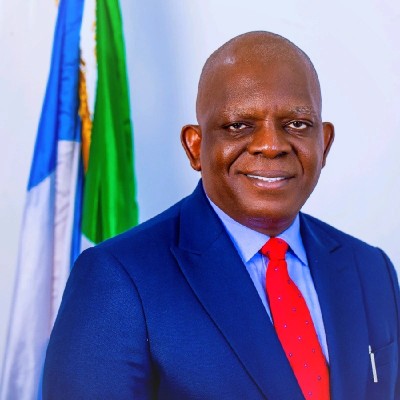
In this interview with the Executive Secretary and Chief Executive Officer of the Nigerian Shippers’ Council (NSC), Dr. Pius Akutah, he speaks on the controversy surrounding the proposed shipping tariff adjustments, the rationale behind the Council’s regulatory decisions, and the subsequent suspension following stakeholders’ protests. He also addresses concerns about regulatory consistency, allegations from freight forwarders, the challenges surrounding the implementation of the International Cargo Tracking Note (ICTN), and ongoing efforts to strengthen the Council’s legal and institutional framework for more effective maritime sector regulation.
Tariff protest was an isolated incident and not a reflection of systemic regulatory failure
Suspension of increased tariff is a demonstration of responsive regulation
Politics does not influence our decisions
The Council initially approved new shipping tariffs, but later suspended implementation after protests by freight forwarders. Does this suggest regulatory inconsistency or external pressure?
Tariff adjustment is part of our statutory mandate as a regulator under Sections 5 and 6 of the Port Economic Regulations 2025. It is not an arbitrary decision taken in isolation. When I assumed office over two years ago, there had already been a tariff review approved by my predecessor, so this is part of an ongoing regulatory process rather than a sudden shift. We have consistently maintained that tariff adjustments should not be viewed as profit-driven measures, but as necessary instruments for sector development, sustainability, and investment justification. For over two and a half years, despite rising operational costs and persistent demands from service providers, we deliberately refrained from adjusting tariffs. This was to ensure that any decision taken would be holistic and considerate of the broader economic environment. In arriving at this decision, we carefully assessed key economic indicators such as inflation trends, GDP growth, and the potential impact on national trade competitiveness. It is also important to note that some stakeholders had initially proposed increases ranging from 150% to 300%, which required firm regulatory moderation. The suspension, therefore, should not be interpreted as inconsistency or external pressure, but rather as a demonstration of responsive regulation—allowing for further stakeholder engagement before full implementation.
Isn’t the Council truly regulating or simply reacting after the crises?
That assertion is not correct. The Council did not act in reaction to a crisis; rather, we acted proactively within the framework of due process. What was approved was not an arbitrary increase, but a structured and conditional adjustment. Specifically, we approved a 35% adjustment band—not a fixed increase. This means operators have the flexibility to implement adjustments within a regulated range, such as 10%, 15%, or 20%, depending on their cost structures and operational realities. This approach reflects a deliberate regulatory strategy that balances the need for business sustainability with market competitiveness. Operators who overreach, risk pricing themselves out of the market, as competition will naturally correct such excesses. So, what we have in place is not reactive regulation, but a calibrated and structured framework designed to ensure fairness and stability.
Some stakeholders argue that shipping companies are threatening shutdown due to tariff decisions. Does this indicate instability in the sector?
What occurred was not indicative of a sector-wide instability. The situation was specific to a particular operator—MSC—and its immediate stakeholders. Other shipping companies successfully concluded their engagement processes without any form of disruption. The issue arose primarily due to a breakdown in dialogue between MSC and its stakeholders, which escalated into tension. At a critical point, I personally intervened on-site during a protest to de-escalate the situation and restore order. It is important to emphasize that this was an isolated incident and not a reflection of systemic regulatory failure or instability within the maritime sector.
There are claims that you have been distracted by political ambition and not focused on your duties. How do you respond?
My focus remains firmly on my official responsibilities. Allegations regarding political ambition or resignation are distractions that do not reflect the reality of my work. I have consistently discharged my duties in strict accordance with the law establishing the Council. In a highly sensitive and economically significant sector like maritime, it is not unusual for regulatory actions to be misinterpreted or politicized. However, my priority remains clear—ensuring regulatory stability, fairness, and efficiency within the sector. Politics does not influence our decisions.
Some freight forwarders have expressed dissatisfaction and even called for your resignation, alleging corruption. What is your response?
The most serious allegations I have encountered relate to corruption, and I must state unequivocally that such claims are completely unfounded. All decisions taken by the Council have been within our legal mandate, transparent in process, and based on extensive stakeholder consultations spanning more than two years. It is unfortunate that regulatory actions, which are meant to serve the broader interest of the industry, are sometimes misconstrued as personal decisions. We remain committed to upholding integrity, transparency, and accountability in all our operations.
You mentioned the risk of regulatory capture. What do you mean by that?
Regulatory capture occurs when a regulatory agency is unable to carry out its lawful duties independently, due to undue external influence or pressure. If regulatory decisions are consistently undermined or dictated by vested interests, it compromises the integrity of the system. As a regulator, we must strike a balance between stakeholder engagement and maintaining our independence. Our responsibility is to act in the best interest of the entire sector and the national economy, not any specific group.
There were claims that protests involved external or hired actors. What is your position?
What we observed during the protest at MSC raised some concerns, particularly regarding the composition of participants. It appeared that not all individuals present were genuine industry stakeholders. That said, our approach remains consistent—we prioritize engagement and dialogue over confrontation. Regardless of who is involved, our objective is always to maintain peace and facilitate constructive discussions.
Let’s talk about ICTN. Why has implementation been delayed despite repeated announcements?
The International Cargo Tracking Note (ICTN) has a long and complex history, characterized by legal disputes, suspensions, and policy inconsistencies over time. Despite these challenges, we remain committed to its implementation because of its strategic importance in enhancing cargo tracking, improving maritime security, and boosting government revenue. However, ongoing court cases involving previously approved service providers cannot be ignored. We are currently working closely with the Ministry of Justice to resolve these legal issues, ensuring that when implementation proceeds, it is done seamlessly and without further disruptions.
There is also a proposed reform bill to upgrade the Council into a stronger regulatory agency. What is the status?
The reform bill has made significant progress. Although it was initially passed, it was not signed into law due to conflicts with provisions in the Nigerian Revenue Service law. It was subsequently returned to the Ministry of Justice for necessary amendments and has now been resubmitted to the National Assembly. Once passed and assented to, it will transform the Council into a more robust regulatory agency, with clearer and expanded powers.
Final thoughts on criticism that the Council is reactive rather than proactive?
That perception does not accurately reflect our approach. One of the major constraints we face is the limitation of the existing legal framework, which is largely outdated. Despite this, we have consistently operated within the provisions of the law while actively pushing for reforms to strengthen our mandate. Our actions have always been guided by due process, stakeholder engagement, and long-term sector stability. With the anticipated enactment of the new law, our regulatory capacity will be significantly enhanced—enabling us to act more decisively, proactively, and effectively in shaping the future of the maritime industry.