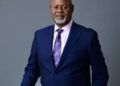
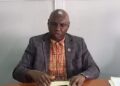
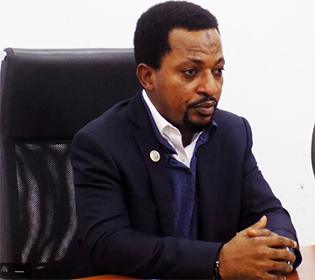
In this interview during a Courtesy visit by the newly-elected executives of the Maritime Reporters Association of Nigeria (MARAN), National Vice President Air and Logistics of the National Association of Government Approved Freight Forwarders (NAGAFF), Dr. Segun Musa opened up on his decades-long advocacy in Nigeria’s transport sector, the failures of government policies, the future of rail transportation, maritime exports, media engagements, and his ongoing interventions in transport development across the country. He also reflects on sundry industry issues.
“The major issue is that Nigeria lacks structured export consolidation systems”
“Nigeria performed better when transportation was managed under a unified ministry structure”
You have been widely known as a rail transportation advocate. How long have you been involved in that campaign?
I have been advocating for the rehabilitation and revitalisation of Nigeria’s rail sector for close to 30 years now. This February marked my 36th year in business, and most of those years have been dedicated to transport advocacy. Back then, rail transportation was practically dead. People never imagined that the sector could ever return to relevance. But some of us kept speaking about it consistently. Unfortunately, during those years, there was no social media. Advocacy was more difficult because there were fewer channels to amplify discussions. Yet we continued. I also warned years ago about what Apapa would become when tank farms started springing up indiscriminately in the area. I criticised the development and predicted the gridlock and infrastructural collapse that eventually happened. Today, everyone can see the reality.
Beyond rail, what other contributions have you made in Nigeria’s transport sector?
I have played prominent roles in several areas of the transport sector. During the administration of late President Umaru Musa Yar’Adua, there was a plan to privatise federal roads and scrap agencies like the Federal Road Safety Corps and FERMA. I chaired the committee set up in Abuja to review that proposal. Our committee did a thorough job and that intervention helped stop the planned dismantling of those agencies. That is why those institutions still exist today. I was also among the brains behind several cargo airport initiatives in Nigeria. I contributed to the conceptualisation of the Ilorin Cargo Airport. I was also involved in the Imo Cargo Airport initiative during the tenure of former Governor Ikedi Ohakim. When that project did not progress as expected, we moved discussions to Akwa Ibom and Enugu. I also played consulting roles in the development conversations around the Anambra Cargo Airport. In addition, my company became the first freight forwarding company to establish a gateway airport operation to the United States. We are currently waiting for full cargo operations to commence there.
You also operate a transport media organisation. Tell us about it.
Yes. Because of my passion for transportation, I established a media platform known as Global Transport Policy (GTP). The aim is to create continuous conversations around all modes of transportation in Nigeria and beyond. Initially, we focused on publishing bilingual transport magazines in English and French. Today, we have secured licences for both a radio and television station. By God’s grace, we will soon commence radio broadcasting before moving fully into television operations. The objective is simple — to continue promoting discussions that can drive development in Nigeria’s transport sector.
Aside media, your organisation is also involved in training and capacity building. What exactly do you do?
We operate an academy under GTP where we organise free masterclass trainings for various institutions and stakeholders. We have trained personnel from the Nigerian Police, Immigration Service, Civil Defence Corps, vigilante groups, LASTMA, FRSC, labour unions, nurses and many others. We also trained the Vice Chancellor, management staff and deans of faculties at Lagos State University. Recently, LASU approved our academy to begin training incoming and graduating students of the institution. All these trainings focus largely on emotional intelligence and professional development as they relate to participants’ areas of specialisation. What makes it unique is that everything is completely free. Participants are provided with breakfast, lunch and internationally recognised masterclass certificates endorsed by the International Coaching Federation (ICF). We see it as part of our corporate social responsibility.
Are there plans to extend these trainings to maritime agencies?
Yes, absolutely. We are currently engaging the Nigeria Customs Service, the Nigerian Army, Nigerian Navy and the Nigerian Air Force, for future trainings. Some aviation agencies unfortunately missed the opportunity because despite the training being free, they still requested financial inducements. We had to step back. Now we are also looking at agencies such as the Nigerian Ports Authority, Nigerian Maritime Administration and Safety Agency and the Nigerian Shippers’ Council.
Your annual transport conferences have also become notable in the industry. What should stakeholders expect this year?
Every year, we organise a major transport roundtable bringing together critical stakeholders from across the world to discuss the future of transportation. This year’s edition will hold next month at Marriott Hotel and it will be our biggest edition so far. We are expanding the venue because of the expected turnout. We are inviting global actors and international participants. The Presidency has acknowledged our invitation, and the Ministry of Transportation has also indicated participation. This year’s conversation will focus heavily on climate issues as they affect transportation, alongside other pressing sectoral challenges. By October, we will also organise another conference dedicated specifically to women in transport. The goal is to create conversations around capacity building, inclusion, synergy and leadership opportunities for women in the sector.
You seem passionate about sustaining industry conversations. Why is that important to you?
The conversation must continue. People often become discouraged because government does not immediately act on recommendations. But if discussions stop, progress stops. One day, somebody somewhere will listen, review old discussions and decide to implement an idea. That is exactly what happened with rail transportation. There was a time nobody believed rail could return in Nigeria, but some of us continued speaking about it consistently until government eventually paid attention. That is why conferences, roundtables and stakeholder engagements remain important.
You also criticised the style of conversations in many Nigerian events. What exactly do you mean?
Most conversations in Nigeria are not genuine engagements. People come to events carrying papers and reading speeches downloaded from the internet. That is not real engagement. Real conversation comes from deep knowledge, experience and practical understanding. When I attend international conferences in Europe, the United States, China or elsewhere, experts sit down and speak freely from years of experience and research. Nobody is hiding behind prepared speeches. I operate in several countries now including the United States, the United Kingdom, China, Ghana and Nigeria. I have seen how genuine policy conversations happen abroad. For Nigeria to improve, stakeholders must begin to engage more deeply and technically.
You were very critical of previous transport administrations, particularly under former Minister Rotimi Amaechi. Why?
Because we must tell ourselves the truth. Throughout the tenure of former Minister Rotimi Amaechi, I consistently challenged policies that I believed were ineffective. For instance, I repeatedly stated that the Cabotage Vessel Financing Fund (CVFF) would not materialise the way they promised Nigerians. People attacked me for saying it, but up till today, where is the money? The sector needs sincerity and accountability. Transportation is too technical to be treated as political compensation. We cannot continue appointing people into strategic transport positions simply because of politics.
You also raised concerns about the fragmentation of transport ministries. What is your position?
Nigeria performed better when transportation was managed under a unified ministry structure. Today, we have separate ministries for aviation, marine and blue economy, transportation and possibly rail in the future. The more we fragment the sector, the more difficult coordination becomes. Transportation is interconnected. Rail affects ports. Ports affect aviation logistics. Road infrastructure affects cargo evacuation. Everything is linked. We need knowledgeable professionals managing these systems, not people learning on the job.
You were also critical of Nigeria’s export structure and freight system. What are the major problems?
The major issue is that Nigeria lacks structured export consolidation systems. Countries like Ghana operate efficient Non-Vessel Operating Common Carrier (NVOCC) systems where multiple exporters consolidate goods into shared containers for export. In Nigeria, exporters still move cargo individually, which increases costs unnecessarily. A small exporter with 50 kilograms of goods should be able to combine shipments with others instead of relying on expensive air freight. Government needs to create platforms that support small-scale exporters through container consolidation systems.
How do you feel receiving the leadership of MARAN on a courtesy visit?
I feel deeply honoured and humbled. I sincerely appreciate the fact that the entire executive of MARAN found me worthy of this visit after your election. It is something that will remain in history for me. What makes this particularly emotional is that I have been associated with MARAN from the very beginning. MARAN is not just another association to me. In fact, when I began gaining visibility in the industry, MARAN was among the very first platforms that gave me an opportunity to speak and contribute. I remember vividly that I attended one of your roundtables as either the third or fourth guest participant many years ago, and since then the relationship has continued to grow stronger. I also remember an event at Premier Hotel in Ibadan over a decade ago where I spoke alongside Chief Adebayo Sarumi of the Nigerian Ports Authority on the controversial issue of Inland Container Depots (ICDs) and rail transportation. While others focused on ICDs, I concentrated on advocating for the rail sector, because rail has always been my passion.
Finally, what message do you have for the new MARAN leadership?
My message is simple: continue the conversation. Do not be discouraged by low attendance, lack of sponsorship or government indifference. Sustained engagement is what eventually drives change. The media must move beyond routine reporting and begin asking tougher, more technical and more informed questions. That is how accountability is created. That is how policy improves. And that is how Nigeria’s transport sector can truly move forward.