World Shipping Council President & CEO Joe Kramek said the agreement affecting the Strait of Hormuz is a positive development and an encouraging step toward restoring safety in this vital maritime corridor.
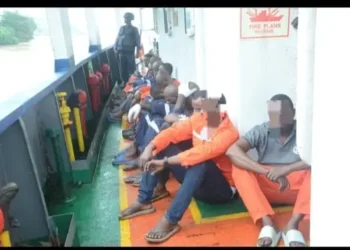
According to Joe Kramerk, the immediate priority is securing the safe passage of seafarers and vessels that remain stranded in the area. He stressed that achieving this would require close coordination among governments, the International Maritime Organization, and industry stakeholders, supported by
The immediate priority is safe passage for the seafarers and ships still stranded in the area. That will require coordination between states, the IMO and industry, backed by the necessary safety and security guarantees. Coordinated risk assessments, mine mitigation operations, and vessel traffic operations should be prioritized as part of these efforts, Kramek said.
Furthermore, he added that the conflict had underscored the importance of protecting the principle of freedom of navigation, arguing that commercial vessels must be able to transit the Strait of Hormuz safely, securely and without the imposition of tolls.
While welcoming the development, Kramek noted that ocean carriers would continue to closely monitor the situation and make operational decisions based on evolving conditions, available intelligence and ongoing risk assessments.
Uncertainty remains over future Strait of Hormuz transit fees
The interim peace agreement between the United States and Iran has taken effect, paving the way for the gradual return of commercial shipping to the Strait of Hormuz after Washington lifted its blockade and negotiations over Tehran’s nuclear programme entered a critical new phase.
Speaking at the White House on 18 June, U.S. Vice President JD Vance said the 60-day period for negotiating the terms of the memorandum of understanding signed by both sides had officially begun, marking the start of what is expected to be a complex diplomatic process.
While the agreement has eased immediate concerns over maritime access, uncertainty remains over the future of transit fees in the strategically important waterway. Reports indicate that Washington and Tehran are aligned on maintaining toll-free passage during the initial 60-day negotiating period, but differences persist over whether Iran will be permitted to continue charging vessels after that window expires.
Since mid-March, Iran’s Islamic Revolutionary Guard Corps has operated what many describe as a maritime “tollbooth” system, requiring foreign-flagged vessels to undergo a vetting process and pay a fee before transiting through Iranian waters.
US President Donald Trump has insisted that the Strait of Hormuz should remain “permanently toll-free,” a position echoed by Vance, who told CNBC earlier this week that the waterway would remain “toll-free for the long term.”
Iran, however, has maintained that the charges in question are maritime service fees rather than transit tolls, underscoring a key point of contention that negotiators will need to address in the weeks ahead.