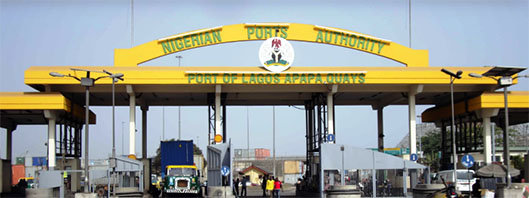
Our recent interaction with the Federal Ministry off Marine and Blue Economy offered no hope for those who had expected that government was doing something about the delayed renewal of the concession agreements with many terminal operators.
In the interaction which was published last week in Shipping Position Daily, the Special Adviser on Media and Communications to the Minister of Marine and Blue Economy, Dr. Bolaji Akinola, stated quiet clearly that “consultations are still in progress”, adding that the Minister of Marine and Blue Economy remains committed to ensuring that the process is transparent, fair and beneficial to the country. What this statement means is that no final decision has been taken on the renewal process.
The claification comes amid growing industry concerns over the expiration of several port concession agreements and uncertainty surrounding the government’s plans for terminal operators whose concessions have either expired or are nearing expiration.
Shipping Position Daily had earlier reported that uncertainty over the renewal of the port concession agreements is generating anxiety within the maritime industry, with stakeholders expressing divergent views on whether existing operators should automatically have their agreements renewed or be subjected to fresh competitive bidding.
We are worried that, the above statement by the aide to the Minister is coming almost one year after the minister told this newspaper that the long wait will soon be over. That was in September 2024.
It appears like the current Minister is not interested in reviewing the contract of the concessionaires spread across the various ports in Lagos, Port Harcourt, Onne , Calabar and Warri.
To put the issues in proper perspectives, it is important to bring out certain facts – Government’s first argument in support of port concession was that the ports (just like other businesses) could be better operated by the private sector. Secondly and rightly too, the government also observed that the nation’s seaports were becoming too expensive in the face of decaying facilities.
Faced by these inadequacies’, government decided to settle for port concession. Since that decision was taken and the eventual handing over of the ports to private terminal operators, one can not say that the decision was wrong.
But, two decades after, the results have been mixed. While some terminal operators have exceeded expectations by investing in infrastructure, deploying modern cargo-handling equipment, and improving turnaround times, others have failed to meet the required standards, contributing to persistent bottlenecks, congestion, and inefficiencies.
There is no doubt that the decision to concession the ports in 2006 was well-thought-out by the Federal Government. The argument was that NPA had failed to live up to its responsibilities. There were allegations of loss of revenue and decay of infrastructure.
Since that decision was taken and the eventual handing over of the ports to private terminal operators, ships’ turn-around time have improved tremendously from an embarrassing almost four weeks, to as low as one day, while ships no longer have to unnecessarily wait for days at any of the terminals. There is also a significant reduction in human traffic into the precincts of the ports. Cases of vandalism, cargo theft and container broaching have dropped drastically or even non-existing. Certainly, the ports are doing better than they were- pre-2006.
Now, with the Federal Government considering terminating the concession of under-performing operators, it is imperative to take a pragmatic approach. A blanket cancellation of all expired concessions will be counter-productive. Instead, the government must adopt a merit-based system that distinguishes between those who have added value to port operations and those who have not.
The terminal operators should be evaluated on clear performance metrics, including investment commitments, efficiency improvements, and adherence to global best practices. Those who have upheld their end of the bargain should have their concessions renewed, while those who have failed to meet expectations should be shown the exit.
However, beyond assessing the terminal operators, the government must also take responsibility for creating an enabling environment for port efficiency. The lack of supporting public user infrastructure—such as adequate roads, electricity, rail connectivity, and functional scanners have limited the performance of terminal operators.
A significant government investment in these critical areas would complement private sector efforts and ensure that the ports operate optimally. Furthermore, regulatory agencies must improve oversight and enforcement of service level agreements, ensuring that operators meet their obligations, rather than operating unchecked once they secure a concession.
However, there is the need for greater transparency in the concession renewal process. The government must resist the temptation of political favouritism and instead adopt a competitive, performance-driven approach. New concessionaires should only be considered if they can demonstrate superior operational capacity and financial commitment compared to existing ones. Otherwise, renewing contracts for well-performing operators remains the best course of action to sustain port efficiency and attract further investment.
We are also aware that the concession agreement with some of the terminals have ended at different times, and that some of them have secured an extension.
But, this can only be achieved when the Federal Government rises above partisanship and politics in the assessment of the terminal operators. It is not true to categorise all the terminal operators as failures. This is not to say that some of them have not been disappointing since the terminals were handed over to them. So, it is not out of place to request that the whole agreement be reviewed and the gaps blocked.
A lot of people, especially those who are sympathetic to the cause of the private terminal operators misconstrue the call for a review as a call for termination of the concession agreement between the terminal operators and the NPA. This, certainly is not true. Hopefully, the parameters of the proposed review have been well spelt-out.
The Federal Government should consider the impact of the delay on the various concessionaires in the port, and hasten the process. The delay is not good for the business interests of the concessionaires.
It is our hope that the review and renewal process will be a holistic review of the entire 2006 agreement, taking cognisance of the various legal lapses and the new realities.
Nigeria’s ports are critical to the economy, and their efficiency impacts trade, revenue generation, and global competitiveness. While the government’s renewed focus on port reform is commendable, it must ensure that decisions on concession renewals are guided by performance, fairness, and long-term national interest.
Retaining the best operators, while phasing-out inefficiency is the only way to build a port system that meets the demands of a growing economy.