
Two events in the last couple of weeks necessitated this editorial. First, a first- hand experience in the hands of security operatives (NPA and Police) at the popular Tin Can Island port second gate and the second reason has to do with the recent fracas at the PTML command of the Nigeria Customs Service.
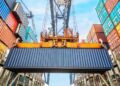
At the Tin Can second gate, some members of this newspaper’s editorial team watched in shock and disbelief recently, as both security personnel of Nigerian Ports Authourity (NPA)and the Police deliberately denied genuine port users access into the port in preference for (empty) container -laden trucks. Obviously, because drivers of the trucks regularly grease the palms of security agents, they are given preference over other port users who want access into the port for genuine business transactions. Car owners are directed to other routes as trucks eventually queue up and cluster around the gates. We now know why the entrances into the ports are the way they are.
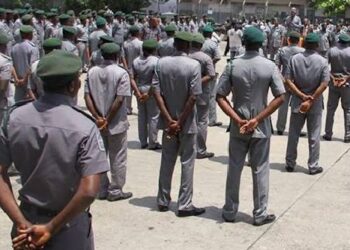
The mayhem which resulted into the arrests of 33 licensed customs agents at PTML; also at Tin Can Island port is still very fresh. Suffice it to stress that central to the crisis is alleged under- hand dealings between customs officers and licensed customs agents.
The port system comprises of a web of suppliers and users of shipping services on one side and suppliers and users of ancillary services on the other. Spread across this winding and complex web are players such as: Nigerian Ports Authourity Nigeria Customs Service and its service providers, shipping agents, Standards Organisation of Nigeria, National Agency for Food and Drugs Administration and Control, terminal operators, service providers (including scanning) importers (big and small), licensed customs agents, dockworkers, truck owners, drivers and motor boys.
It is difficult to ascertain the identity of those who perpetuate fraud in the port system, because the chain of importation is long; hence it can only be situated within the chain; that is, from the point an importer opens his ‘Letter of Credit’ to when the goods are actually procured and, packaged and freighted into Nigeria as an import and up to the point at which it is cleared from the port and delivered to the consignee.
In analysing the phenomenon called corruption in the port system, a lot of people tend to pin it down on stakeholders in the Nigerian port system, but that is an incorrect judgement.
Our findings have revealed that corruption is (in most cases) engineered from the point at which a consignment is procured. A situation when an importer defies import guidelines and import prohibition orders of the federal government makes the consignment and its importer susceptible. By implication, the licensed customs agent inherits the liability.
To ensure that the (offending) consignment is cleared out of the port, he (the clearing agent) begins to define ways and this means being at the mercy of officials of government agencies, notably Customs.
The notoriety and high rating which the Nigeria Customs Service enjoys on the corruption scale is not to say that other players are angels; virtually all the actors whom we have identified above are involved at one level or the other in making the port system what it is.
Stakeholders always rush to label customs personnel as the most corrupt, but as much as we do not want to draw a corruption perception table, we will like to look at them one after the other.
The first thing that happens once a ship comes into the harbours is that officials of government agencies; notably, the Nigeria Immigration Service go on board. Curiously, they board empty handed and disembark with loads of goodies including foreign drinks and other assorted items. That is the first act of corruption.
From that point, the terminal operator takes over and moves the consignments to designated storage facilities, while the importer or his licensed customs agents begins the process of taking delivery. From this moment, he is at the mercy of the container handler operator at the terminal, the Customs officer (and sometimes, the dockworker) at the terminal. If he is lucky and the container is not problematic, it may not be necessary to open his container for full examination; if this is so, he moves to the gate and still contends with a horde of agencies including the Police and the Customs who must again, vet the documents before the container exits.
We also think that the various anti-corruption committees in the port and the in-house committees within the agencies have not done enough. With the exemption of the Port Industry Anti- Corruption Standing Committee, we dare say that other corruption monitoring units (including the ones being promoted by the Customs) only exist on paper.














Discussion about this post