 The Council for the Regulation of Freight Forwarding in Nigeria (CRFFN) has commenced a renewed drive to sanitise cargo operations across the nation’s ports, even as the Maritime Anti-Corruption Network (MACN) pushes for strict, Standard Operating Procedure (SOP)-driven enforcement to eliminate delays, curb bad practices and reduce the rising cost of doing business at Nigerian ports.
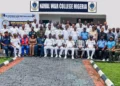
The direction was set at the launch of a Technical Training on MACN Tools for CRFFN staff at Abuja on Wednesday. The training is aimed at strengthening the application of integrity systems within freight forwarding regulation and enforcement.
The programme brought together regulators, enforcement officers and private sector stakeholders to deepen institutional capacity for transparency, accountability and efficiency in port operations.
Speaking at the event, the founder of the Convention on Business Integrity (CBI) and a key driver of the MACN Nigeria project, Mr. Soji Apampa, said Nigeria’s port reform journey has become a global reference point, but cautioned that the measurable gains achieved on vessel clearance must now be extended to cargo movement and logistics corridors.
Apampa explained that the MACN initiative was triggered by the UK Bribery Act of 2012, which made companies criminally liable not only for bribery but also for the “failure to prevent bribery” by third parties acting on their behalf. According to him, this compelled shipping companies trading with Nigeria to rethink their exposure to corruption risks and collaborate on a collective response.

He said that in response, eight shipping companies, including Maersk, came together in 2012 to establish MACN, which was initially housed within the Danish shipping giant. From that modest beginning, the network has expanded to more than 200 member entities, now representing over 75 per cent of containerised cargo globally and more than 50 per cent of all maritime traffic worldwide, with ship registries and insurance companies also joining the platform.
According to Apampa, in 2019, MACN had documented 266 incidents linked to vessel operations and submitted the evidence to the Office of the Vice President, which led to the arrest of port officials caught extorting items and cash from vessels, with some offenders sent to Kirikiri prison in Lagos.
He said the enforcement intervention produced measurable impact. From the 266 cases recorded in 2019, incidents fell to 128 in 2020, declined further to 84 in 2021, and continued downward to 48, 45, and eventually about 30 cases in subsequent years. Apampa said the sustained decline surprised international stakeholders and earned Nigeria the description of the “Nigerian miracle” within MACN circles.
However, he clarified that the success story has been largely confined to vessel clearance, while cargo operations remain vulnerable, particularly along transport corridors and checkpoints where SOPs are weak or inconsistently enforced.
According to him, the focus of the MACN technical training for CRFFN staff is to replicate the same data-and-evidence model used for vessels within freight forwarding and cargo clearance processes. With vessels, he said, MACN could identify the officer, the boarding time and the activity on board. The challenge now is building similar transparency for cargo movement.
Also, CRFFN’s commitment to cargo reform was reinforced by its Registrar/CEO, Mr Kingsley Igwe, who emphasized the council’s dedication to modernizing freight operations and strengthening enforcement oversight. Speaking at the session, Igwe noted that CRFFN is focused on ensuring seamless coordination across the logistics chain, from terminals to port gates, while protecting operators from arbitrary disruptions.
“CRFFN is committed to working with all stakeholders to streamline cargo movement and ensure that regulatory frameworks are clear, enforceable, and fair,” Igwe said. He highlighted ongoing efforts to dismantle redundant checkpoints and improve collaboration with government agencies, ensuring that cargo clearance aligns with the council’s standards and MACN’s enforcement guidelines.
Igwe also stressed the importance of data-driven monitoring and accountability, noting that the council is leveraging technology and digital systems to track cargo timelines, document compliance, and reduce unnecessary costs for operators and the economy at large.

Also speaking, a maritime arbitrator and Consultant for MACN Nigeria, Mr. Moses Fadipe called for a structured, SOP-driven enforcement regime across Nigeria’s cargo logistics chain to eliminate inefficiencies, curb bad practices and drastically reduce cargo dwell time at the nation’s ports.
Fadipe stressed that many freight forwarders and enforcement officers still lack proper understanding of operational standards expected by regulatory and climate agencies in port operations.
According to him, compliance begins with knowledge of government policies such as 24-hour port operations and the 14-hour cargo clearance target, noting that while the timelines are achievable, many operators and practitioners are yet to attain them due to opaque, fragmented and poorly coordinated processes.
Fadipe warned that weak and uncoordinated SOPs across the logistics chain have fueled bad practices, exposing operators to enforcement pressure and inefficiencies. He argued that enforcement must be guided not by arbitrariness, but by clearly defined procedures applicable across agencies.
“There must be a well-structured SOP, not only for CRFFN, but for the entire logistics chain. From when cargo is released by the terminal to the port gate, there are still checkpoints. What CRFFN should do is not just dismantle checkpoints, but structure SOPs so that cargo released is not stopped unnecessarily by any agency,” he stated.