By Oluyinka Onigbinde
The Nigeria Customs Service has said the service will go fully paperless by the second quarter of 2026, in a move aimed at fast-tracking cargo clearance, reducing delays, and improving trade facilitation across the nation’s borders.
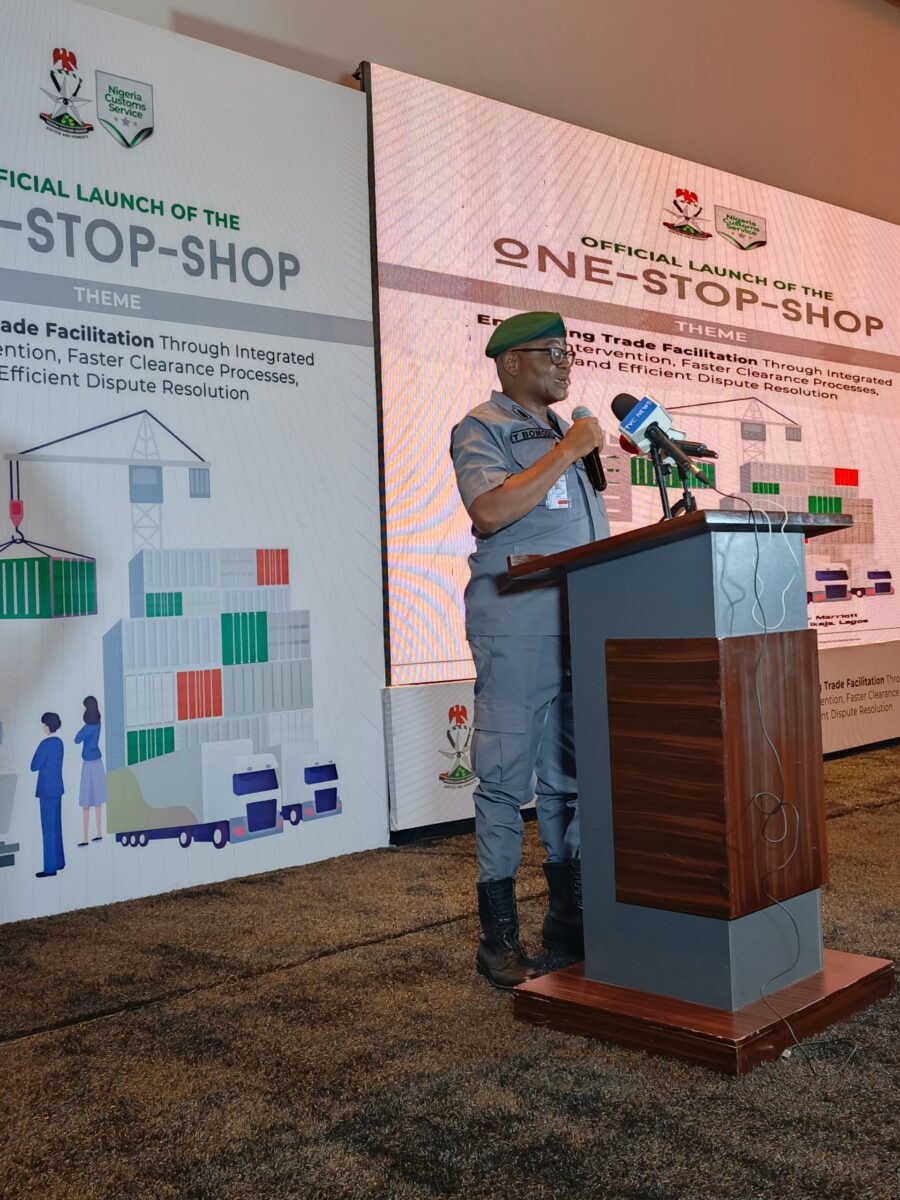
The announcement was made during the formal launch of its One-Stop-Shop (OSS) platform in Lagos, under the theme “Enhancing trade facilitation through integrated risk intervention, faster clearance process and efficient dispute resolution.”
The Comptroller-General of Customs, Bashir Adewale Adeniyi, was represented at the event by the Deputy Comptroller-General in charge of Enforcement, Timi Bomodi. In his keynote delivered on the CG’s behalf, Adeniyi described the OSS as a continuation of trust-based engagement with the trading community and part of a broader digital transformation.
He recalled last year’s launch of the Authorised Economic Operator programme and said the OSS reflects the Service’s commitment, under the leadership of Bola Ahmed Tinubu, to predictable, transparent, and accountable border processes that enhance investment and competitiveness.
Adeniyi noted that delays at ports were often caused not by the time taken for inspections but by fragmented procedures, overlapping checks, and idle waiting times. He said National assessments, Nigeria’s Trade Policy Review at the World Trade Organization, and the Service’s Time Release Study all highlighted these bottlenecks as increasing trade costs and weakening confidence.
To tackle these challenges, he explain that the OSS centralises valuation, processing centres, intelligence, enforcement, compliance monitoring, and gate operations into a single workflow. Digital tracking, automated alerts, joint inspections, and shared dashboards replace multiple fragmented interventions, making all actions traceable, accountable, and coordinated.
“Multiple checkpoints are collapsed into one decision space, with interventions that are collective, fully auditable, and aligned with institutional responsibility,” Adeniyi said.
The platform targets a 48-hour clearance window, lower compliance costs, stronger revenue assurance, and enhanced transparency.
He added that the paperless initiative, starting with core clearance, documentation, and approvals, is scheduled for rollout by the end of the second quarter.
“This will reduce physical interfaces, improve processing speed, and strengthen audit controls,” Adeniyi said.
The CG also emphasised the importance of inter-agency collaboration under the “One Government” directive and reaffirmed the Service’s support for the National Single Window initiative, which will complement the OSS by extending coordination across the entire border management ecosystem.
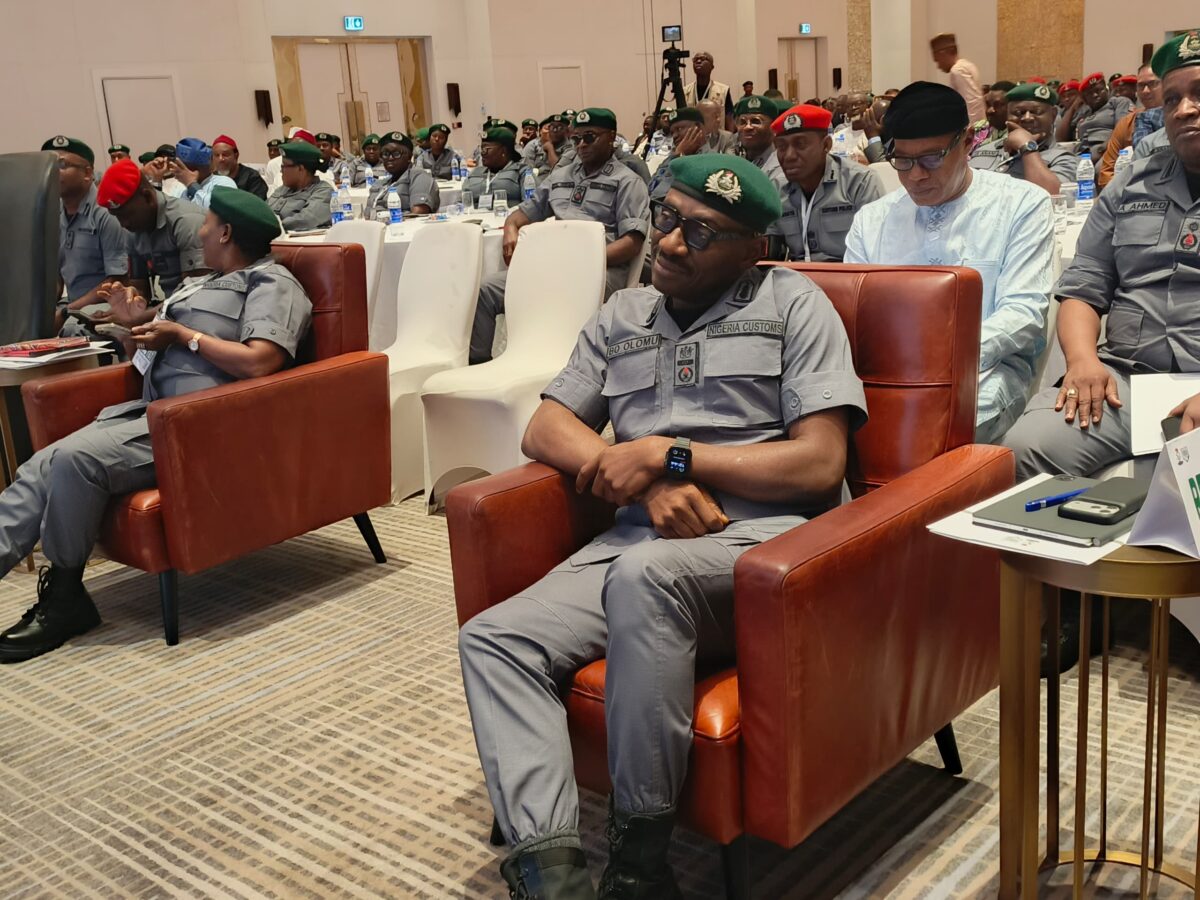
Deputy Comptroller-General in charge of Tariff and Trade, Caroline Kemen Niagwan noted that OSS adoption began in 2018 but faced challenges, mainly due to communication gaps. The digital platform now consolidates all risk interventions into a single interface, eliminating procedural complications and improving clearance efficiency.
She urged officers at ports and border stations to take ownership of the process. “Your involvement is crucial to achieving the objectives of the One-Stop-Shop. Active participation from all teams will ensure the platform’s success,” she said.
In a goodwill message, the Director General Manufacturers Association of Nigeria (MAN) who was represented by Mr. Segun Oshidipe lauded Customs for improving the ease of doing business.
He said the OSS represents a deliberate step to streamline procedures, reduce bottlenecks, enhance inter-agency coordination, and improve operations at ports and borders.
Oshidipe praised the creation of an open forum where stakeholders can voice concerns and propose practical solutions, emphasizing that collaboration and transparency are essential to building trust, driving reforms, and strengthening Nigeria’s global competitiveness.
He expressed MAN’s readiness to collaborate for the OSS’s successful implementation and hoped the engagement would boost operational efficiency, enhance trade facilitation, and contribute to national economic development.
Oshidipe, however, stressed that true success depends on seamless, timely trade facilitation at reasonable costs, achievable through better understanding, stronger partnerships, and deeper stakeholder engagement.
The long-term goal, he said, is a more efficient and digitally secure trade environment that drives compliance, lowers costs, and spurs economic growth.
On his part the President of Association of Nigeria Licensed Customs Agents (ANLCA) Mr. Emenike Nwokeoji expressed full support to the initiative stating that the OSS will not only reduce cost, but will also reduce human intervention.
Adeniyi concluded by affirming that the OSS represents a shift from fragmented interventions to coordinated governance, from discretion to data, and from isolated actions to collective responsibility.
He urged stakeholders to engage constructively, use the platform responsibly, and hold Customs to its commitments. “When border processes function efficiently, industries become more competitive, jobs expand, and national productivity rises—because progress at the border remains progress for the nation,” he said.