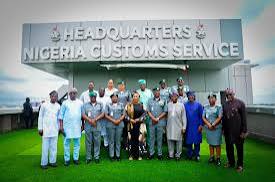
The Nigeria Customs Service has assured manufacturers, freight forwarders and other players in the nation’s trade sector that it will continue to engage them on fiscal policies affecting their businesses, saying sustained dialogue remains key to resolving implementation challenges and improving the country’s trading environment.
The assurance was given by the Comptroller-General of Customs, Adewale Adeniyi, recently at the Customs House, Maitama, Abuja, during a stakeholders’ engagement where participants sought clarification on the recently introduced Green Tax Surcharge Policy, and matters to do with African Continental Free Trade Area (AfCFTA).
Addressing the guests, CGC Adeniyi assured the stakeholders of the Service’s resolve to enhance and facilitate trade, acknowledging that, “Your feedback is important because it helps us understand what is happening in the field, and where necessary, we will take your concerns to the Federal Ministry of Finance and other relevant government institutions.”
Speaking about Authorised Economic Operator (AEO), CGC Adeniyi further explained that Nigeria would not lower the standards required under the Authorised Economic Operator Programme as the initiative is guided by global benchmarks established by the World Customs Organization (WCO).
Also speaking, the Deputy Comptroller-General of Customs in charge of Tariff and Trade, Caroline Niagwan, clarified that electric vehicles can be imported without payment of duty only by holders of Import Duty Exemption Certificate (IDEC) issued by the Federal Ministry of Finance.
She also urged importers facing classification disputes to take advantage of the Advance Ruling system, adding, “Once an Advance Ruling is issued based on genuine documentation, importers have certainty on classification, valuation or origin before the goods arrive, thereby reducing unnecessary disputes during clearance.”
Earlier, a chieftain of the Africa Association of Professional Freight Forwarders and Logistics of Nigeria (APFFLON), Akeem Ayobiojo, commended the Nigeria Customs Service for implementing Chapter 99, describing it as a major relief for manufacturers.
He, however, appealed for wider sensitisation on the Green Tax and called for improvements in the administration of Pre-Arrival Assessment Reports and Post Clearance Audit, saying more predictable procedures would reduce delays and unexpected costs for importers and freight forwarders.